Robinia · Kew POWO · Kew Plants of the World Online
Robinia
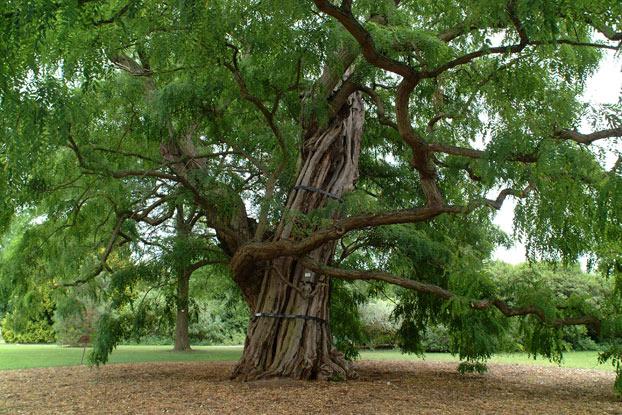
Sign in to saveRobinia is a genus of flowering plants in the family Fabaceae, tribe Robinieae, native to North America. Commonly known as locusts, they are deciduous trees and shrubs growing tall. The leaves are pinnate with 7–21 oval leaflets. The flowers are white or pink, in usually pendulous racemes. Many species have thorny shoots, and several have sticky hairs on the shoots.
OverviewAI-generated
Robinia is a taxon name that refers to two distinct biological groups. In the plant kingdom, it is a genus within the family Fabaceae. In the animal kingdom, it is an accepted genus of flatworms classified under the phylum Platyhelminthes, class Trematoda, order Plagiorchiida, and family Bunocotylidae. The animal genus was described by Pankov, Webster, Blasco-Costa, Gibson, Littlewood, Balbuena & Kostadinova in 2006.
The plant genus Robinia has records from the United States and Mexico, with specimens held by institutions including UCMP, SDNHM, YPM, and GH. The animal genus inhabits marine, brackish, and freshwater environments. The term is referenced in 135 other encyclopedia articles and has 984 associated PubMed entries.
Synthesized by Vinony from 24 facts across 6 sources: Wikidata, PubMed, Plants of the World, WoRMS, iDigBio, Vinony graph. Generated from structured data (not the Wikipedia text) and checked against those facts — may still contain errors.
Species
robiniaslekta
Genus
- PhylumPlatyhelminthes
- ClassTrematoda
- OrderPlagiorchiida
- FamilyBunocotylidae
General: are sister to the Gliricidia and Robinia groups. Within Use: Robinia pseudoacacia L. (black locust) and R. hispida L
via · Kew POWO
Museum specimens
- Specimen records
- 878
- With media
- 646
- Family
- Fabaceae
- Collections
- UCMP, SDNHM, YPM, GH
- Recorded in
- United States, Mexico
Research
984 papers- [Robinia pseudoacacia poisoning].Anales de pediatria (Barcelona, Spain : 2003) · 2009
- Identification of Robinia pseudoacacia target proteins responsive to Mesorhizobium amphore CCNWGS0123 effector protein NopT.Journal of experimental botany · 2020
- Robinia pseudoacacia-dominated vegetation types of Southern Europe: Species composition, history, distribution and management.The Science of the total environment · 2020
- Fermentation of Robinia pseudoacacia flower for improving the antioxidation: optimized conditions, active composition, mechanism, and biotransformation process.Preparative biochemistry & biotechnology · 2023
- Sulfur availability and nodulation modify the response of Robinia pseudoacacia L. to lead (Pb) exposure.Journal of hazardous materials · 2024
via PubMed
Wikidata facts
- Instance of
- taxon
- Subclass of
- tree
- Parent taxon
- Robinieae
- Named after
- Jean Robin
- Image
- Robina9146.JPG
Show 8 more facts
- taxon rank
- genus
- taxon name
- Robinia
- Commons category
- Robinia
- topic's main category
- Category:Robinia
- Commons gallery
- Robinia
- described by source
- Granat Encyclopedic Dictionary
- taxon common name
- robinija
via Wikidata · CC0
~2 min read
Encyclopedic overview
5 sectionsContents
- Toxicity
- Species
- Hybrids
- References
- External links
Robinia is a genus of flowering plants in the family Fabaceae, tribe Robinieae, native to North America. Commonly known as locusts, they are deciduous trees and shrubs growing tall. The leaves are pinnate with 7–21 oval leaflets. The flowers are white or pink, in usually pendulous racemes. Many species have thorny shoots, and several have sticky hairs on the shoots.
The genus is named after the royal French gardeners Jean Robin and his son Vespasien Robin, who introduced the plant to Europe in 1601.
Excerpted from Wikipedia’s “Robinia” article, available under the CC BY-SA 4.0 licence.