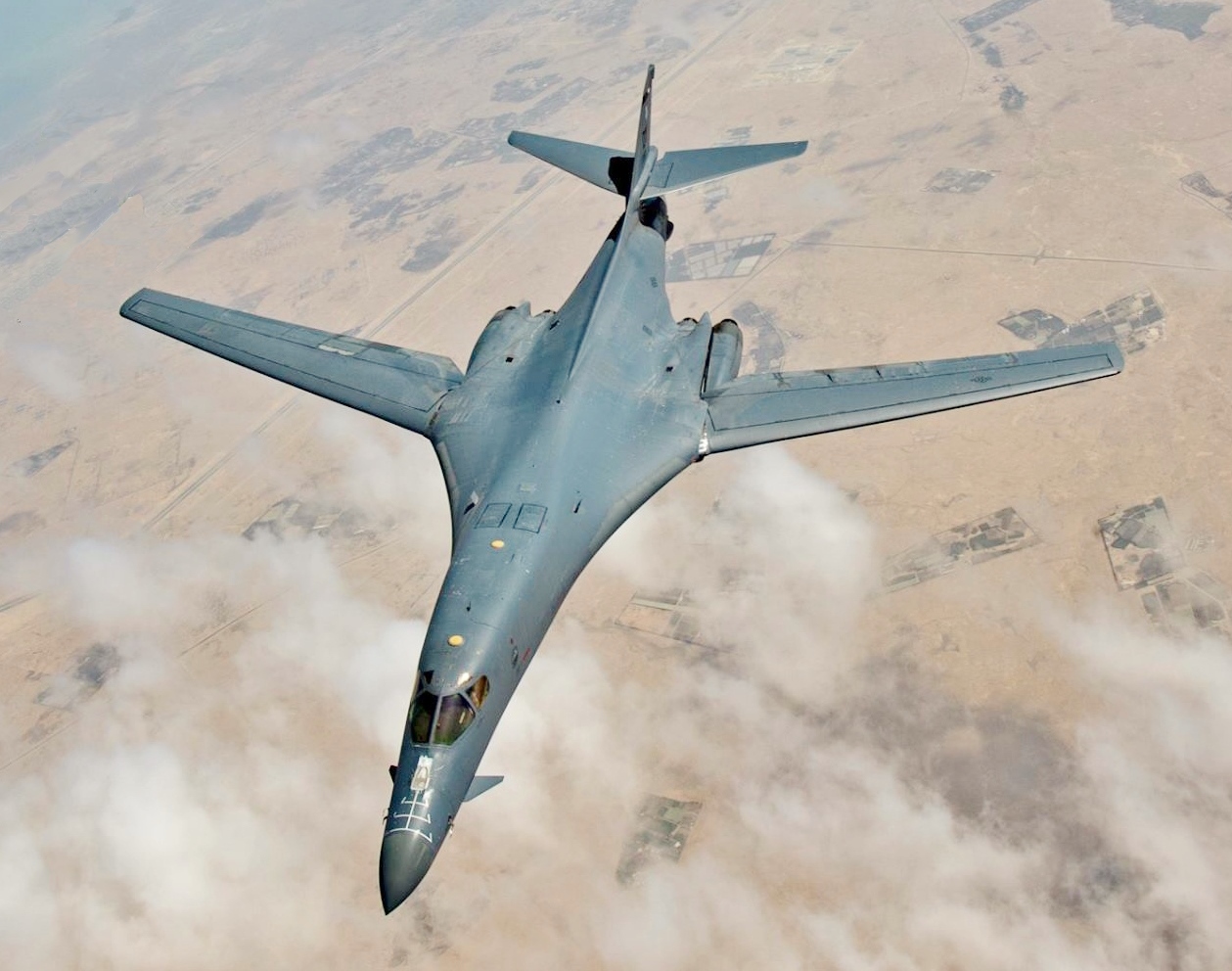
Rockwell B-1 Lancer
Sign in to saveAlso known as Lancer, B-1 Lancer, B-1, Bone, The Bone
The Rockwell B-1 Lancer is a supersonic variable-sweep wing, heavy bomber used by the United States Air Force. It has been nicknamed the "Bone". As of 2026, it is one of the U.S. Air Force's three strategic bomber types, along with the B-2 Spirit and the B-52 Stratofortress. It carries up to a 75,000-pound (34,000 kg) payload.
The Rockwell B-1 Lancer is a fast, heavy bomber used by the U.S. Air Force that can carry large quantities of weapons and has wings that adjust during flight for different speeds. It remains one of three main strategic bombers in the Air Force's fleet, alongside the older B-52 and the advanced B-2.
AI-generated from the Wikipedia summary — may contain errors.
Wikipedia views (30d)
83,402 totalvia Wikimedia Pageviews API
Wikidata facts
- Operator
- United States Air Force
- Country of origin
- United States
- Developer
- Rockwell Automation
- Manufacturer
- Boeing
- Image
- B-1B.jpg
- Height
- 10.4
- Length
- 44.5
Show 9 more facts
- Commons category
- Rockwell B-1 Lancer
- powered by
- General Electric F101
- Commons gallery
- Rockwell B-1 Lancer
- vehicle range
- 6478
- total produced
- 100
- first flight
- 1974-12-23
- service entry
- 1986-10-01
- wing area
- 181.2
- nickname
- The Bone
Sources (7)
via Wikidata · CC0
~40 min read
Encyclopedic overview
The Rockwell B-1 Lancer is a supersonic variable-sweep wing, heavy bomber used by the United States Air Force. It has been nicknamed the "Bone" (from "B-One"). As of 2026, it is one of the U.S. Air Force's three strategic bomber types, along with the B-2 Spirit and the B-52 Stratofortress. It carries up to a 75,000-pound (34,000 kg) payload.
The B-1 was first envisioned in the 1960s as a bomber that would combine the Mach 2 speed of the B-58 Hustler with the range and payload of the B-52, ultimately replacing both. After a long series of studies, North American Rockwell (subsequently renamed Rockwell International, B-1 division, later acquired by Boeing) won the design contest for what emerged as the B-1A. Prototypes of this version could fly Mach 2.2 at high altitude and long distances and at Mach 0.85 at very low altitudes. The program was canceled in 1977 due to its high cost, the introduction of the AGM-86 cruise missile that flew the same basic speed and distance, and early work on the B-2 stealth bomber.
Excerpted from Wikipedia’s “Rockwell B-1 Lancer” article, available under the CC BY-SA 4.0 licence.