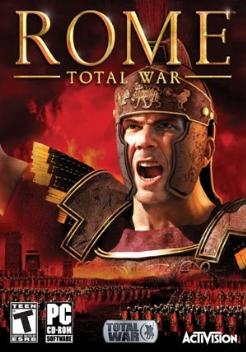
File:Romebox.jpg · Wikimedia Commons · See Wikimedia Commons
OverviewAI-generated
Rome: Total War is a strategy and simulation game developed by The Creative Assembly. Released on September 22, 2004, the title is part of the Total War franchise and utilizes the TW Engine 2. It supports both single player and multiplayer modes. The game is available on PC, iOS, Android, and macOS platforms.
The software has a version identifier of 1.5. Its gameplay combines real-time strategy, turn-based strategy, tactical, and simulator elements. Critical reception included a Metacritic score of 88 and an IGDB critic rating of 91 based on three reviews. User ratings vary across platforms, with an IGDB score of 83 from 316 users and a RAWG rating of 4.41. Additional review scores recorded include 8/10 and 16/20.
Synthesized by Vinony from 22 facts across 4 sources: Wikidata, RAWG, IGDB, Vinony graph. Generated from structured data (not the Wikipedia text) and checked against those facts — may still contain errors.
Game data
Metacritic 88- Released
- 2004-09-22
- User rating
- 4.41 / 5
- Genres
- Strategy, Simulation
- Platforms
- PC, iOS, Android, macOS
via RAWG
Game details · IGDB
Set during the rule of the late Roman Republic and the early Roman Empire, Rome: Total War is a real-time tactics and turn-based strategy game that takes place across Europe, North Africa and the Near East. The player assumes control of one of three Roman families with eight other factions playable outside the main campaign. The main goal of the campaign is to become emperor of Rome by conquering fifty provinces with the support of the people before capturing Rome itself although a short campaign is also available wherein success depends on besting other factions in a race to seize control …
- Released
- 2004
- Genres
- Real Time Strategy (RTS), Simulator, Strategy, Turn-based strategy (TBS), Tactical
- Platforms
- Android, PC (Microsoft Windows), iOS, Mac
- Game modes
- Single player, Multiplayer
- Engine
- TW Engine 2
- Franchise
- Total War
- Developer
- The Creative Assembly
- Publisher
- Sega, Activision, Feral Interactive
Key facts
- Developer
- Creative Assembly
- Publishers
- Activision (original) Sega (current) Feral Interactive (Mac OS X, iOS, Android)
- Director
- Michael M. Simpson
- Designers
- Robert T. Smith Mike Brunton Michael de Plater Jamie Ferguson Chris Gambold
- Composer
- Jeff van Dyck
- Series
- Total War
- Platforms
- Windows Mac OS X iOS Android Linux macOS
- Release
- September 22, 2004 Windows , NA : September 22, 2004 AU : September 24, 2004 EU : October 1, 2004 Mac OS X , WW : February 5, 2010 iOS , WW : November 10, 2016 Android , WW : December 19, 2018 Linux , macOS WW : April 29, 2021
- Genres
- Real-time tactics , turn-based strategy
- Modes
- Single-player , multiplayer
via Wikipedia infobox
Wikidata facts
- Instance of
- video game
- Country of origin
- United Kingdom
- Publisher
- Feral Interactive
- Series
- Total War
- Followed by
- Total War: Rome II
- Follows
- Medieval: Total War
- Composer
- Jeff van Dyck
- Narrative location
- Greece
- Developer
- Feral Interactive
- Platform
- Android
- Game mode
- multiplayer video game
- Official website
- www.feralinteractive.com/en/mac-games/rometw
Show 9 more facts
- publication date
- 2004-09-22
- software version identifier
- 1.5
- input device
- touchscreen
- review score
- 88/100
- distributed by
- App Store
- set in period
- ancient history
- operating system
- iOS
- language of work or name
- English language
- compatible with
- Steam Deck
Sources (7)
via Wikidata · CC0
~19 min read
Encyclopedic overview
Rome: Total War is a strategy video game developed by The Creative Assembly and originally published by Activision; its publishing rights have since passed to Sega. The game was released for Microsoft Windows in 2004. The Mac OS X version was released on February 5, 2010, by Feral Interactive, who also released the iPad version on November 10, 2016, the iPhone version on August 23, 2018, and the Android version on December 19, 2018. The game is the third title in The Creative Assembly's Total War series, following Shogun: Total War, and Medieval: Total War.
The game's main campaign takes place from 270 BC to 14 AD, showcasing the rise and final centuries of the Republican period and the early decades of the imperial period of Ancient Rome. Gameplay is split between real-time tactical battles and a turn-based strategic campaign. Within the campaign, players manage the economy, government, diplomacy, and military of their faction and attempt to accomplish a series of objectives on a map that encompasses most of Europe, North Africa, and the Near East. On the battlefield, the player controls groups of soldiers and uses them to engage in combat with enemy forces.
Excerpted from Wikipedia’s “Rome: Total War” article, available under the CC BY-SA 4.0 licence.