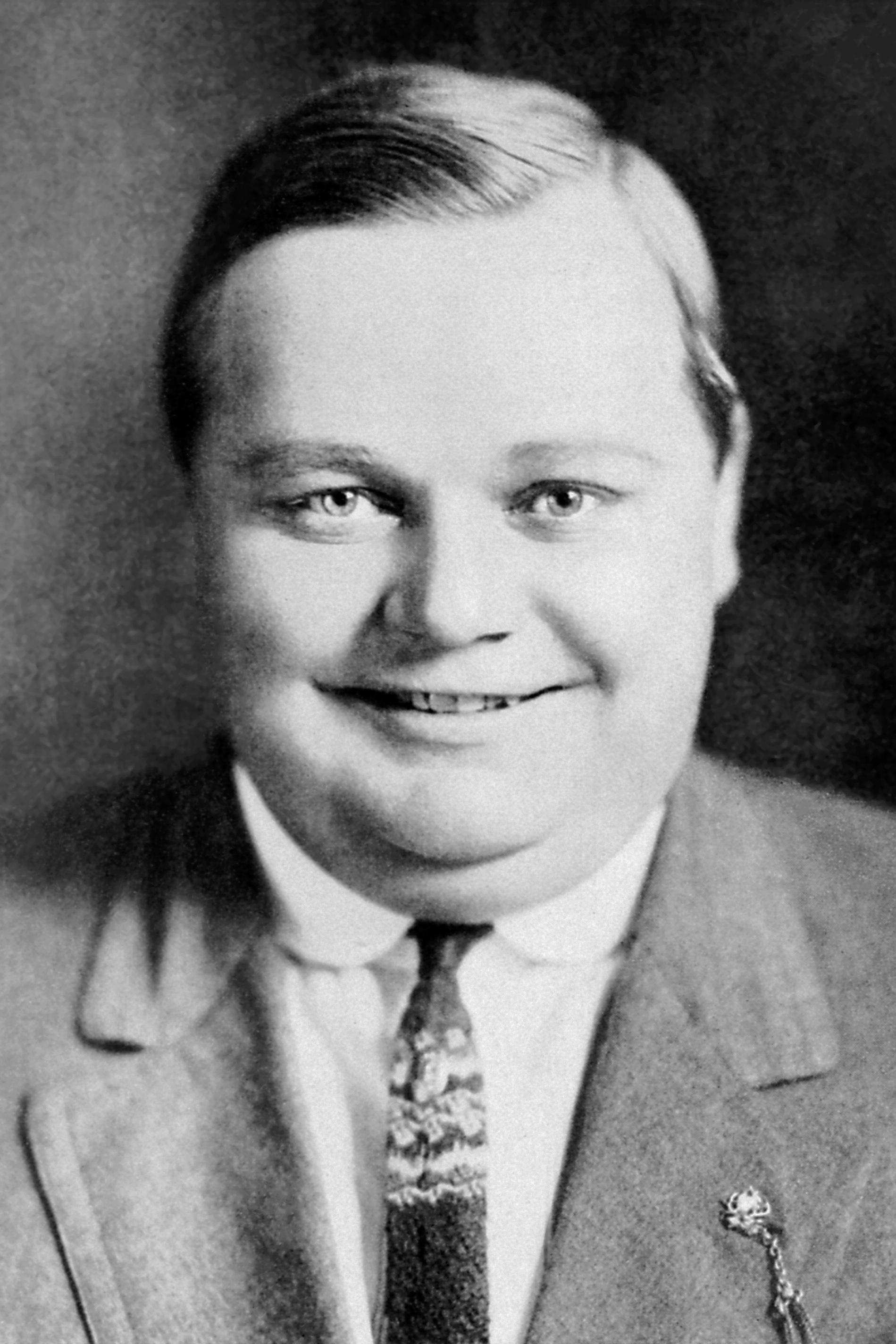
Profile via TMDB · Courtesy of TMDB
Roscoe Arbuckle
Sign in to saveAlso known as Fatty Arbuckle, Roscoe Conkling Arbuckle, William Goodrich, Fatty
American actor, director and comedian
OverviewAI-generated
Roscoe Arbuckle, also known as Fatty, was an American actor, comedian, film director, and screenwriter. Born in Smith Center, Kansas, in 1887, he began his work period in 1904. He spoke and wrote in English. His notable works include the film *The Vitaphone comedy collection*.
Arbuckle died in New York City on June 29, 1933, from a myocardial infarction. His manner of death was natural causes. He was cremated. He was married to Minta Durfee, Addie McPhail, and Doris Deane. He received a star on the Hollywood Walk of Fame.
Synthesized by Vinony from 32 facts across 4 sources: Wikidata, Open Library, TMDb, Vinony collections. Generated from structured data (not the Wikipedia text) and checked against those facts — may still contain errors.
Person · Open Library
- Born
- 1887
- Died
- 1933
- Works
- 1
Top works
- The Vitaphone comedy collection
via Open Library + Wikidata
Film & TV
Smith Center, Kansas, USA
Roscoe Arbuckle (March 24, 1887 - June 29, 1933), widely known to audiences as “Fatty” Arbuckle, was an American silent film actor, comedian, director, and screenwriter. He started at the Selig Polyscope Company and eventually moved to Keystone Studios, where he worked with Mabel Normand and Harold Lloyd as well as with his nephew, Al St. John. He also mentored Charlie Chaplin, Monty Banks and…
Known for
- A Brave Engineer: Buster Keaton's Last Ride — Self (Archival)2026
- Wonder Dogs! Canine Stars of the Silent Era (1898-1928)2025
- Charlie Chaplin, The Genius of Liberty — archive footage2020
- Buster Keaton: The Shorts Collection 1917-19232016
- Looking for Mabel Normand — Self (archive footage)2015
- The Parrott Chase — (archive footage) (uncredited)2009
- Why Be Good?: Sexuality & Censorship in Early Cinema — Self (archive footage)2007
- Buster Keaton: From Silents to Shorts — (archive footage)2006
- So Funny It Hurt: Buster Keaton & MGM — Self (archive footage)2004
- Chaplin Today: The Gold Rush — Self (archive footage)2003
via TMDB
Key facts
- Born
- Roscoe Conkling Arbuckle , ( 1887-03-24 ) March 24, 1887, Smith Center, Kansas , U.S.
- Died
- June 29, 1933 (1933-06-29) (aged 46), New York City, U.S.
- Other names
- Fatty Arbuckle, William Goodrich
- Occupations
- Actor director screenwriter comedian
- Years active
- 1904–1933
- Spouses
- Minta Durfee ( married</span>"}]]}'>m. 1908 ; divorced</span>"}]]}'>div. 1925 ) Doris Deane ( married</span>"}]]}'>m. 1925 ; divorced</span>"}]]}'>div. 1929 ) Addie McPhail ( married</span>"}]]}'>m. 1932 )
- Relatives
- Andrew Arbuckle (cousin), Maclyn Arbuckle (cousin), Al St. John (nephew)
via Wikipedia infobox
Wikidata facts
- Instance of
- human
- Gender
- male
- Citizenship
- United States
- Place of birth
- Smith Center
- Place of death
- New York City
- Spouse
- Doris Deane
- Languages spoken
- English language
- Native language
- English language
- Image
- Fatty Arbuckle art - The Film Daily, Jul-Dec 1932 (page 820 crop).jpg
- Residence
- New York City
Show 14 more facts
- name in native language
- Roscoe Arbuckle
- Commons category
- Roscoe Arbuckle
- cause of death
- myocardial infarction
- date of birth
- 1887-03-24
- date of death
- 1933-06-29
- manner of death
- natural causes
- Commons gallery
- Roscoe Arbuckle
- filmography
- Roscoe Arbuckle filmography
- place of burial
- cremation
- start of work period
- 1904-00-00
- writing language
- English language
- end of work period
- 1933-00-00
- Commons Creator page
- Roscoe Arbuckle
- nickname
- Fatty
Sources (8)
via Wikidata · CC0
~37 min read
Encyclopedic overview
Fatty Arbuckle ad from The Film Daily, 1932 Roscoe Conkling "Fatty" Arbuckle (/ˈɑːrbʌkəl/; March 24, 1887 – June 29, 1933) was an American silent film actor, director, and screenwriter. He started at the Selig Polyscope Company and eventually moved to Keystone Studios, where he worked with Mabel Normand and Harold Lloyd as well as with his nephew, Al St. John. He also mentored Charlie Chaplin, Monty Banks and Bob Hope, and brought vaudeville star Buster Keaton into the movie business. Arbuckle was one of the most popular silent stars of the 1910s and one of the highest-paid actors in Hollywood, signing a contract in 1920 with Paramount Pictures for $1 million a year (equivalent to $16.1 million in 2025).
Arbuckle was the defendant in three widely publicized trials between November 1921 and April 1922 for the rape and manslaughter of Virginia Rappe. Rappe had fallen ill at a party hosted by Arbuckle at San Francisco's St. Francis Hotel in September 1921, and died four days later. A friend of Rappe accused Arbuckle of raping and accidentally killing her. The first two trials resulted in hung juries, but the third trial acquitted Arbuckle. The third jury took the unusual step of giving Arbuckle a written statement of apology for his treatment by the justice system.
Excerpted from Wikipedia’s “Roscoe Arbuckle” article, available under the CC BY-SA 4.0 licence.