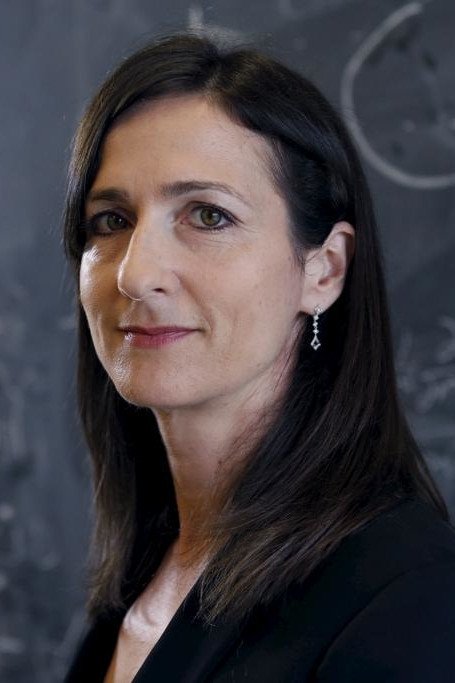
Profile via TMDB · Courtesy of TMDB
Film & TV
Toronto, Canada
Known for
- Life from Space — Herself2021
- Living Universe — Self2018
- Alien Earths — Herself2009
via TMDB
Key facts
- Born
- ( 1971-07-21 ) July 21, 1971 (age 54) , Toronto , Ontario, Canada
- Citizenship
- Canada–United States
- Education
- University of Toronto (BSc), Harvard University (PhD)
- Known for
- Search for extrasolar planets
- Spouse
- Charles Darrow
- Awards
- Order of Canada (2020, Officer), MacArthur Fellowship (2013), Helen B. Warner Prize (2007), Harvard Book Prize in Astronomy (2004), NSERC Science and Technology Fellowship (1990–1994)
- Fields
- Astronomy , Planetary science
- Institutions
- Massachusetts Institute of Technology (2007–), Carnegie Institution of Washington (2002–2006) , Institute for Advanced Study (1999–2002)
- Thesis
- Extrasolar giant planets under strong stellar irradiation (1999)
- Doctoral advisor
- Dimitar Sasselov
- Website
- seagerexoplanets .mit .edu
via Wikipedia infobox
Wikidata facts
- Instance of
- human
- Given name
- Sara
- Gender
- female
- Citizenship
- Canada
- Place of birth
- Toronto
- Occupation
- biologist
- Educated at
- Harvard University
- Languages spoken
- English language
- Doctoral advisor
- Dimitar Sasselov
- Field of work
- astrobiology
- Official website
- www.saraseager.com
- Image
- Sara Seager CHF-Cain-Conference-May-2016-059.jpg
- Residence
- Concord
Show 4 more facts
- date of birth
- 1971-07-21
- Commons category
- Sara Seager
- social media followers
- 15202
Sources (9)
via Wikidata · CC0
~12 min read
Encyclopedic overview
Sara Seager OC (born July 21, 1971) is a Canadian-American astronomer and planetary scientist. She is a professor at the Massachusetts Institute of Technology, though she will return to her alma mater the University of Toronto to join the Canadian Institute for Theoretical Astrophysics (CITA) as North Star Distinguished Professor, starting September 1, 2026. Seager is known for her work on extrasolar planets and their atmospheres. She is the author of two textbooks on these topics, and has been recognized for her research by Popular Science, Discover Magazine, Nature, and TIME Magazine. Seager was awarded a MacArthur Fellowship in 2013 citing her theoretical work on detecting chemical signatures on exoplanet atmospheres and developing low-cost space observatories to observe planetary transits.
Background
Excerpted from Wikipedia’s “Sara Seager” article, available under the CC BY-SA 4.0 licence.