Encyclopedia of Life · EOL (see source)
Scolecomorphidae
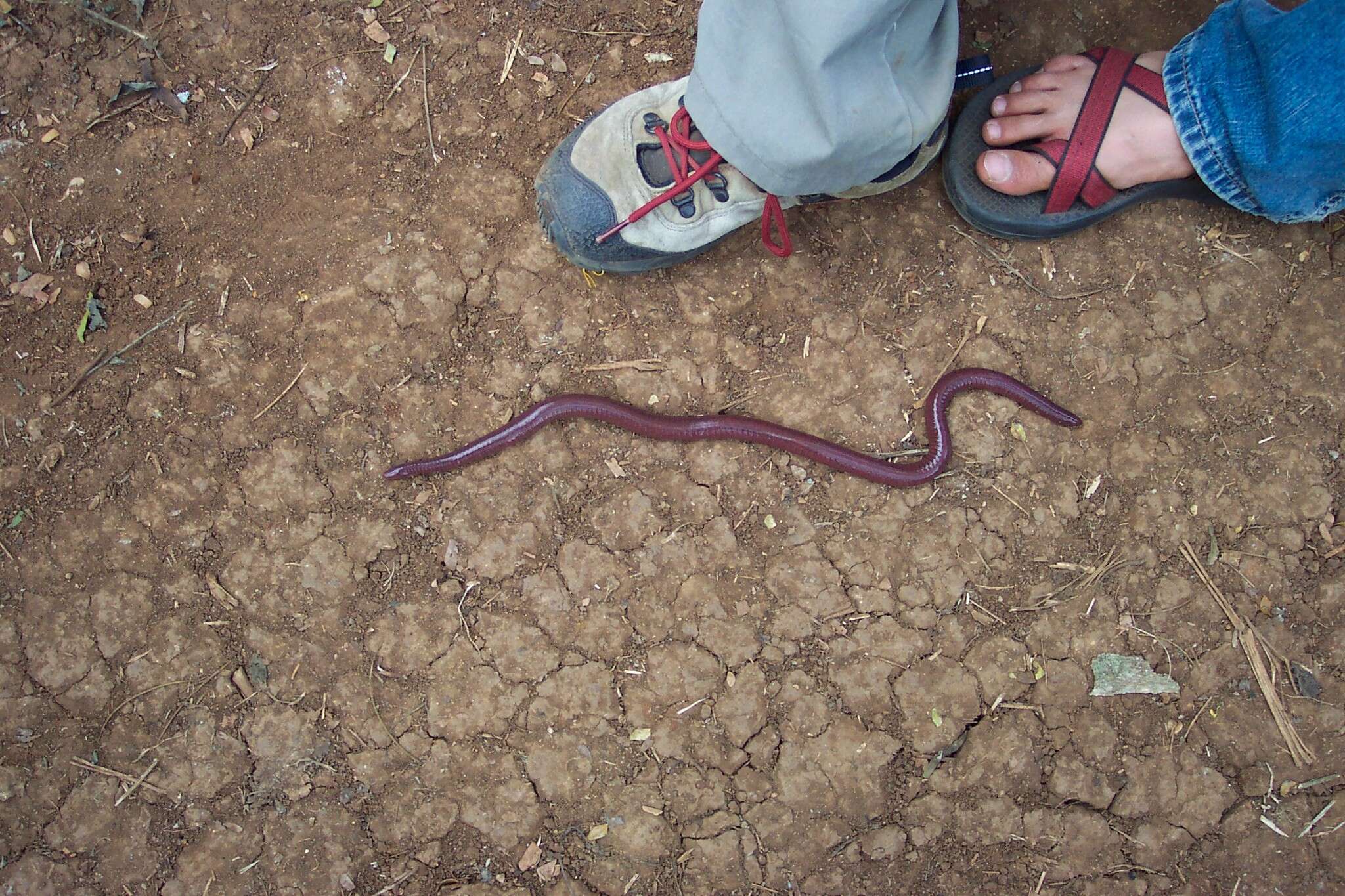
Sign in to saveThe Scolecomorphidae (from , 'wormlike' and , 'form') are a family of caecilians also known as tropical caecilians, buried-eyed caecilians, or African caecilians. They are found in Cameroon in West Africa, and Malawi and Tanzania in East Africa. Caecilians are legless amphibians which superficially resemble worms or snakes.
Species
FAMILY
- KingdomAnimalia
- PhylumChordata
- ClassAmphibia
- OrderGymnophiona
- FamilyScolecomorphidae
Короткоголо́вые червя́ги или африка́нские червя́ги (лат. Scolecomorphidae) — семейство земноводных из отряда безногих (Gymnophiona). Включает 6 видов. Характеризуются широкой диастемой между предсошниковыми и нёбными зубами. Глаза покрыты костью.
via GBIF
Wikidata facts
Show 4 more facts
- Commons category
- Scolecomorphus
- taxon rank
- family
- taxon name
- Scolecomorphidae
- topic's main category
- Category:Scolecomorphidae
Sources (1)
via Wikidata · CC0
~3 min read
Encyclopedic overview
3 sectionsContents
- Morphology
- Taxonomy
- References
The Scolecomorphidae (from , 'wormlike' and , 'form') are a family of caecilians also known as tropical caecilians, buried-eyed caecilians, or African caecilians. They are found in Cameroon in West Africa, and Malawi and Tanzania in East Africa. Caecilians are legless amphibians which superficially resemble worms or snakes.
Scolecomorphids have only vestigial eyes, which are attached to the base of a pair of tentacles underneath the snout. Unlike other caecilians, they have only primary annuli; these are grooves running incompletely around the body, giving the animal a segmented appearance. All other caecilians have a complex pattern of grooves, with secondary or tertiary annuli present. Also uniquely amongst tetrapods, the scolecomorphids lack a stapes bone in the middle ear.
Excerpted from Wikipedia’s “Scolecomorphidae” article, available under the CC BY-SA 4.0 licence.