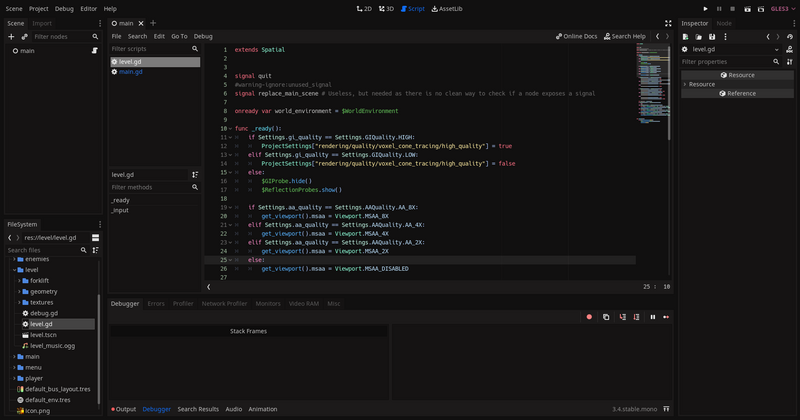
File:Gdscript3.4.png · Wikimedia Commons · See Wikimedia Commons
手稿語言
Sign in to saveAlso known as script language, extension language, embedded language, embeddable language, glue language
電腦編程語言
A scripting language is a type of programming language designed to automate tasks or control events that happen while a program is running. It matters because it allows people to extend or customize how software behaves without needing to rebuild the entire program from scratch.
AI-generated from the Wikipedia summary — may contain errors.
Wikidata facts
- Subclass of
- programming language
Show 5 more facts
- opposite of
- systems programming language
- Stack Exchange tag
- stackoverflow.com/tags/scripting-language
- topic's main category
- Category:Scripting languages
- Commons category
- Scripting languages
- short name
- сценарный
via Wikidata · CC0
Article · 中文
脚本语言(英語:Scripting language)是为了缩短传统的「编写、编译、链接、运行」(edit-compile-link-run)过程而创建的计算机编程语言。早期的脚本语言经常被称为批处理语言或。一个脚本通常是解释运行而非编译。脚本語言通常都有簡單、易學、易用的特性,目的就是希望能讓程式設計師快速完成程式的編寫工作。而巨集語言則可視為脚本語言的分支,兩者也有實質上的相同之處。 虽然许多脚本语言都超越了计算机简单任务自动化的领域,比如JavaScript、Perl、PHP、Python、Ruby和Tcl,成熟到可以编写精巧的程序,但仍然还是被称为脚本。几乎所有计算机系统的各个层次都有一种脚本语言。包括操作系统层,如计算机游戏,网络应用程序,字处理文档,网络软件等。在许多方面,高级编程语言和脚本语言之间互相交叉,二者之间没有明确的界限。
Abstract from DBpedia / Wikipedia · CC BY-SA