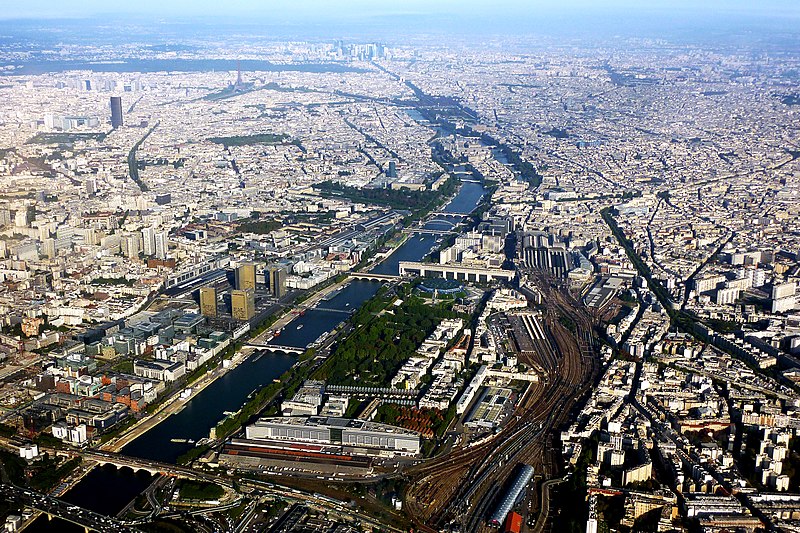
File:Bercy,_Paris_01.jpg · Wikimedia Commons · See Wikimedia Commons
Seine
Sign in to saveAlso known as river Seine, Seine River
The Seine ( ; ) is a river in northern France. Its drainage basin is in the Paris Basin (a geological relative lowland) covering most of northern France. It rises at Source-Seine, northwest of Dijon in northeastern France in the Langres plateau, flowing through Paris and into the English Channel at Le Havre (and Honfleur on the left bank). It is navigable by ocean-going vessels as far as Rouen, from the sea. Over 60 percent of its length, as far as Burgundy, is negotiable by large barges and most tour boats, and nearly its whole length is available for recreational boating; excursion boats off
OverviewAI-generated
The Seine is a river with a length of 776.67 and a watershed area of 78650. Its discharge is 500. The subject is categorized under "Seine River" in the Commons category and has a gallery titled "Seine".
An article titled "Inside the Billion-Dollar Effort to Clean Up the Seine" describes a plan by Paris to make the river swimmable again in time for the 2024 Olympics. This topic is referenced by 2,891 other encyclopedia articles.
Synthesized by Vinony from 12 facts across 3 sources: Wikidata, Firecrawl, Vinony graph. Generated from structured data (not the Wikipedia text) and checked against those facts — may still contain errors.
Key facts
- River.name
- Seine
- River.image
- Bercy, Paris 01.jpg
- River.image_size
- 250
- River.image_caption
- The Seine in Paris
- River.map
- Bassin Seine.png
- River.map_size
- 250
- River.map_caption
- Topographic map of the Seine basin
- River.pushpin_map_size
- 250
- River.subdivision_type1
- Country
- River.subdivision_name1
- France
- River.discharge1_location
- Le Havre
- River.source1_location
- Source-Seine
- River.mouth
- English Channel ()
- River.mouth_location
- Le Havre/Honfleur
- River.river_system
- Seine basin
- River.tributaries_left
- Yonne, Loing, Eure, Risle
- River.tributaries_right
- Ource, Aube, Marne, Oise, Epte
- River.mapframe
- yes
via Wikipedia infobox
Described at
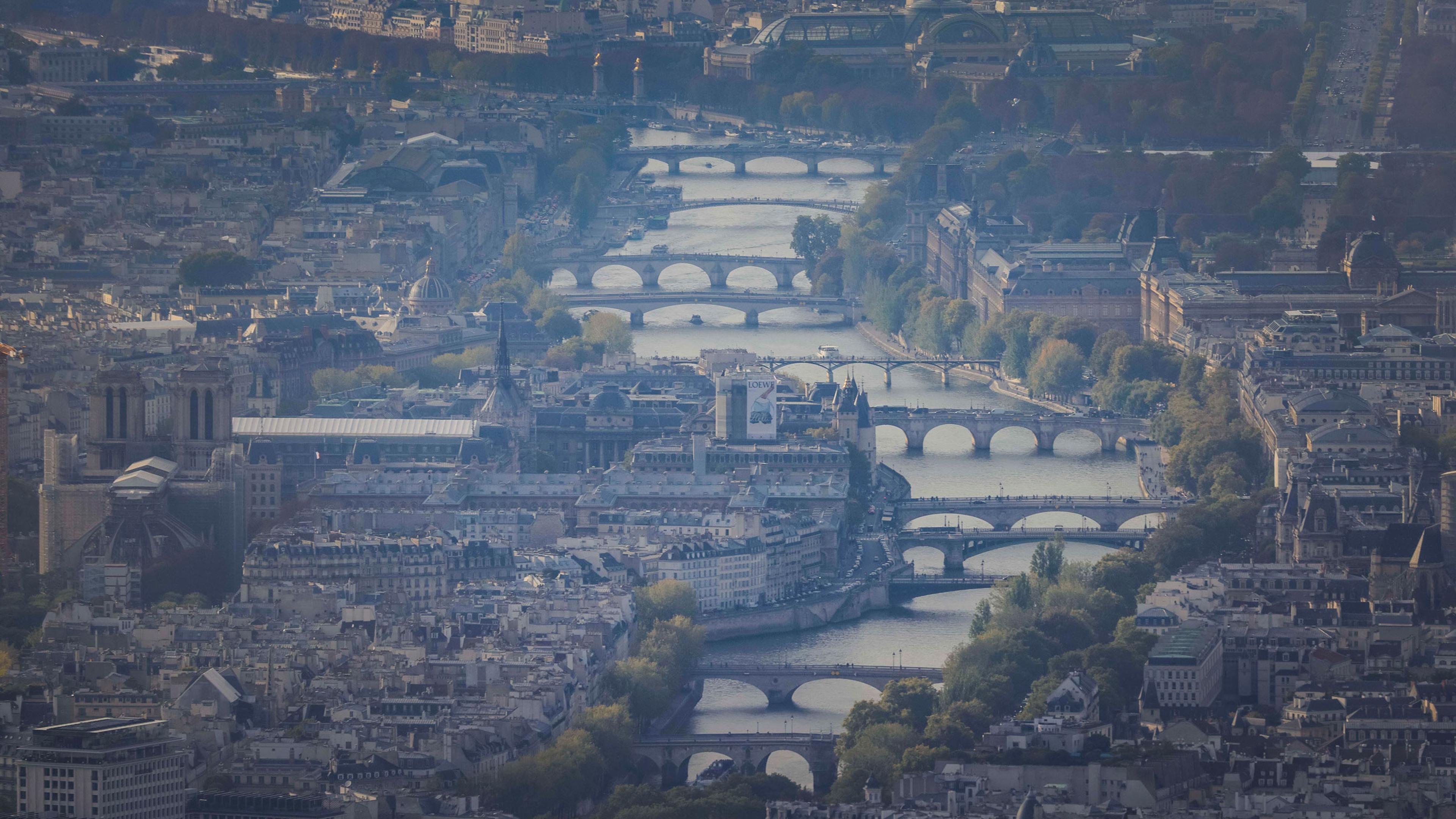
Inside the Billion-Dollar Effort to Clean Up the Seine
Paris has a plan to make the Seine swimmable again—just in time for the 2024 Olympics.
time.com →Custom Feed: See the stories that matter most to you. Smart Alerts: Get notified about major news as it happens. Custom Feed: See the stories that matter most to you. Smart Alerts: Get notified about major news as it happens. Aerial view of the Seine river winding through a smoggy Paris, France. Aerial view of the Seine river winding through a smoggy Paris, France.Laurent Grandguillot—REA/Redux Custom Feed: See the stories that matter most to you. Smart Alerts: Get notified about major news as it happens. For residents of southeast Paris, the construction vehicles rumbling back and forth behind the Austerlitz train station are a loud annoyance that has gone on for too many months. But for city officials—and countless Parisians, they hope—history is unfolding behind the cordoned-off area. After years of thwarted ambitions and vague promises, the French capital, officials say, is set to accomplish a rare feat for a major metropolis: making its once heavily polluted waterway fit for swimming again. In February, city officials invited TIME to pass through the metal turnstile behind the cordon, and see up close the cleanup of the Seine—one of the world’s most iconic rivers—which stretches for 481 miles , from Burgundy through Paris out to the sea in Normandy. Indeed, the river has defined Paris since it was founded by ancient Romans. It was along these riverbanks that merchants in the Middle Ages first set up, creating a settlement that finally dwarfed once bigger rivals like Lyon and Marseilles. And it was on the banks, too, that the world’s finest architects constructed the Eiffel Tower, the Notre Dame Cathedral , and the Louvre and Orsay museums—stunning monuments that draw millions of visitors each year to sail down the narrow stretch of the Seine that cuts through the dead center of Paris. Officials are therefore keenly aware of the deeper significance of cleaning up the Seine, seeing it as a way of connecting the modern city to its oldest history. “The Seine,” says Emmanuel Grégoire, deputy mayor of Paris in charge of urban planning, “is the reason why Paris was born.” In recent years, smaller European cities, like Zurich, Munich, and Copenhagen, have opened urban swimming. There are also efforts under way to make swimming possible in Berlin’s Spree River and Amsterdam’s canals, with frequent meetings among cities to discuss what is required. Yet Grégoire is keen to point out that making the Seine swimmable could mean Paris becoming the world’s first giant urban area to have inner-city bathing. “It is a dream,” he says. A person sits by the Seine river near the Pont d'Iéna in Paris, France.Sasha Arutyunova Some believe the Seine’s cleanup will also spur similar projects elsewhere. “The Seine River is maybe the most romanticized river in history, in literature,” says Dan Angelescu, founder of Fluidion, a water-monitoring tech company based in Paris and Los Angeles, which has taken daily readings of pollution levels in both cities’ rivers since 2016. The Seine cleanup, he says, “obviously has a lot of emotional impact on people, and definitely acts as inspiration to others.” Los Angeles, which will host the 2028 Olympics, has sent water and sanitation officials to Paris to study the Seine cleanup. When asked which other major cities are watching how Paris is cleaning the Seine, Angelescu responds, “I think everybody.” The idea of cleaning up the Seine is hardly new. In 1990, then Paris mayor and later French President Jacques Chirac declared he would launch a major cleanup of the Seine, and swim in it “in three years.” The idea withered over the years, and Chirac died in 2019, his grand ambition unfulfilled. What makes this time different is the pressing Olympics deadline. When the current mayor of Paris, Anne Hidalgo , presented her winning bid for the 2024 Games back in 2016, she promised that the city, home to 11 million people in the greater urban area, would undergo a drastic environmental upgrade by 2024. Key
Excerpt from a page describing this subject · 18,785 chars · not written by Vinony
~17 min read
Encyclopedic overview
18 sectionsContents
- River sources
- Course
- Navigation
- Dredging
- Dams and flood control
- Flooding
- 2018 Paris flood
- Watershed
- Tributaries
- Water quality
- History
- At the Olympics
- 1900 and 1924 Summer Olympics
- 2024 Summer Olympics
- World Heritage Sites
- In art
- See also
- References
The Seine ( ; ) is a river in northern France. Its drainage basin is in the Paris Basin (a geological relative lowland) covering most of northern France. It rises at Source-Seine, northwest of Dijon in northeastern France in the Langres plateau, flowing through Paris and into the English Channel at Le Havre (and Honfleur on the left bank). It is navigable by ocean-going vessels as far as Rouen, from the sea. Over 60 percent of its length, as far as Burgundy, is negotiable by large barges and most tour boats, and nearly its whole length is available for recreational boating; excursion boats offer sightseeing tours of the river banks in the capital city, Paris.
thumb|View over the Seine in Paris, Pont des Invalides in the foreground, Eiffel tower in the background There are 37 bridges in Paris across the Seine (the most famous of which are the Pont Alexandre III and the Pont Neuf) and dozens more outside the city.
Excerpted from Wikipedia’s “Seine” article, available under the CC BY-SA 4.0 licence.
Gallery (26)
On the map
3 mapped locations
Available in 117 languages
- Español
- Français
- Deutsch
- 中文
- 日本語
- Русский
- Português
- Italiano
- العربية
- हिन्दी
- Afrikaans
- Albanian
- Albanian
- Amharic
- Aragonese
- Aramaic
- Armenian
- Asturian
Show 98 more
- azb
- Azerbaijani
- Bahasa Indonesia
- Balinese
- Bangla
- Basque
- be_x_old
- Belarusian
- Bosnian
- Breton
- Bulgarian
- Burmese
- Catalan
- Cebuano
- Central Kurdish
- Chechen
- Chuvash
- Croatian
- Czech
- Danish
- Egyptian Arabic
- Esperanto
- Estonian
- Fijian
- Filipino
- Finnish
- Galician
- Georgian
- Greek
- Hawaiian
- Hebrew
- Hungarian
- hyw
- Icelandic
- Ido
- Interlingua
- Interlingue
- Irish
- Javanese
- Kashubian
- Kazakh
- Kurdish
- Kyrgyz
- Latin
- Latvian
- Lithuanian
- Luxembourgish
- Macedonian
- Malagasy
- Malay
- Malayalam
- Marathi
- Mazanderani
- Mingrelian
- Mongolian
- Nederlands
- Nepali
- Northern Frisian
- Norwegian
- Norwegian Nynorsk
- nrm
- Occitan
- Old English
- Ossetic
- Piedmontese
- Polski
- Punjabi
- Romanian
- Rusyn
- Scots
- Serbian
- Serbian (Latin)
- Sicilian
- simple
- Slovak
- Slovenian
- Standard Moroccan Tamazight
- Svenska
- Swahili
- Tamil
- Tatar
- Tibetan
- Tiếng Việt
- Türkçe
- Ukrainian
- Urdu
- Uzbek
- Waray
- Welsh
- West Flemish
- Western Frisian
- Western Panjabi
- Wu Chinese
- zh_min_nan
- zh_yue
- فارسی
- ไทย
- 한국어
via Wikidata sitelinks · CC0