Official website (https://www.centralparknyc.org/attractions/seneca-village-site)
Seneca Village
Sign in to savehuman settlement in the United States of America
Weather now
7-day forecast
via Open-Meteo
Official website
Seneca Village Landscape | Central Park Conservancy
The site of Seneca Village was once home to the largest community of African-American property owners in pre-Civil War New York. The landscape in Central…
centralparknyc.org →Link to the official site · 21,522 chars · not written by Vinony
Described at
MAAP | Place Detail: Seneca Village
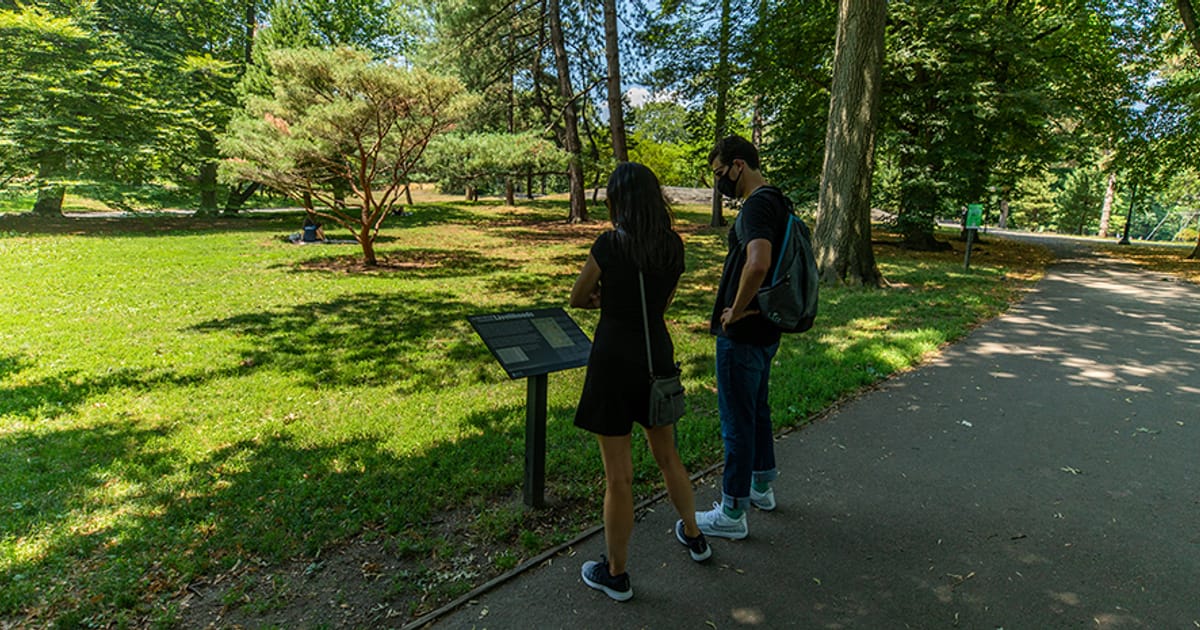
maap.columbia.edu →Choose Place Abolitionist Place Abyssinian Baptist Church African Burial Ground African Free School African Grove Theater African Society for Mutual Relief Audubon Ballroom Bedford-Stuyvesant Bethel AME Church of Amityville Black Brigades Booker T. Washington House Bridge Street AWME Church Catherine Ferguson Colored Orphan Asylum David Ruggles Home Downing's Oyster House Duke Ellington Eastville Community Ebbets Field Execution Grounds Five Points Fort Amsterdam Fraunces Tavern Frederick Douglass Freedom's Journal Freetown Gideon and the Great Dock Harlem Harlem Children's Zone Harlem Community Art Center Harlem Hellfighters Harriet Tubman Hofstra University Hughson's Tavern James McCune Smith Pharmacy John Street Church Joseph Lloyd Manor Lakeville Land of the Blacks Langston Hughes Latting's Hundred Lewis H. Latimer Louis Armstrong Manhattan Company Marcus Garvey Minton's Playhouse Mother AME Zion Church New York City Draft Riots 1863 Pierre Toussaint Ralph Ellison Rikers Island Rocky Point Samuel Ballton House Sandy Ground Schomburg Library Seneca Village Setauket Shiloh Presbyterian Church Slave Market Slave Revolt of 1712 Sojourner Truth St. Philip's Episcopalian Church Studio Museum in Harlem Tappan Brothers Theodore Wright House Tontine Coffeehouse Wall Street Weeksville West Indian Day Parade William Floyd Estate Public Historian Cynthia R. Copeland describes the diverse community of Seneca Village. This map (pictured) shows Seneca Village, a largely black community that thrived from 1825 until 1855, when the land was made part of Central Park by the city. Today, as you walk in Central Park near West Drive and 85th Street, you can see a plaque commemorating Seneca Village. As a community of free black property owners, Seneca Village was unique in its day. It was located in the hilly, rock-strewn woods between 82nd and 89th Streets and 7th and 8th Avenues. At that time it was a long walk to the crowded city. The village grew steadily from 1825, when Andrew Williams first bought three lots for $125. By 1832, about 25 more lots were sold to African Americans. And by the early 1850s, the village boasted three churches, a school, and a population of some 300 people. Over the years, German and Irish immigrants joined the community. This diverse community lived in peace, attending the All Angel’s Church together and sharing the services of one midwife. But as the city pushed north, the media began to paint a different picture of the little village, calling it a “shantytown” and calling the property owners “squatters” who were “wretched and debased.” Many people in the city, including Mayor Fernando Wood, wanted the land for a great new park. In 1855, the mayor used the power of eminent domain to claim the land. Then he sent the police to clear it. For two years the residents resisted the police as they petitioned the courts to save their homes, churches, and schools. In 1857, they were finally removed. As one newspaper put it, the raid upon Seneca Village would “not be forgotten…[as] many a brilliant and stirring fight was had during the campaign. But the supremacy of the law was upheld by the policeman’s bludgeons.” Cynthia Copeland on Seneca Village and the development of Central Park Public Historian Cynthia R. Copeland talks about the decision to build Central Park and the displacement of the residents of Seneca Village by eminent domain. Cynthia Copeland on the origin of Seneca Village Public Historian Cynthia R. Copeland describes enclaves of free African Americans and the unusual beginning of Seneca Village. Cynthia Copeland on the Seneca Village community Public Historian Cynthia R. Copeland describes the diverse community of Seneca Village. Kenneth Jackson discusses Seneca Village Columbia University Professor of History Kenneth Jackson discusses the emergence and demolition of Seneca Village. Current view of the Seneca Village site Today, as you walk in Central Park near West Drive and 85th Street, you can s
Excerpt from a page describing this subject · 8,715 chars · not written by Vinony
Wikidata facts
- Named after
- Rochester metropolitan area
- Country
- United States
- Located in
- Manhattan
- Population
- 225
- Elevation
- 28
- Location
- Central Park
- Official website
- www.centralparknyc.org/attractions/seneca-village-site
- Image
- Seneca Village from Map of Central Park by Viele 1856 (1697276).png
Show 5 more facts
- inception
- 1825-00-00
- dissolved, abolished or demolished date
- 1857-00-00
- cause of destruction
- Central Park
- Commons category
- Seneca Village
Sources (2)
via Wikidata · CC0
Gallery (2)
On the map
2 mapped locations