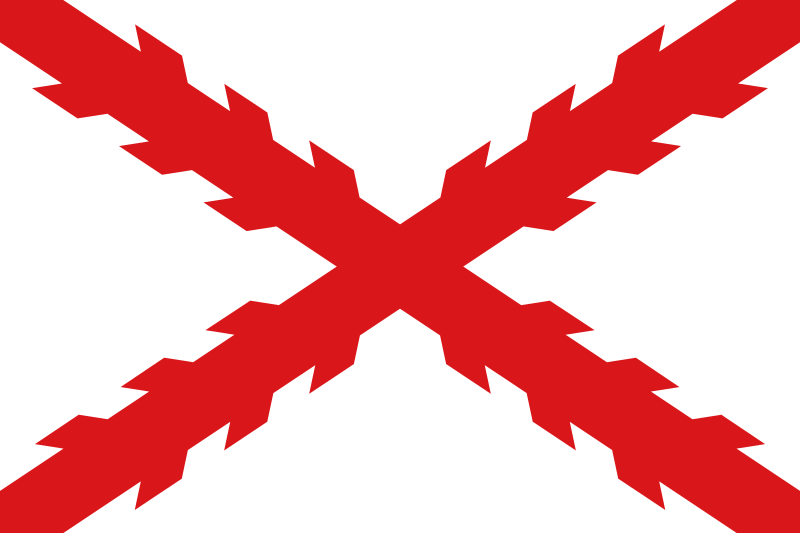
File:Flag_of_Cross_of_Burgundy.svg · Wikimedia Commons · See Wikimedia Commons
Seventeen Provinces
Sign in to saveUnion of states in the Netherlands in the 15th and 16th centuries
Key facts
- Status
- Personal union of Imperial fiefs
- Capital
- Brussels
- Common languages
- Dutch Low Saxon Frisian Walloon Luxembourgish French
- Religion
- Catholic (official) Protestant
- Government
- Monarchy
- Historical era
- Early modern period
- Iso 3166 code
- NL
via Wikipedia infobox
Wikidata facts
- Country
- Holy Roman Empire
- Located in
- Burgundian Circle
- Continent
- Europe
- Capital
- Brussels
- Form of government
- monarchy
Show 7 more facts
- Commons category
- Seventeen Provinces
- topic's main category
- Category:Seventeen Provinces
- inception
- 1482-01-01
- dissolved, abolished or demolished date
- 1581-00-00
- located in the present-day administrative territorial entity
- Luxembourg
- replaced by
- Spanish Netherlands
- native label
- Zeventien Provinciën
Sources (2)
via Wikidata · CC0
~10 min read
Encyclopedic overview
The Seventeen Provinces (Dutch: Zeventien Provinciën, French: Dix-Sept Provinces, Spanish: Diecisiete Provincias) was a term used to describe the Spanish Netherlands before the Dutch Revolt, when they were at their largest extent. They covered most of the Low Countries, i.e., what is now the Netherlands, Belgium, Luxembourg, and most of the French departments of Nord (French Flanders and French Hainaut) and Pas-de-Calais (Artois).
The Seventeen Provinces arose from the Burgundian Netherlands, a number of fiefs held by the House of Valois-Burgundy and inherited by the House of Habsburg in 1482, and held by Habsburg Spain from 1556. Starting in 1512, the Provinces formed the major part of the Burgundian Circle. In 1581, many of these provinces seceded to form what would eventually become the Dutch Republic.
Excerpted from Wikipedia’s “Seventeen Provinces” article, available under the CC BY-SA 4.0 licence.