Encyclopedia of Life · EOL (see source)
Species
Endangeredsicklefin lemon shark
Species
- PhylumChordata
- ClassElasmobranchii
- OrderCarcharhiniformes
- FamilyCarcharhinidae
犁鰭檸檬鯊(学名:Negaprion acutidens),又名尖齒檸檬鯊、犁鰭檸檬鮫,简称檸檬鯊(但和美洲同属的柠檬鲨非同种),为真鯊科檸檬鯊屬下的一个种。主要分布在印度洋-太平洋海域深度低於 92米(302英尺) 的亚热带及热带浅海地区,棲息地包括紅樹林、河口與珊瑚礁等。體長可達 3.8米(12英尺),為胎生,在 10~11 個月的妊娠期後每兩年可產下最多 13 頭幼鯊。 犁鰭檸檬鯊是以硬骨魚為食的掠食者,不常進行長距離的移動,時常可以在固定地點重複目擊到同一個體。這項習性加上牠們的低繁殖率導致犁鰭檸檬鯊在印度與東南亞海域的個體數量大減甚至是局部地區滅絕。人類會為了肉、魚翅和鯊魚魚肝油(英语:shark liver oil)捕捉牠們。
via IUCN
Wikidata facts
Show 8 more facts
- taxon rank
- species
- IUCN conservation status
- Endangered status
- Commons category
- Negaprion acutidens
- taxon name
- Negaprion acutidens
- taxon common name
- 犁鰭檸檬鮫
- short name
- N. acutidens
- taxon range
- New Guinea
- external data available at URL
- www.gbif.org/dataset/abf8082d-c179-4cb2-acc4-3cdef16c4341
Sources (2)
via Wikidata · CC0
~12 min read
Encyclopedic overview
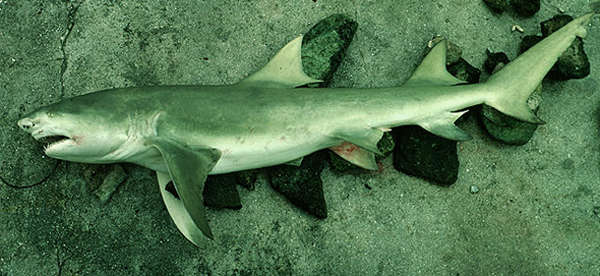
The sicklefin lemon shark (Negaprion acutidens) or sharptooth lemon shark is a species of requiem shark belonging to the family Carcharhinidae, widely distributed in the tropical waters of the Indo-Pacific. It is closely related to the better-known lemon shark (N. brevirostris) of the Americas; the two species are almost identical in appearance, both being stout-bodied sharks with broad heads, two dorsal fins of nearly equal size, and a plain yellow-tinged coloration. As its common name suggests, the sicklefin lemon shark differs from its American counterpart in having more falcate (sickle-shaped) fins. This large species grows up to 3.8 m (12 ft) long. It generally inhabits water less than 92 m (302 ft) deep in a variety of habitats, from mangrove estuaries to coral reefs.
A slow-moving predator feeding mainly on bony fishes, the sicklefin lemon shark seldom travels long distances and many individuals can be found year-round at certain locations. Like other members of its family, this species is viviparous, with females giving birth to no more than 13 pups every other year, following a gestation period of 10–11 months. Although they are potentially dangerous to humans and known to respond vigorously to any provocation, under normal circumstances, sicklefin lemon sharks are cautious and tend to retreat if approached. The IUCN has assessed this species as Endangered; its low reproductive productivity and rate of movement limits the capacity of depleted stocks to recover. Off India and Southeast Asia, this species has been severely depleted or extirpated by unregulated exploitation for its meat, fins, and liver oil.
Excerpted from Wikipedia’s “sicklefin lemon shark” article, available under the CC BY-SA 4.0 licence.