File:Software_Categories_expanded.svg · Wikimedia Commons · See Wikimedia Commons
software license
Sign in to savegoverns the use and/or redistribution of software
A software license is a legal agreement that sets rules for how you can use a piece of software and whether you're allowed to share it with others. It matters because it clarifies your rights and responsibilities, protecting both the software creator and the people who use it.
AI-generated from the Wikipedia summary — may contain errors.
Wikidata facts
Show 2 more facts
- Commons category
- Software licenses
- topic has template
- Template:Infobox software licence
via Wikidata · CC0
~22 min read
Encyclopedic overview
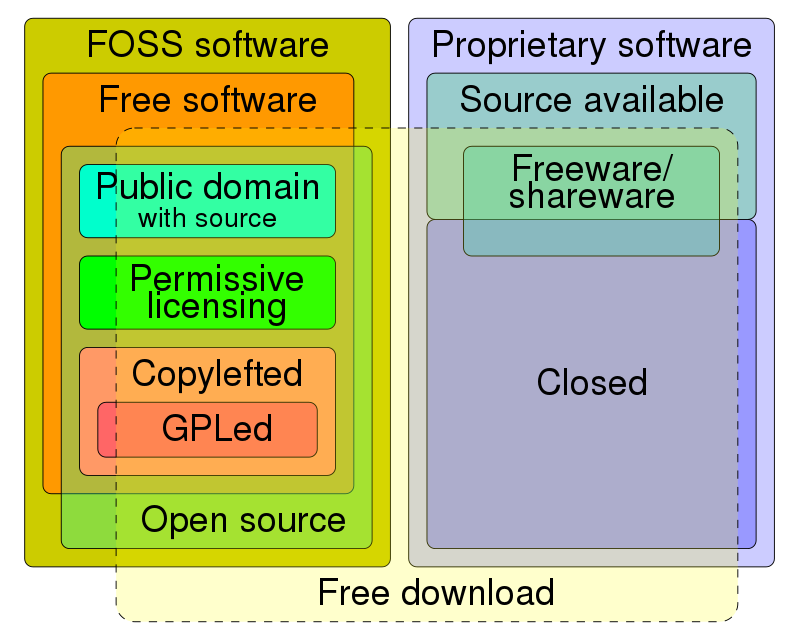
Diagram of software under various licenses according to the FSF and their The Free Software Definition: on the left side "free software", on the right side "proprietary software". On both sides, and therefore mostly orthogonal, "free download" (Freeware). A software license is a legal instrument governing the use or redistribution of software.
Since the 1970s, software copyright has been recognized in the United States. Despite the copyright being recognized, most companies prefer to sell licenses rather than copies of the software because it enables them to enforce stricter terms on redistribution. Very few purchasers read any part of the license, initially shrink-wrap contracts and now most commonly encountered as clickwrap or browsewrap. The enforceability of this kind of license is a matter of controversy and is limited in some jurisdictions. Service-level agreements are another type of software license where the vendor agrees to provide a level of service to the purchaser, often backed by financial penalties.
Excerpted from Wikipedia’s “software license” article, available under the CC BY-SA 4.0 licence.