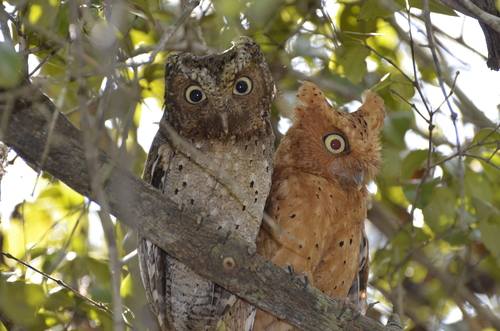
(c) John Mwacharo, some rights reserved (CC BY-SA) · cc-by-sa
Species
EndangeredSokoke Scops-Owl
species
Vogels De sokokedwergooruil (Otus ireneae) is een vogelsoort uit de familie van de strigidae (uilen). Het is een bedreigde vogelsoort in oostelijk Kenia en het noorden van Tanzania die in 1966 geldig werd beschreven door Sidney Dillon Ripley.[2] Kenmerken Deze ooruil is 15 cm lang. Het is een zeer kleine soort dwergooruil met nauwelijks zichtbare oorpluimen. De uil is roodbruin of grijs (er zijn twee kleurvariëteiten) en met afwisselend lichte en donkere spikkels, streepjes in het verenkleed. De meeste uilen met een vergelijkbaar verenkleed in het gebied zijn groter.[1] Verspreiding en leefgebied Deze uil werd in oostelijk Kenia, in en rond het Nationaal park Arabuko Sokoke ontdekt en bleek later ook voor te komen in Tanzania in de oostelijke, lager gelegen gebieden aan de voet van het Usambaragebergte. Het leefgebied bestaat uit natuurlijk bos of secundair bos. De hoogste dichtheden worden gevonden in natuurlijk bos met bomen uit het geslacht Cynometra (boomsoorten uit de vlinderbloemenfamilie).[1] Status De sokokedwergooruil heeft een beperkt verspreidingsgebied en daardoor is de kans op uitsterven aanwezig. De grootte van de populatie werd in 2016 door BirdLife International ge
via IUCN
Wikidata facts
Show 6 more facts
- taxon rank
- species
- IUCN conservation status
- Endangered status
- Commons category
- Otus ireneae
- taxon name
- Otus ireneae
- taxon common name
- mocho-d'orelhas-de-sokoke
- taxon range
- Africa
via Wikidata · CC0
~4 min read
Encyclopedic overview
The Sokoke scops owl (Otus ireneae), also Morden's scops owl or Morden's owlet, is a highly localized species of scops owl found in lowland forests of Kenya and Tanzania. The greatest population of this species of owl is in the Cynometra-Manilkara forest, which is less than one-third of the Sokoke Forest. It is also found in the Afzelia-Cynometra forest.
The Sokoke scops owl can grow to 6+1⁄2 in (17 cm), and can weigh up to 2 oz (57 g), and is the smallest of the scops owls. It is insectivorous and coloring ranges from grey to rufous.
Excerpted from Wikipedia’s “Sokoke Scops Owl” article, available under the CC BY-SA 4.0 licence.