AI overview
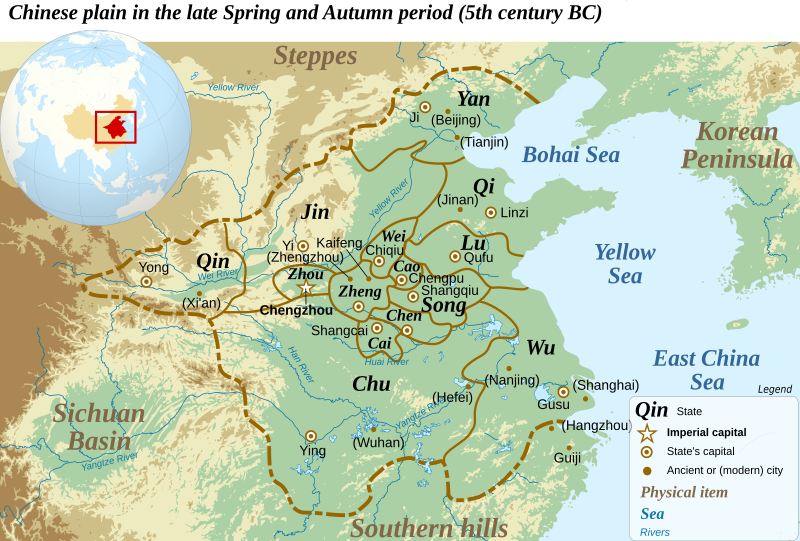
The Spring and Autumn period was an era in Chinese history lasting roughly from 770 to 476 BCE, characterized by the decline of central authority as regional lords gained power and independence. This period is significant because it saw major developments in Chinese thought, warfare, and society that would shape the country's future, and it marked the transition toward the subsequent Warring States period.
AI-generated from the Wikipedia summary — may contain errors.
Wikidata facts
- Image
- China 2b.jpg
Show 4 more facts
- Commons category
- Spring and Autumn Period
- Commons gallery
- 春秋時代
- start time
- 0771-00-00
- end time
- 0476-00-00
Article · 中文
春秋时期(公元前770年-公元前476年/公元前403年),简称春秋, 是东周的前半段时期。周室在平王東遷後實力大減, 没有足夠的威望號令諸侯,因而形成春秋初期之局面。春秋时代周天子的势力减弱,群雄纷争,春秋霸政形成,齐桓公、宋襄公、晋文公、秦穆公、楚庄王相继称霸,史称“春秋五霸”。當時齊桓公提出「尊周室,攘夷狄,禁篡弑,抑兼併」(尊王攘夷)的思想,因此周天子於表面上仍獲尊重。春秋时期因孔子修订的《春秋》而得名。这部书记载了从鲁隐公元年(前722年)到鲁哀公十四年(前481年)的历史,共二百四十二年。后史学家为了方便起见,一般从周平王元年(前770年)东周立国,平王東遷到雒邑起,到周敬王四十三年(前477年)或四十四年(前476年)为止(也有学者认为应到《左傳》記載之終(前468年)、三家灭智(前453年)或三家分晋(前403年)),称为“春秋时期”。春秋时期之后是战国时期。据史书记载,春秋二百四十二年间,有三十六名君主被臣下或敌国所殺,五十二个諸侯國被灭。。有大小战事四百八十多次,诸侯的朝聘和盟会四百五十餘次。鲁国朝王三次,聘周四次。
Abstract from DBpedia / Wikipedia · CC BY-SA