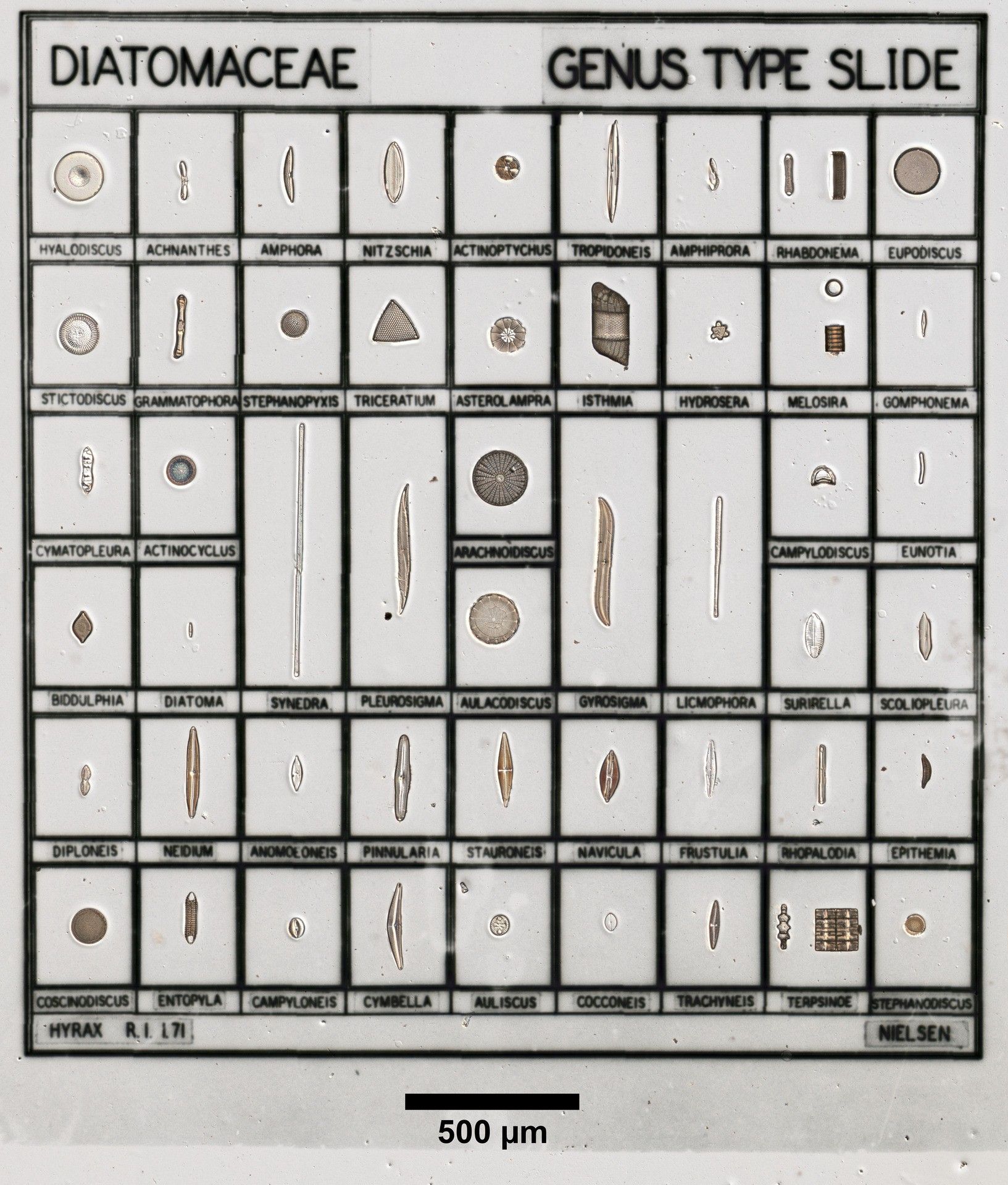
Specimen image via iDigBio · CC0
Stephanodiscus
Sign in to saveStephanodiscus is a genus of centric diatoms, belong to the family Stephanodiscaceae. These diatoms are single-celled, photosynthetic algae characterized by circular, radially symmetrical silica cell walls (frustules).
Species
GENUS
- KingdomChromista
- PhylumOchrophyta
- ClassBacillariophyceae
- OrderThalassiosirales
- FamilyStephanodiscaceae
via GBIF
Museum specimens
- Specimen records
- 49
- With media
- 2
- Family
- Stephanodiscaceae
- Collections
- FC-UNAM, INECOL, US, NHMUK
- Recorded in
- Mexico, United States, Germany, Sri Lanka
Wikidata facts
- Instance of
- taxon
- Parent taxon
- Stephanodiscaceae
- Image
- Stephanodiscus neoastraea.jpeg
Show 4 more facts
- taxon name
- Stephanodiscus
- taxon rank
- genus
- Commons category
- Stephanodiscus
Sources (2)
via Wikidata · CC0
~1 min read
Encyclopedic overview
1 sectionsContents
- References
Stephanodiscus is a genus of centric diatoms, belong to the family Stephanodiscaceae. These diatoms are single-celled, photosynthetic algae characterized by circular, radially symmetrical silica cell walls (frustules).
They are commonly found in freshwater environments, such as lakes and rivers, and are ecologically significant as primary producers in aquatic food webs. Stephanodiscus species, like Stephanodiscus hantzschii or Stephanodiscus niagarae, are often used as indicators of environmental conditions, including water quality and nutrient levels, due to their sensitivity to changes in their habitat. Their intricate frustule patterns are also studied in paleolimnology to reconstruct past environmental conditions.
Excerpted from Wikipedia’s “Stephanodiscus” article, available under the CC BY-SA 4.0 licence.