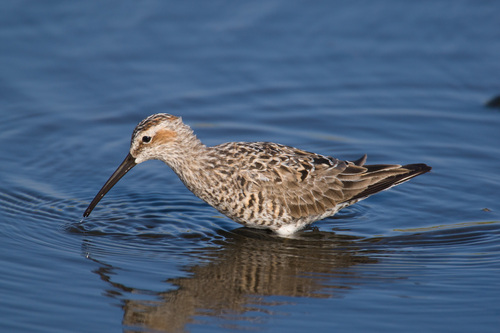
File:Stilt_Sandpiper_(29065008787).jpg · Wikimedia Commons · See Wikimedia Commons
Stilt Sandpiper
Sign in to saveAlso known as Calidris himantopus, Micropalama himantopus, Micropalama himatopus
species of bird
OverviewAI-generated
The Stilt Sandpiper (*Calidris himantopus*) is a species of bird in the family Scolopacidae, order Charadriiformes, and class Aves. Its scientific name was established by Bonaparte in 1826. The species is diurnal and inhabits marine environments. It has a wingspan of 42.5 and an egg incubation period of 20 days.
The taxon range includes Brazil, South America, and Parauapebas. The IUCN Red List assessed the species as Near Threatened in 2024. Other common names for this bird include Bindenstrandläufer, Correlimos zancolín, and Ходулочниковый песочник.
Synthesized by Vinony from 29 facts across 5 sources: Wikidata, iNaturalist, WoRMS, IUCN Red List, Vinony graph. Generated from structured data (not the Wikipedia text) and checked against those facts — may still contain errors.
Species
Near Threatenedstilt sandpiper
Species
- PhylumChordata
- ClassAves
- OrderCharadriiformes
- FamilyScolopacidae
via IUCN
Wikidata facts
Show 10 more facts
- taxon rank
- species
- IUCN conservation status
- Near Threatened
- Commons category
- Calidris himantopus
- taxon name
- Calidris himantopus
- wingspan
- 42.5
- egg incubation period
- 20
- taxon common name
- 高跷鹬
- taxon range
- South America
- diel cycle
- diurnality
- short name
- C. himantopus
via Wikidata · CC0
~3 min read
Encyclopedic overview
The stilt sandpiper (Calidris himantopus) is a small shorebird. The scientific name is from Ancient Greek; the genus name kalidris or skalidris is a term used by Aristotle for a gray-colored waterside bird. The specific himantopus means "strap foot" or "thong foot", and also refers to the stilt.
Taxonomy
Excerpted from Wikipedia’s “Stilt Sandpiper” article, available under the CC BY-SA 4.0 licence.