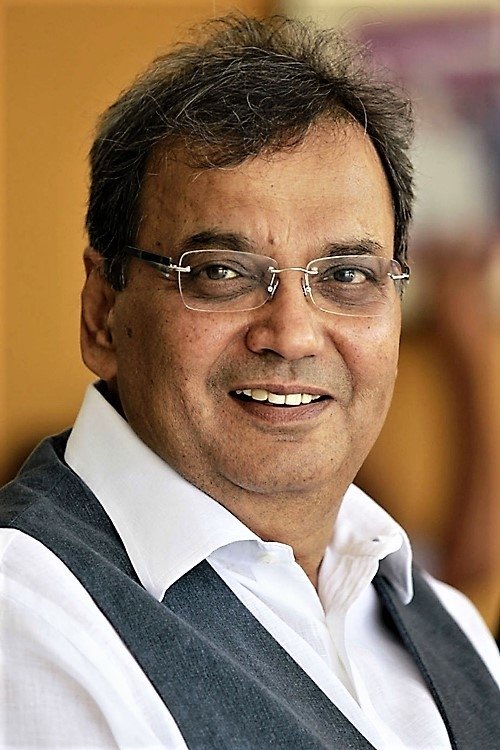
Profile via TMDB · Courtesy of TMDB
Film & TV
Subhash Ghai (born 24 January 1945) is an Indian film director, producer and screenwriter, known for his works predominantly in Hindi cinema. His most notable works include Kalicharan (1976), Karz (1980), Hero (1983), Meri Jung (1985), Karma (1986), Ram Lakhan (1989), Saudagar (1991), Khalnayak (1993), Pardes (1997), Taal (1999), and Black & White (2008). In 1982, He started Mukta Arts Private…
Known for
- The Roshans — Self2025
- Kaagaz Ki Kashti — Himself2016
- Jai Ho — self2014
- Comedy Nights with Kapil — Self2013
- Om Shanti Om — Subhash Ghai2007
- Indian Idol — Self2004
- Gumrah1976
- Naatak1975
- Do Bachche Dus Haath1972
- Aradhana — Prakash1969
via TMDB
Listeners · Last.fm
- Listeners
- 84
- Total plays
- 606
<a href="https://www.last.fm/music/Subhash+Ghai">Read more on Last.fm</a>
Wikidata facts
- Instance of
- human
- Gender
- male
- Citizenship
- India
- Place of birth
- Nagpur
- Occupation
- director
- Educated at
- Film and Television Institute of India
- Official website
- muktaarts.com
- Image
- Subhash Ghai 2007 - still 27030.jpg
Show 5 more facts
- name in native language
- Subhash Ghai
- Commons category
- Subhash Ghai
- date of birth
- 1945-01-24
- related category
- Category:Films directed by Subhash Ghai
- start of work period
- 1970-00-00
Sources (3)
via Wikidata · CC0
Article · Español
Subhash Ghai (24 de enero de 1945 en Nagpur) es un director de cine, productor, guionista y actor nacido en La India, reconocido por su colaboración al cine de Bollywood. Sus obras más notables incluyen Kalicharan (1976), Karz (1980), Hero (1983), Meri Jung (1985), Karma (1986), Ram Lakhan (1989), Saudagar (1991), Khalnayak (1993), Pardes (1997), Taal (1999) y Black & White (2008). En 1982 fundó la compañía Mukta Arts. En 2006 recibió el Premio Nacional de Cine por producir la película Iqbal. En 2015 recibió el Premio IIFA por sus constantes contribuciones al cine de La India.
Abstract from DBpedia / Wikipedia · CC BY-SA