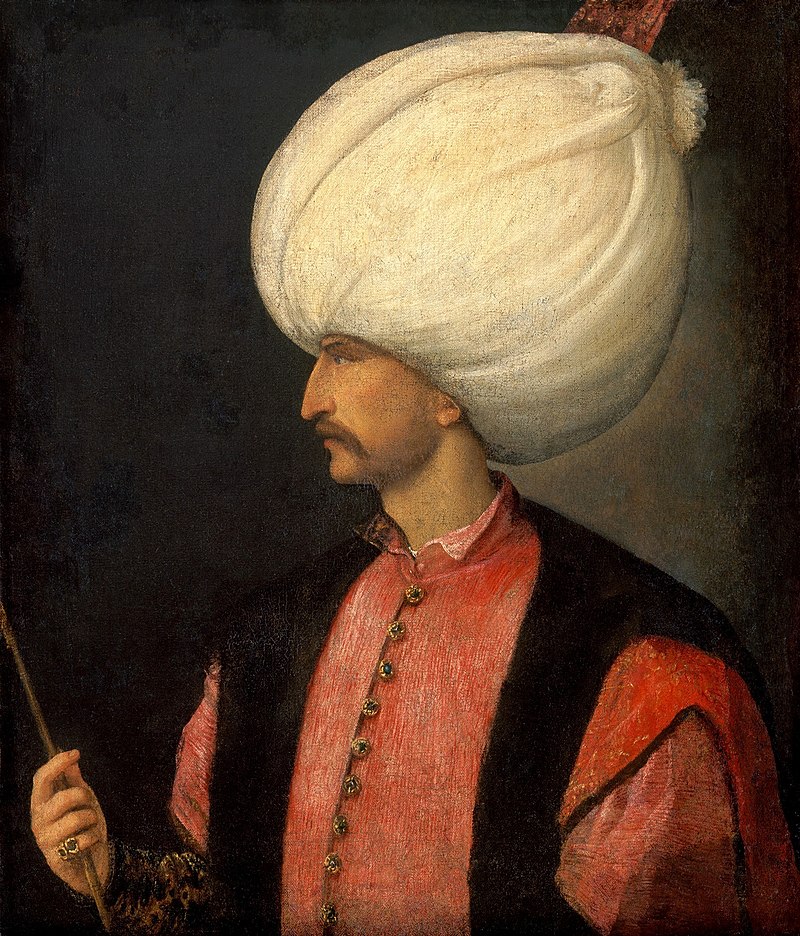
File:EmperorSuleiman.jpg · Wikimedia Commons · See Wikimedia Commons
sultán
Sign in to savetítulo islámico equivalente a rey o monarca
A sultan is a ruler or monarch, most commonly associated with Islamic empires and kingdoms throughout history. The title matters because sultans wielded significant political and often religious authority over large territories and populations, shaping major civilizations like the Ottoman Empire.
AI-generated from the Wikipedia summary — may contain errors.
Wikidata facts
Show 8 more facts
- Commons category
- Sultans
- described by source
- Encyclopædia Britannica 11th edition
- topic's main category
- Category:Sultans
- female form of label
- سلطانة
- male form of label
- سلطان
- P8168
- Akim
- on focus list of Wikimedia project
- Wikipedia:Vital articles/Level/4
- organization directed by the office or position
- sultanate
Sources (1)
via Wikidata · CC0
Article · Español
El término sultán (del árabe سلطان sulṭān, y este de سلطة sulṭa: «poder») es un título utilizado en algunos países islámicos equivalente al de rey o monarca (aunque no se traduce, ya que un rey propiamente dicho es en árabe un malik ملك). Literalmente vendría a significar «el que ejerce el poder», y en su origen fue un modo de referirse a los jefes militares, generalmente turcos, que ejercían el poder de facto en territorios nominalmente gobernados por el califa. Más adelante se convirtió en título real (del soberano). El término es distinto de rey (ملك malik), a pesar de que ambos se refieren a un gobernante soberano. El uso de "sultán" se limita a los países musulmanes, donde el título tiene un significado religioso, en contraste con el más secular rey, que se utiliza tanto en países musulmanes como no musulmanes. En los últimos años, el término sultán ha sido sustituido gradualmente por el de rey por los gobernantes hereditarios contemporáneos que desean enfatizar su autoridad secular bajo el imperio de la ley. Un ejemplo notable es Marruecos, cuyo monarca cambió su título de sultán a rey en 1957.
Abstract from DBpedia / Wikipedia · CC BY-SA
Gallery (38)
Available in 102 languages
- Español
- Français
- Deutsch
- 中文
- 日本語
- Русский
- Português
- Italiano
- العربية
- हिन्दी
- Albanian
- Albanian
- Aragonese
- Armenian
- Asturian
- azb
- Azerbaijani
- Bahasa Indonesia
Show 83 more
- Bangla
- Banjar
- Bashkir
- Basque
- be_x_old
- Belarusian
- Bikol
- Bosnian
- Breton
- Bulgarian
- Catalan
- Cebuano
- Central Kurdish
- Chuvash
- Croatian
- Czech
- Danish
- Egyptian Arabic
- Esperanto
- Estonian
- Filipino
- Finnish
- Galician
- Georgian
- Greek
- Hebrew
- Hungarian
- Icelandic
- Ido
- Iloko
- Irish
- Javanese
- Kannada
- Kazakh
- Kurdish
- Latin
- Latvian
- Limburgish
- Lithuanian
- Macedonian
- Malagasy
- Malay
- Malayalam
- Mingrelian
- Mongolian
- Nederlands
- Northern Frisian
- Norwegian
- Norwegian Nynorsk
- Occitan
- Pashto
- Polski
- Punjabi
- Romanian
- Serbian
- Serbian (Latin)
- Sicilian
- simple
- Sindhi
- Slovak
- Slovenian
- Svenska
- Swahili
- Tajik
- Tamil
- Tiếng Việt
- Türkçe
- Turkmen
- Ukrainian
- Urdu
- Uzbek
- Welsh
- Western Frisian
- Western Panjabi
- Wu Chinese
- Yiddish
- Zaza
- zh_classical
- zh_min_nan
- zh_yue
- فارسی
- ไทย
- 한국어
via Wikidata sitelinks · CC0