
Taforalt Cave
Sign in to saveAlso known as Taforalt, Taforalt Caves
Taforalt, or Grotte des Pigeons, is a cave in the province of Berkane, Aït Iznasen region, Morocco, possibly the oldest cemetery in North Africa. It contained at least 34 Iberomaurusian adolescent and adult human skeletons, as well as younger ones, from the Upper Palaeolithic between 15,100 and 14,000 calendar years ago. There is archaeological evidence for Iberomaurusian occupation at the site between 23,200 and 12,600 calendar years ago, as well as evidence for Aterian occupation as old as 85,000 years.
Key facts
- Ancient site.name
- Taforalt
- Ancient site.alternate_name
- Grotte des Pigeons
- Ancient site.image
- Taforalt.jpg
- Ancient site.alt
- Taforalt
- Ancient site.caption
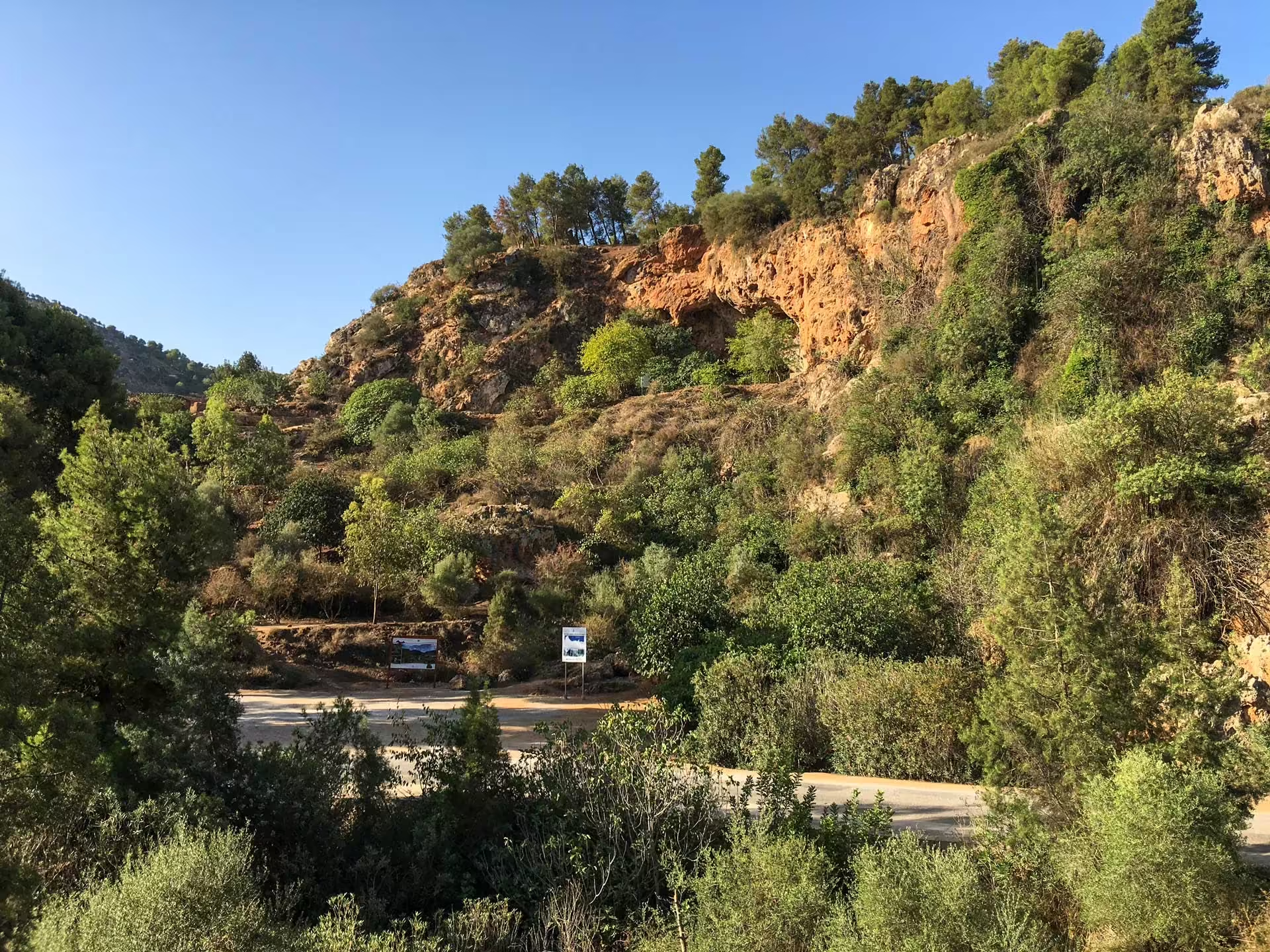
- The cave in September 2017
- Ancient site.image_size
- 240
- Ancient site.map_type
- Morocco
- Ancient site.map_alt
- Taforalt
- Ancient site.map_caption
- location in Morocco
- Ancient site.map_size
- 240
- Ancient site.relief
- yes
- Ancient site.location
- near Taforalt village, Iznasen mountains
- Ancient site.region
- Morocco
- Ancient site.epochs
- Middle Paleolithic, Epipalaeolithic
- Ancient site.cultures
- pre-Mousterian, Aterian, Iberomaurusian
- Ancient site.excavations
- 1944–1947, 1950–1955, 1969-1977, 2003-2018, 2022
- Ancient site.archaeologists
- Ruhlmann, Roche, Bouzouggar, Barton, Humphrey
- Ancient site.public_access
- No
via Wikipedia infobox
Described at
Taforalt, alebo holubia jaskyňa - Maroko - PlaceMania
Taforalt je paleolitická jaskyňa s jedným z najstarších pohrebísk v severnej Afrike.
placemania.sk →Od jej objavenia v roku 1908 prebieha na lokalite séria vykopávok a výskumov, ktoré archeológom poskytli nové pohľady na život v pravekej severnej Afrike. Zakladateľ projektu PlaceMania.sk a zodpovedá za jeho obsah, technické fungovanie a dlhodobý rozvoj. Cestovné zápisky na webe vychádzajú z vlastnej skúsenosti z ciest; faktografické záznamy o miestach vznikajú kombináciou verejných zdrojov, automatizovaného spracovania dát a redakčného overovania. Zameriava sa na netradičné lokality, ich historický a geografický kontext a menej známe súvislosti. Things to do near Taforalt, alebo holubia jaskyňa, Pigeon Cave, Taforalt Cave, مغارة تافوغالت، مغارة الحمام, Grotte des Pigeons, Cuevas de Taforalt, Gruta de Taforalt, Jaskinia Taforalt, Turistická atrakcia, Berkane, Berkane Province, Oriental, Morocco, المغرب, Maroko, MA. Find tours, guided tours, local activities, attractions, tickets, excursions, sightseeing, day trips and travel experiences nearby. Coordinates: 34.8142113, -2.4041441. Cintorín Sidi Ben Achir: viacero prepojených pohrebísk na atlantickom pobreží mesta Salé. Táto reštaurácia sa nachádza v múroch opevnenia z 18. storočia, ktoré kedysi bránilo starú mestskú štvrť. Trinásť drevených trámov vyčnievajúcich z tejto historickej budovy bolo kedysi súčasťou hydraulických hodín. V marockej Zagore stojí tabuľa, ktorá pôsobí ako obyčajná turistická atrakcia. V skutočnosti však označuje jeden z najpôsobivejších smerov starého… Pozrite si ďalšie zaujímave miesta vo svete, ktoré stoja za naplánovanie ďalšej cesty. Jaskyňa Fa-Hien Lena na Srí Lanke je významné archeologické nálezisko s pozostatkami ľudského osídlenia starými približne 37 000 rokov. Do tohto obrovského podzemného jaskynného komplexu sa dá dostať iba cez malý otvor v hornej časti. Ísť navštíviť svojho príbuzného či predka na tomto cintoríne, musíš byť v dobrej fyzickej kondícii a mať veľmi dobrú orientáciu. Historická stavba, v ktorej boli kedysi chované holuby, ktoré farmári používali na hnojenie poľnohospodárskej pôdy. Chcete vidieť ďalšie úchvatné miesta ako Taforalt, alebo holubia jaskyňa? Nájdeš ich u nás na mape. Objav s nami ďalšie úžasné miesta na zemi.
Excerpt from a page describing this subject · 15,587 chars · not written by Vinony
Wikidata facts
- Instance of
- archaeological site
- Country
- Morocco
- Located in
- Oujda
- Image
- مغارة تافوغالت.jpg
Show 4 more facts
- Commons category
- Taforalt
- heritage designation
- Tentative World Heritage Site
- publication date
- 2021-07-06
Sources (1)
via Wikidata · CC0
~24 min read
Encyclopedic overview
19 sectionsContents
- Site description
- Geography
- Culture
- Excavation history
- Stratigraphy
- Dating
- Archaeological finds
- Artefacts
- Faunal remains
- Floral remains
- Human remains
- Occupation site utility
- World Heritage status
- Ancient DNA
- European and Levantine admixtures (c.5500 BC)
- See also
- Sources
- References
- External links
Taforalt, or Grotte des Pigeons, is a cave in the province of Berkane, Aït Iznasen region, Morocco, possibly the oldest cemetery in North Africa. It contained at least 34 Iberomaurusian adolescent and adult human skeletons, as well as younger ones, from the Upper Palaeolithic between 15,100 and 14,000 calendar years ago. There is archaeological evidence for Iberomaurusian occupation at the site between 23,200 and 12,600 calendar years ago, as well as evidence for Aterian occupation as old as 85,000 years.
==Site description== La Grotte des Pigeons is a cave in eastern Morocco near the village of Taforalt. Human occupation and natural processes in the cave have produced a thick sequence of archaeological layers dating between at least 85,000 and 10,000 years ago. These occupation layers include pre-Mousterian, Aterian, and Iberomaurusian lithic industries, plus an unusual non-Levallois industry between the Aterian and the Iberomaurusian dating to c. 24,500 cal BP. These industries date from the Middle Stone Age and the Later Stone Age. Excavations of the Iberomaurusian layers dating from 15,100 to 14,000 years ago have recovered dozens of burials with some showing evidence of postmortem processing. Some burials suggest potential ritualistic practices, as evidenced by the inclusion of animal remains such as horns, mandibles, a hoof, and a tooth, alongside plant macro-remains like Ephedra, acorns (Quercus), and pine nuts (Pinus pinaster). Ephedra, known for its extensive use in traditional medicine, may have held significant importance in the burial rituals, potentially serving both symbolic and practical purposes during these activities. The deep and highly stratified cave floor has yielded hearths, lithics, and shell beads, among a variety of artefacts of varying ages. The dryness of the cave has contributed to the notable level of preservation found among the remains and artefacts.
Excerpted from Wikipedia’s “Taforalt Cave” article, available under the CC BY-SA 4.0 licence.
Gallery (4)
On the map
2 mapped locations