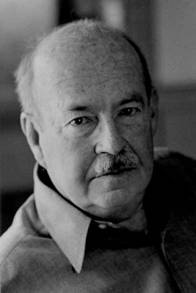
File:Talcott_Parsons_(photo).jpg · Wikimedia Commons · See Wikimedia Commons
Talcott Parsons
Sign in to saveAmerican sociologist (1902 – 1979)
Talcott Parsons was an American sociologist who lived from 1902 to 1979 and became one of the most influential sociological theorists of the twentieth century. His work on how societies function and maintain order shaped the field of sociology and continues to be studied and debated by scholars today.
AI-generated from the Wikipedia summary — may contain errors.
Wikidata facts
- Instance of
- human
- Family name
- Parsons
- Gender
- male
- Citizenship
- United States
- Place of birth
- Colorado Springs
- Place of death
- Munich
- Child
- Charles Parsons
- Occupation
- biologist
- Educated at
- Heidelberg University
- Employer
- Harvard University
- Political party
- Democratic Party (United States)
- Languages spoken
- German
- Native language
- English language
- Academic degree
- doctorate
- Student of
- Bronisław Malinowski
- Doctoral student
- Albert K. Cohen
- Field of work
- history
- Image
- TalcottParsons.jpg
Show 10 more facts
- date of birth
- 1902-12-13
- date of death
- 1979-05-08
- member of
- American Philosophical Society
- Commons gallery
- Talcott Parsons
- student
- Jeffrey C. Alexander
- writing language
- English language
- Commons category
- Talcott Parsons
- interested in
- sociology
- name in native language
- Talcott Parsons
- on focus list of Wikimedia project
- Wikipedia:Vital articles/Level/4
via Wikidata · CC0
~40 min read
Encyclopedic overview
Talcott Parsons (December 13, 1902 – May 8, 1979) was an American sociologist of the classical tradition, best known for his social action theory and structural functionalism. Parsons is considered one of the most influential figures in sociology in the 20th century. After earning a PhD in economics, he served on the faculty at Harvard University from 1927 to 1973. In 1930, he was among the first professors in its new sociology department. Later, he was instrumental in the establishment of the Department of Social Relations at Harvard.
Based on empirical data, Parsons' social action theory was the first broad, systematic, and generalizable theory of social systems developed in the United States and Europe. Some of Parsons' largest contributions to sociology in the English-speaking world were his translations of Max Weber's work and his analyses of works by Weber, Émile Durkheim, and Vilfredo Pareto. Their work heavily influenced Parsons' view and was the foundation for his social action theory. Parsons viewed voluntaristic action through the lens of the cultural values and social structures that constrain choices and ultimately determine all social actions, as opposed to actions that are determined based on internal psychological processes. Although Parsons is generally considered a structural functionalist, towards the end of his career, in 1975, he published an article that stated that "functional" and "structural functionalist" were inappropriate ways to describe the character of his theory.
Excerpted from Wikipedia’s “Talcott Parsons” article, available under the CC BY-SA 4.0 licence.