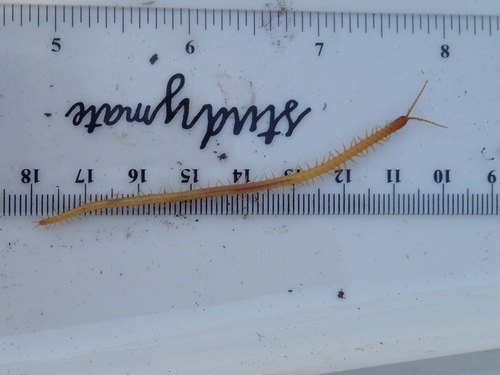
(c) Clare Hawkins, some rights reserved (CC BY-NC), uploaded by Clare Hawkins · cc-by-nc
Tasmanophilus
Sign in to saveTasmanophilus is a genus of centipedes in the family Zelanophilidae. This genus was described by American biologist Ralph Vary Chamberlin in 1920. Centipedes in this genus are found in Australia and New Zealand. This genus contains only two species.
Species
GENUS
- KingdomAnimalia
- PhylumArthropoda
- ClassChilopoda
- OrderGeophilomorpha
- FamilyGeophilidae
via GBIF
Museum specimens
- Specimen records
- 414
- Family
- Geophilidae
- Collections
- USNM, QVMAG, AM
- Recorded in
- New Zealand, Australia
Wikidata facts
- Instance of
- taxon
- Parent taxon
- Geophilidae
Show 2 more facts
- taxon name
- Tasmanophilus
- taxon rank
- genus
Sources (1)
via Wikidata · CC0
~1 min read
Encyclopedic overview
3 sectionsContents
- Description
- Species
- References
Tasmanophilus is a genus of centipedes in the family Zelanophilidae. This genus was described by American biologist Ralph Vary Chamberlin in 1920. Centipedes in this genus are found in Australia and New Zealand. This genus contains only two species.
==Description== Centipedes in this genus feature short forcipules with denticles, a broad forcipular coxosternite, anterior trunk metasternites with an unusual medial depression and pores arranged into an anterior pair of groups and a posterior transverse band, and scattered coxal pores. The claws of the second maxillae have small filaments. The female gonopods are distinct and biarticulate. These centipedes range from about 2 cm to about 5 cm in length and have 39 to 69 pairs of legs.
Excerpted from Wikipedia’s “Tasmanophilus” article, available under the CC BY-SA 4.0 licence.