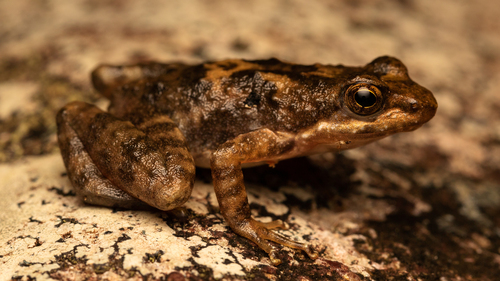
(c) James Bennett, some rights reserved (CC BY-NC), uploaded by James Bennett · cc-by-nc
Taudactylus
Sign in to saveTaudactylus is a genus of frogs in the family Myobatrachidae. These frogs are endemic to rainforest areas of coastal eastern Australia, most of this genus inhabit fast flowing streams in highland area. Most members of this genus have suffered serious declines, in which the disease chytridiomycosis appears to have played a significant role: T. diurnus is believed to be extinct, while all others except T. liemi are listed as critically endangered by the IUCN. These listings are conservative, and it is likely T. acutirostris, presently listed as critically endangered, already is extinct.
Species
Eungella Day Frog
GENUS
- KingdomAnimalia
- PhylumChordata
- ClassAmphibia
- OrderAnura
- FamilyMyobatrachidae
via GBIF
Museum specimens
- Specimen records
- 16
- Family
- Myobatrachidae
- Collections
- USNM, FMNH, QM
- Recorded in
- Australia
Wikidata facts
- Instance of
- taxon
- Parent taxon
- Myobatrachidae
- Image
- Taudactylus eungellensis.png
Show 6 more facts
- Commons category
- Taudactylus
- topic's main category
- Category:Taudactylus
- taxon name
- Taudactylus
- taxon rank
- genus
- endemic to
- Queensland
- taxon author citation
- Straughan & Lee, 1966
Sources (2)
via Wikidata · CC0
~4 min read
Encyclopedic overview
3 sectionsContents
- Cause of amphibian declines identified
- Species
- References
Taudactylus is a genus of frogs in the family Myobatrachidae. These frogs are endemic to rainforest areas of coastal eastern Australia, most of this genus inhabit fast flowing streams in highland area. Most members of this genus have suffered serious declines, in which the disease chytridiomycosis appears to have played a significant role: T. diurnus is believed to be extinct, while all others except T. liemi are listed as critically endangered by the IUCN. These listings are conservative, and it is likely T. acutirostris, presently listed as critically endangered, already is extinct.
They are distinguishable from other Australian myobatrachids by the T-shaped pad at the end of each finger and toe. They are all small frogs and reach no larger than 40 mm in length. The fingers and toes are unwebbed and the skin is generally smooth. The tympanum is large and is either visible or hidden. They lack vocal sacs but all species are known to call. The Eungella Torrent Frog is the only known Myobatrachid known to show its presence by the movement of its body.
Excerpted from Wikipedia’s “Taudactylus” article, available under the CC BY-SA 4.0 licence.