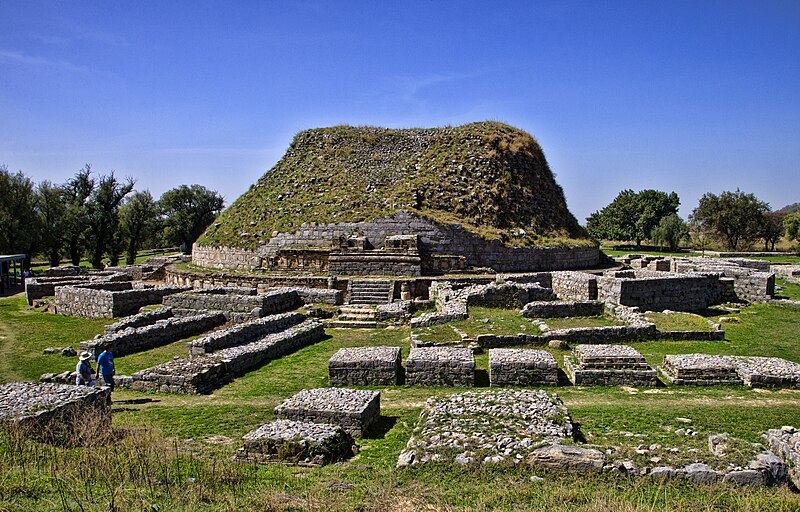
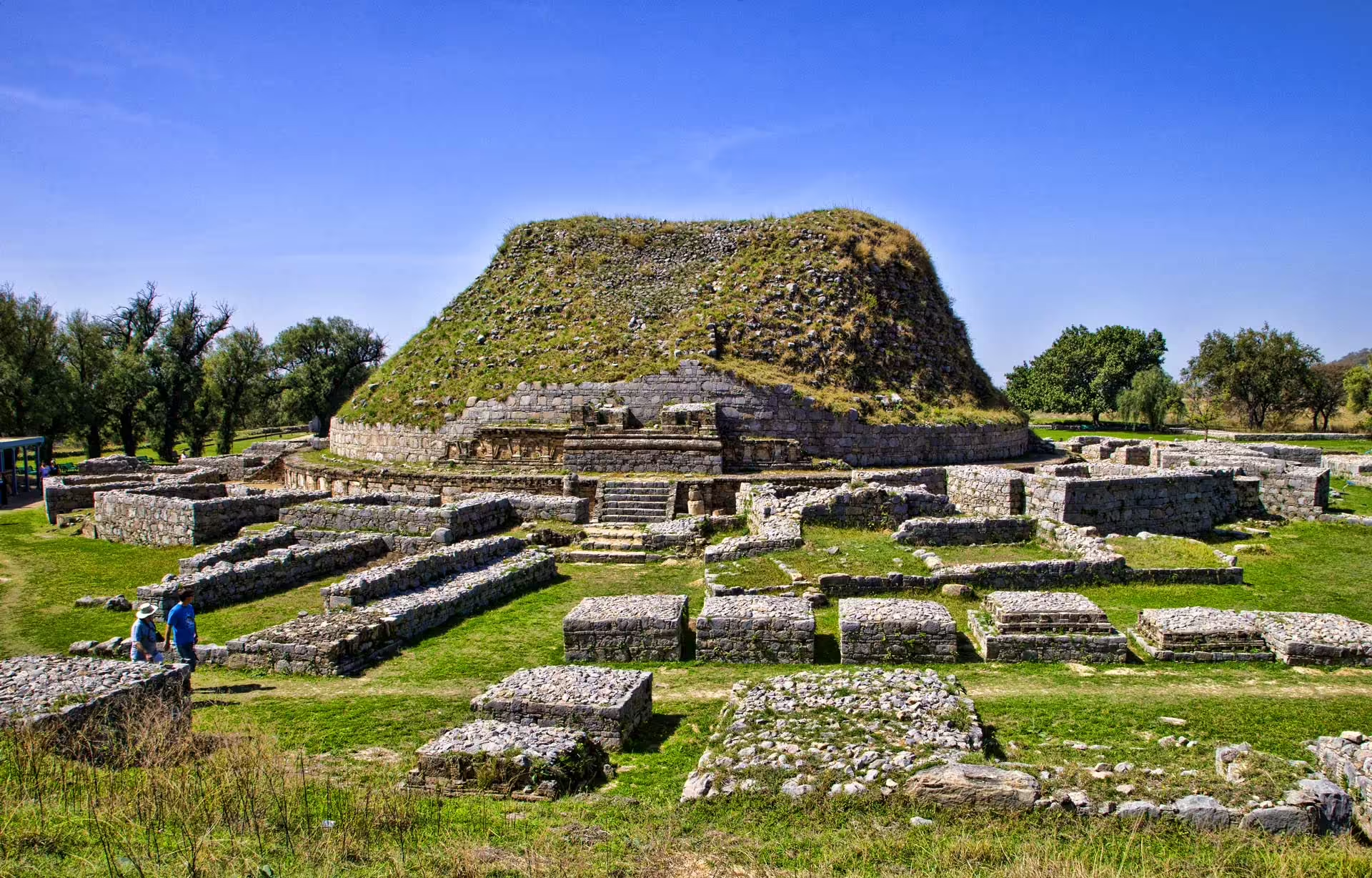
File:Dharmarajika_stupa,Taxila.jpg · Wikimedia Commons · See Wikimedia Commons
Taxila
Sign in to saveTaxila (, , ), historically known as Takshashila, is a city and UNESCO World Heritage Site in Rawalpindi District in Punjab province of Pakistan. Founded around , it is one of the oldest cities in South Asia. Taxila is located within the Taxila Tehsil on the Pothohar Plateau of Punjab, Pakistan, and it lies approximately northwest of the Islamabad–Rawalpindi metropolitan area and is just south of the Haripura District of Khyber Pakhtunkhwa.
Taxila, located in modern-day Pakistan, is an ancient city that was founded around the same period as other early South Asian settlements and is now recognized as a UNESCO World Heritage Site. The city is significant because it represents one of the oldest urban centers in South Asia and preserves important historical evidence from that era.
AI-generated from the Wikipedia summary — may contain errors.
Key facts
- Settlement.name
- Taxila
- Settlement.settlement_type
- City
- Settlement.image_skyline
- File:Dharmarajika stupa,Taxila.jpg
- Settlement.image_caption
- The Dharmarajika Stupa, a Mauryan-era Buddhist stupa near the city of Taxila (2010)
- Settlement.blank_emblem_type
- Emblem
- Settlement.pushpin_map
- Pakistan#Punjab Pakistan
- Settlement.pushpin_relief
- yes
- Settlement.pushpin_label_position
- bottom
- Settlement.pushpin_mapsize
- 250
- Settlement.pushpin_map_caption
- Location within Punjab##Location within Pakistan
- Settlement.subdivision_type
- Country
- Settlement.subdivision_type1
- Province
- Settlement.subdivision_type2
- Division
- Settlement.subdivision_name2
- Rawalpindi
- Settlement.parts_style
- para
- Settlement.elevation_m
- 549
- Settlement.population_as_of
- 2023 Pakistani census
- Settlement.population_total
- 136,900 (population of Taxila including Taxila Cantonment)
via Wikipedia infobox
Described at
Staroveké mesto Taxila - Pakistan - PlaceMania
Rozsiahly archeologický komplex Taxila v Pakistane s vrstvami osídlenia od Harappanov po budhistické obdobie
placemania.sk →Tak ako stromy ukazujú svoj život skúmaním letokruhov, odkrývanie vrstiev v Taxile ukazuje fascinujúce vplyvy viacerých civilizácií, ktoré žili v tomto starobylom meste pri pakistanskej rieke Indus. Taxila, ktorá sa dostala do povedomia okolitého sveta prostredníctvom príbehov z indickej a grécko-rímskej literatúry, predstavuje objavnú prechádzku vzostupom ľudskej civilizácie v juhovýchodnej Ázii, od neolitických hrobiek až po stopy samotného Budhu. Taxila, ktorá sa nachádza na križovatke starovekých obchodných ciest prinášajúcich tejto oblasti prosperitu, je gigantom z hľadiska veľkosti aj rozsahu archeologických nálezísk. Tri odlišné stavebné techniky rozdeľujú lokalitu na tri samostatné „mestá“ pochádzajúce z troch rôznych časových období. Okrem slávnych budhistických stúp, z ktorých niektoré predchádzali tradícii fyzického zobrazovania Budhu, sa v Taxile podľa mnohých nachádza prvá univerzita na svete, Takṣaśilā. Okrem toho sa v ruinách v Sarai Kala nachádzali pozostatky raných Harappanov , ktoré sa datujú už do roku 2900 pred n. l. Jedinečnú črtu má socha Budhu bez hlavy. Jej pupok bol taký výrazný, že v priebehu rokov doň zbožní budhisti začali pri modlitbe vkladať prst. Po rokoch tejto praxe sa z pupka stal pomerne mimoriadne veľký otvor v Budhovom bruchu. Aj keď je oveľa menej známy ako mnohé iné historické miesta, len na málo miestach na Zemi je taká koncentrácia našich historických záznamov; preto nebolo prekvapením, že UNESCO v roku 1980 označilo Taxilu za svetové dedičstvo. Vďaka tomuto prílevu ochranárskeho a kurátorského zmýšľania vzniklo múzeum, ktoré poskytuje účinného sprievodcu tromi tisícročiami ľudskej civilizácie pod nohami a sprístupňuje obrovské zázraky mesta všetkým. Zakladateľ projektu PlaceMania.sk a zodpovedá za jeho obsah, technické fungovanie a dlhodobý rozvoj. Cestovné zápisky na webe vychádzajú z vlastnej skúsenosti z ciest; faktografické záznamy o miestach vznikajú kombináciou verejných zdrojov, automatizovaného spracovania dát a redakčného overovania. Zameriava sa na netradičné lokality, ich historický a geografický kontext a menej známe súvislosti. Things to do near Staroveké mesto Taxila, Takshashila University (World's first University), Takshashila, Taxila, ٹیکسلا, Taksila, Таксила, 塔克西拉, Univerzita, Vzdelávacia inštitúcia, Haripur, Khyber Pakhtunkhwa, Islamic Republic of Pakistan, Pakistan, PK, PAK. Find tours, guided tours, local activities, attractions, tickets, excursions, sightseeing, day trips and travel experiences nearby. Coordinates: 33.7649483, 72.8748446. Je to jedno z posledných zachovaných starovekých budhistických miest v regióne, ktoré vďaka svojej odľahlej polohe uniklo niekoľkým hunským nájazdom. K tomuto veľkolepému pakistanskému mauzóleu sa dá dostať len cez takmer 300 metrov dlhú uličku. Pozrite si ďalšie zaujímave miesta vo svete, ktoré stoja za naplánovanie ďalšej cesty. Tikal: monumentálne chrámy Mayov, ktoré džungľa na stáročia pohltila a znovu vydala. Ruiny Nalandy, starovekej kláštornej univerzity v Indii, považovanej za prvú rezidenčnú univerzitu na svete. Mohenjo-daro bolo jedným z najväčších miest civilizácie Indusu, s pravidelným urbanizmom a vyspelým hygienickým systémom. Chcete vidieť ďalšie úchvatné miesta ako Staroveké mesto Taxila? Nájdeš ich u nás na mape. Objav s nami ďalšie úžasné miesta na zemi.
Excerpt from a page describing this subject · 17,125 chars · not written by Vinony
Wikidata facts
- Instance of
- archaeological site
- Country
- Pakistan
- Located in
- Rawalpindi District
- Capital of
- Indo-Parthian kingdom
- Image
- Double-Headed Eagle Stupa at Sirkap 08.jpg
Show 5 more facts
- described by source
- Pauly–Wissowa
- Commons category
- Taxila
- topic's main category
- Category:Taxila
- heritage designation
- World Heritage Site
- described at URL
- www.placemania.sk/svetova-zaujimavost/staroveke-mesto-taxila
Sources (2)
via Wikidata · CC0
~36 min read
Encyclopedic overview
37 sectionsContents
- Etymology
- In traditional sources
- In Jainism
- History
- Early settlement
- Gandhāra kingdom
- Achaemenid Empire
- Hellenistic
- Mauryan Empire
- Indo-Greek, Indo-Scythian, and Indo-Parthian Kingdoms
- Kushan Empire
- Gupta Empire
- Invasions by Hunas and Umayyads and decline
- Centre of learning
- Notable students and teachers
- Ruins
- World Heritage Site
- Demographics
- Population
- Geography
- Climate
- Economy
- Tourism
- Industry
- Transportation
- Rail
- Road
- Air
- Education
- Ancient ruins
- Culture
- Museums
- Gallery
- See also
- Notes
- References
- External links
Taxila (, , ), historically known as Takshashila, is a city and UNESCO World Heritage Site in Rawalpindi District in Punjab province of Pakistan. Founded around , it is one of the oldest cities in South Asia. Taxila is located within the Taxila Tehsil on the Pothohar Plateau of Punjab, Pakistan, and it lies approximately northwest of the Islamabad–Rawalpindi metropolitan area and is just south of the Haripura District of Khyber Pakhtunkhwa.
Established during the Vedic period, Old Taxila was for a time the capital city of ancient Gandhāra. Situated on the eastern shore of the Indus River—the pivotal junction of the Indian subcontinent and Central Asia—it was possibly founded around 1000 BCE. Takshashila and Pushkalavati remained prominent cities in Gandhāra during the Mahajanapadas. The city is believed to have become part of the Achaemenid Empire during 550 – 326 BCE. In 326 BCE, it was claimed by Alexander the Great, after overthrowing the Achaemenids. Alexander gained control of the city without a battle since it immediately surrendered to his Macedonian Empire. This was followed successively by the Mauryans (~317 – ~200 BCE), the Indo-Greeks (~200 BCE – ~55 BCE), the Indo-Scythians (~80 BCE – ~30 CE), and the Kushan Empire (~30 CE – ~375 CE) and later the Guptas (~240 CE – ~580 CE), which it became the capital again after Mauryans. Owing to its strategic location, Taxila has changed hands many times over the centuries, with many polities vying for its control. When the great ancient trade routes connecting these regions ceased to be important, the city sank into insignificance in the 5th century by the invading Hunas and was fully destroyed by the Umayyads in 712 CE, which laid the spread of Islam in Indian Subcontinent. In mid-19th century British Raj, ancient Taxila's ruins were rediscovered by British archaeologist Alexander Cunningham and extensively excavated by Sir John Marshall. In 1980, UNESCO designated Taxila as a World Heritage Site. The area was part of the ancient Gandhara region. Taxila (ancient city), located in the town of Taxila, was designated a UNESCO World Heritage Site in 1980.
Excerpted from Wikipedia’s “Taxila” article, available under the CC BY-SA 4.0 licence.
Gallery (32)
On the map
3 mapped locations
Available in 67 languages
- Español
- Français
- Deutsch
- 中文
- 日本語
- Русский
- Português
- Italiano
- العربية
- हिन्दी
- Amharic
- Armenian
- Assamese
- Bahasa Indonesia
- Bangla
- Basque
- Bulgarian
- Burmese
Show 48 more
- Catalan
- Croatian
- Czech
- Danish
- Egyptian Arabic
- Esperanto
- Finnish
- Georgian
- Goan Konkani
- Greek
- Gujarati
- Hebrew
- Hungarian
- Kannada
- Kazakh
- Latvian
- Lithuanian
- Maithili
- Malayalam
- Maltese
- Marathi
- Nederlands
- Nepali
- Norwegian
- Pashto
- Polski
- Punjabi
- Romanian
- Serbian (Latin)
- simple
- Sindhi
- Sinhala
- skr
- Slovak
- Slovenian
- Svenska
- Tamil
- Telugu
- Tiếng Việt
- Türkçe
- Ukrainian
- Urdu
- Uzbek
- Western Panjabi
- zh_yue
- فارسی
- ไทย
- 한국어
via Wikidata sitelinks · CC0