Also known as Teheran, Ṭihrán, Tehran
伊朗首都和最大的城市
Tehran is the capital and largest city of Iran, with a population of around 9 million people in the city itself and 16.8 million in its metropolitan area. It serves as the administrative center for Iran and is the second-largest metropolitan area in the Middle East, making it a major political and population hub in the region.
AI-generated from the Wikipedia summary — may contain errors.
In the Vinony graph
Vinony catalogs 德黑兰 in its National Capitals collection (222 entries).
Within Vinony's link graph, 德黑兰 is referenced by 12,984 other articles, and connects out to Vahdat Hall, Niavaran and capital city.
The entry is geolocated on the map in 23, across 4 mapped points.
Vinony files it under Capital cities in Asia, Cities in Tehran province and Commons link from Wikidata.
Weather now
cached 23h ago7-day forecast
via Open-Meteo
Place details
- Locality
- شهر تهران
- Region
- استان تهران
- Country
- ایران
- Population
- 7,153,309
- Timezone
- Asia/Tehran
via OpenStreetMap · GeoNames
Air quality
- PM2.5
- 51.0 µg/m³
- PM10
- 64.0 µg/m³
Wikipedia views (30d)
61,966 totalvia Wikimedia Pageviews API
Key facts
- Settlement.name
- Tehran
- Settlement.settlement_type
- Capital city
- Settlement.image_flag
- Flag of Tehran.svg
- Settlement.image_seal
- لوگو شهرداری تهران.svg
- Settlement.pushpin_map
- Iran#Middle East3#Asia
- Settlement.pushpin_relief
- yes
- Settlement.pushpin_map_caption
- Location in Iran and Asia
- Settlement.mapframe caption
- Map of Tehran
- Settlement.mapframe
- yes
- Settlement.subdivision_type
- Country
- Settlement.subdivision_type1
- Province
- Settlement.subdivision_type2
- County
- Settlement.subdivision_type3
- District
- Settlement.subdivision_name1
- Tehran
- Settlement.subdivision_name2
- TehranReyShemiranat
- Settlement.subdivision_name3
- Central
- Settlement.leader_title
- Mayor
- Settlement.leader_name
- Alireza Zakani
via Wikipedia infobox
Wikidata facts
- Part of
- Greater Tehran
- Official name
- تهران
- Demonym
- Téhéranaise
- Country
- Iran
- Located in
- Central District
- Continent
- Asia
- Official language
- Persian
- Currency
- Iranian rial
- Population
- 8846782
- Area
- 686
- Elevation
- 1179
- Time zone
- UTC+04:30
- Head of government
- Alireza Zakani
- Capital of
- Tehran County
- Official website
- www.tehran.ir
- Image
- North of tehran.jpg
- Dialing code
- 021
Show 22 more facts
- twinned administrative body
- Dubai
- Commons category
- Tehran
- topic's main category
- Category:Tehran
- Commons gallery
- تهران
- category for people born here
- Category:Births in Tehran
- category for people who died here
- Category:Deaths in Tehran
- category for films shot at this location
- Category:Films shot in Tehran
- category of associated people
- Category:People from Tehran
- on focus list of Wikimedia project
- Wikipedia:Vital articles/Level/4
- category for people buried here
- Category:Burials in Tehran
- inception
- 1794-03-20
- nickname
- دار السلطنه
- native label
- تهران
- owner of
- Shohada Stadium (Qods)
- postal code
- 13ххх-15ххх
- hashtag
- Tehran
- P8168
- Kemalpaşazade
- male population
- 4324155
- female population
- 4369551
- member of
- League of Historical Cities
- P12749
- Pennsylvania
- OpenStreetMap zoom level
- 13
Sources (13)
via Wikidata · CC0
Travel guide
Understand
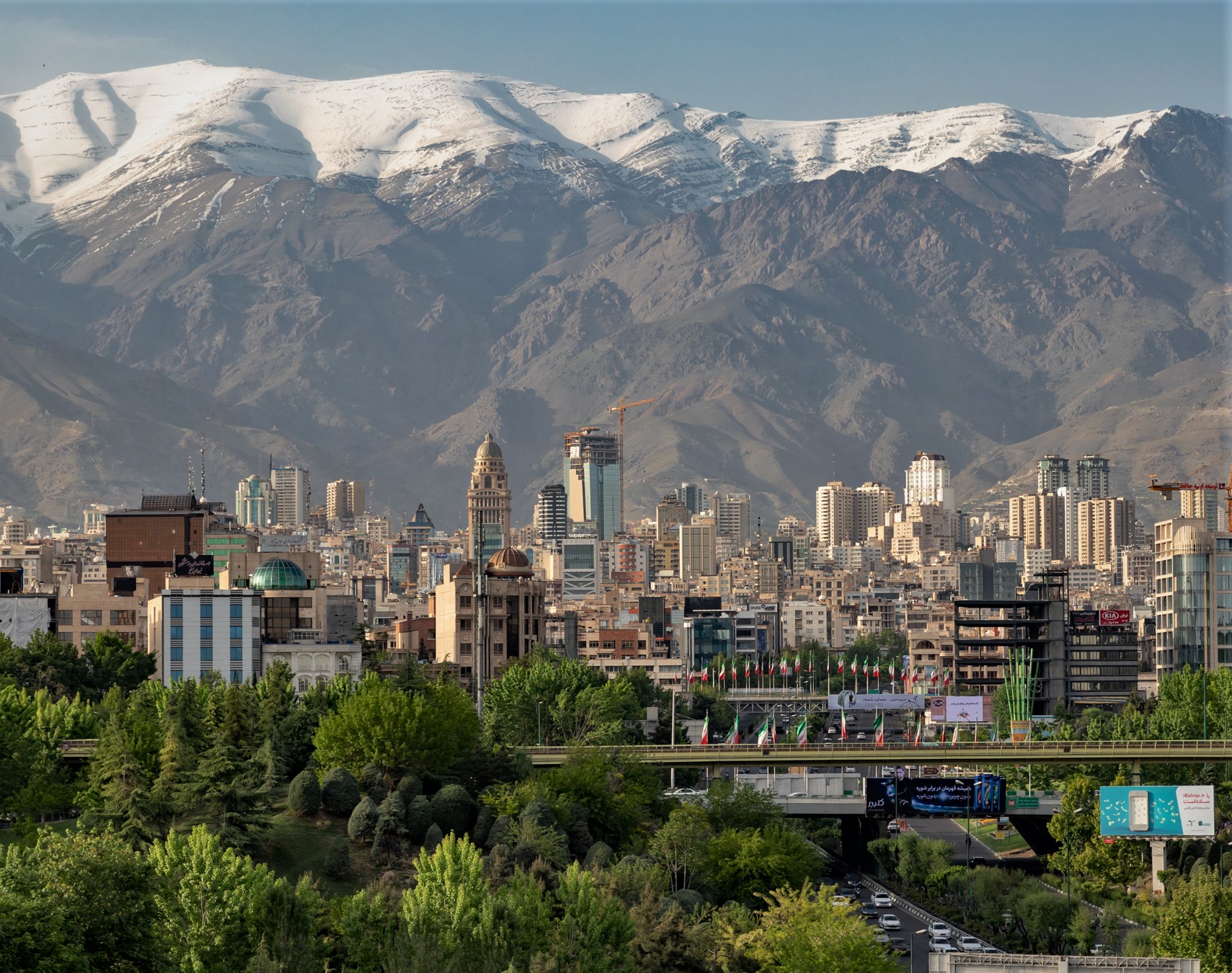
thumb|Aerial view of Tehran
The city can be roughly divided into two parts - north and south. The northern districts of Tehran are more prosperous, modern, cosmopolitan and expensive while southern parts are less attractive but cheaper.
At the time of the Zand dynasty, it was a little town that was significant from a strategic point of view. The first of the Qajar kings, Agha Mohammed Khan, named Tehran as the country's capital in 1778, and most of its growth started during the reign of a subsequent Qajar monarch, Fath-Ali Shah. The castle that Agha Mohammed Khan had built was to contain the new majestic buildings.
At the same time, the city's population doubled. Due to the increasing significance of the city, gates, squares and mosques were built and it was at the time of Nassereddin Shah that the city's master sketch was prepared and modern streets were constructed. Later, huge central squares like Toopkhaneh square (now Imam Khomeini) and quite a few military buildings were built. Even though the Qajar dynasty was in a period of decline, Tehran soon took the shape of a modern city. The structure of large government buildings, new streets, recreation centres, urban service organizations, and academic and methodical centres was started, even as most of the old gates and buildings were destroyed and the city's old architectural fabric replaced by a contemporary one.
Tehran has also earned itself an unenviable reputation as a smog-filled, traffic-clogged and featureless sp…
Get in
For information on Iranian visas please refer the Iran#visas page.
Get around
Getting around traffic-clogged, sprawling Tehran is a true test of patience. While taxis are your best bet, they are pricier here than the rest of the country. A large local bus network will also take you almost anywhere you need to go, as long you can make sense of the routes and Persian line numbers. The true star of Tehran's transport system, however, is the metro.
Eat
thumb|A cheap restaurant in Tehran selling take-away soup Prices quoted on the menu may exclude an 8% tax, a 10-15% service charge, and a 10% tip. Be prepared to add as much as 1/3 to the prices quoted on the menu.
Drink
For information on popular drinks in Iran, see Iran#Drink. Alcoholic beverages are illegal in Iran, other than some allowances for ritual use by Jews and Christians.
Sleep
The old-styled Mosaferkhanehs and budget hotels are often low quality and overpriced. The reason is that Iran has had very limited exposure to the outside world. In many low budget places there are no European toilets or even no toilet paper and staff can be rather unfriendly with no English-speaking ability. However, a couple of modern hostels have opened in Tehran.
Connect
For information on mobile phone operators and using the internet in Iran, see Iran#Connect
You need to use a proxy server, VPN or a software like Freegate or Psiphon to access Facebook, Twitter, YouTube and some websites; otherwise, you might see this page which shows that the site you want to access is filtered and blocked by the judiciary system. You also need to use Freegate to check your bank account balance; otherwise, your account might get blocked due to the sanctions against Iran.
Stay safe
See also the warnings at Iran#Stay safe.
Considering that the population of Tehran is around 15 million, it is still one of the safer cities to visit in global terms. Violent crime is rare and exercising common sense and taking the usual precautions against pickpockets in crowded areas should ensure a hassle-free visit. Most areas are safe even late at night, although it is not advisable to take a private taxi at 02:00 for example (but the lack of public nightlife means that few tourists would be out at that time in the first place). South Tehran (or the areas south of the Tehran Bazaar) is the only area that should really be avoided after dark, as some of the more deprived neighborhoods are there.
Traffic in Tehran is very dangerous and should be considered to be among the worst in the world. Even though crossing the street might at first seem impossible, drivers usually do a very good job avoiding pedestrians. Still, try to cross the street when the locals do as there is safety in numbers. The rate of traffic accidents is disturbingly high, so faith should not be put on drivers' skills alone.
thumbnail|Traffic congestion is very acute in Tehran and driving habits are dangerous. Exercise extreme caution when crossing the street.
The fake police that have traditionally targeted tourists in Esfahan have also found their way to Tehran. These are usually uniformed men in unmarked cars flashing fake IDs and requesting to see your passport or to search through your luggage. Yo…
Go next
If the hustle and bustle of Tehran becomes too much, it's possible to go to the Caspian Sea for a day or two. The holiday town of Ramsar is about five hours away, and the drive across the Alborz Mountains is spectacular. A taxi round-trip for a day shouldn't set you back more than 500,000 rials (ask for taxis near Azadi Square). Qom — about 2 hours away southwest of Tehran by bus and one hour by car (120 km) is the most religious city of Iran followed by Mashhad
Travel guide from Wikivoyage (CC BY-SA 4.0)
Article · 中文
德黑蘭(波斯語:تهران / Ťehrân,發音:[tehˈɾɒːn])是伊朗的首都和最大城市,同時是德黑蘭省省會,總人口達8,429,807人,是西亞地區人口最稠密的城市之一,也是世界第19大城市。 在20世紀,伊朗各地有大批民眾湧入德黑蘭定居,有意見認為德黑蘭的市區人口應要減少至少5,000,000人。德黑蘭有許多歷史上著名的清真寺、基督教堂、猶太會堂及琐罗亚斯德教的火廟。當代的德黑蘭是現代化的城市,高樓大廈林立,當中的阿扎迪塔及默德塔是德黑蘭的標誌性建築。德黑蘭在2008年是全球生活成本最低的城市。以城市人口計算,德黑蘭是全球第19大的都市,國內生產總值排行第56位,城市群人口排行第29位。伊朗的歷史悠久,首都也隨著時代的推進而變遷,德黑蘭是第32個伊朗首都。德黑蘭的母語是帶有的波斯語,98%的德黑兰人都使用母語,德黑蘭的大部分居民都是波斯人。在前伊斯蘭及伊斯蘭時代早期,德黑蘭在祆教裡稱為「拉伊」(Ray),亦即波斯古經裡的剌伽。
Abstract from DBpedia / Wikipedia · CC BY-SA
Gallery (54)
On the map
4 mapped locations
Available in 207 languages
- Español
- Français
- Deutsch
- 中文
- 日本語
- Русский
- Português
- Italiano
- العربية
- हिन्दी
- Achinese
- Adyghe
- Afrikaans
- Akan
- Albanian
- Albanian
- Amharic
- Aragonese
Show 188 more
- Aramaic
- Armenian
- Assamese
- Asturian
- Avaric
- Awadhi
- azb
- Azerbaijani
- Bahasa Indonesia
- Balinese
- Bangla
- Banjar
- Bashkir
- Basque
- bat_smg
- Bavarian
- be_x_old
- Belarusian
- Bhojpuri
- Bikol
- Bosnian
- Breton
- Bulgarian
- Buriat
- Burmese
- Catalan
- cdo
- Cebuano
- Central Kurdish
- Chechen
- Chuvash
- Cornish
- Crimean Tatar
- Croatian
- Czech
- Danish
- dty
- Egyptian Arabic
- Erzya
- Esperanto
- Estonian
- Extremaduran
- Faroese
- Fiji Hindi
- Filipino
- Finnish
- fiu_vro
- Gagauz
- Galician
- Georgian
- Gilaki
- Greek
- Guarani
- Haitian Creole
- Hakka Chinese
- Hausa
- Hebrew
- Hungarian
- hyw
- Iban
- Icelandic
- Ido
- Iloko
- Inari Sami
- Ingush
- Interlingua
- Interlingue
- Irish
- Javanese
- Kabardian
- Kabyle
- Kannada
- Kanuri
- Kara-Kalpak
- Kashmiri
- Kazakh
- kbp
- kge
- Khmer
- Kongo
- Kurdish
- Kyrgyz
- Lao
- Latin
- Latvian
- Lezghian
- Ligurian
- Limburgish
- Lingua Franca Nova
- Lithuanian
- lld
- Lombard
- Low German
- Luxembourgish
- Macedonian
- Malagasy
- Malay
- Malayalam
- Maltese
- Māori
- Marathi
- Mari
- Mazanderani
- Minangkabau
- Mingrelian
- Moksha
- Mongolian
- Moroccan Arabic
- Navajo
- Neapolitan
- Nederlands
- Nepali
- Newari
- Northern Frisian
- Northern Sami
- Norwegian
- Norwegian Nynorsk
- Novial
- Nyanja
- Occitan
- Odia
- Old English
- olo
- Ossetic
- Papiamento
- Pashto
- Piedmontese
- Polski
- Punjabi
- Quechua
- roa_tara
- Romanian
- Romansh
- Rusyn
- Santali
- Sardinian
- Scots
- Scottish Gaelic
- Serbian
- Serbian (Latin)
- Shona
- Sicilian
- Silesian
- simple
- Sindhi
- Sinhala
- Slovak
- Slovenian
- Somali
- Svenska
- Swahili
- Tajik
- Talysh
- Tamil
- Tatar
- Telugu
- Tibetan
- Tiếng Việt
- Tok Pisin
- Toki Pona
- Türkçe
- Turkmen
- Udmurt
- Ukrainian
- Upper Sorbian
- Urdu
- Uyghur
- Uzbek
- Venetian
- Veps
- Volapük
- Waray
- Welsh
- Western Frisian
- Western Panjabi
- Wolof
- Wu Chinese
- Yakut
- Yiddish
- Yoruba
- Zaza
- Zeelandic
- zh_classical
- zh_min_nan
- zh_yue
- فارسی
- ไทย
- 한국어
via Wikidata sitelinks · CC0