
File:Spectre_Terahertz.svg · Wikimedia Commons · See Wikimedia Commons
terahertz radiation
Sign in to saveAlso known as THF, tremendously high frequency, decimillimetric waves
the 300–3000 GHz range of the electromagnetic spectrum
OverviewAI-generated
Terahertz radiation is a form of electromagnetic radiation defined by its frequency range. It spans from a lower limit of 300 to an upper limit of 3000. This specific band of waves is the subject of scientific inquiry and technological discussion.
The topic has been covered in various media, including an article in Popular Science titled "What are terahertz waves useful for?". The subject is also referenced by 368 other encyclopedia articles, indicating its presence across multiple informational sources.
Synthesized by Vinony from 11 facts across 4 sources: Wikidata, PubMed, Firecrawl, Vinony graph. Generated from structured data (not the Wikipedia text) and checked against those facts — may still contain errors.
Key facts
- Frequency range
- 0.1 THz to 10 THz
- Wavelength range
- 3 mm to 30 μm
via Wikipedia infobox
Research
2,593 papers- Terahertz radiation and the skin: a review.Journal of biomedical optics · 2021
- Non-Thermal Effects of Terahertz Radiation on Gene Expression: Systematic Review and Meta-Analysis.Genes · 2024
- Progress of the Impact of Terahertz Radiation on Ion Channel Kinetics in Neuronal Cells.Neuroscience bulletin · 2024
- Terahertz nanotechnology.Nanotechnology · 2013
- Terahertz radiation affects the dynamics of neurons by decreasing membrane area ratio.Brain research bulletin · 2025
via PubMed
Described at
What are terahertz waves useful for? | Popular Science
In the far infrared band of the electromagnetic spectrum, engineers are exploring the terahertz gap, which could lead to a wave of faster, more sensitive technologies.
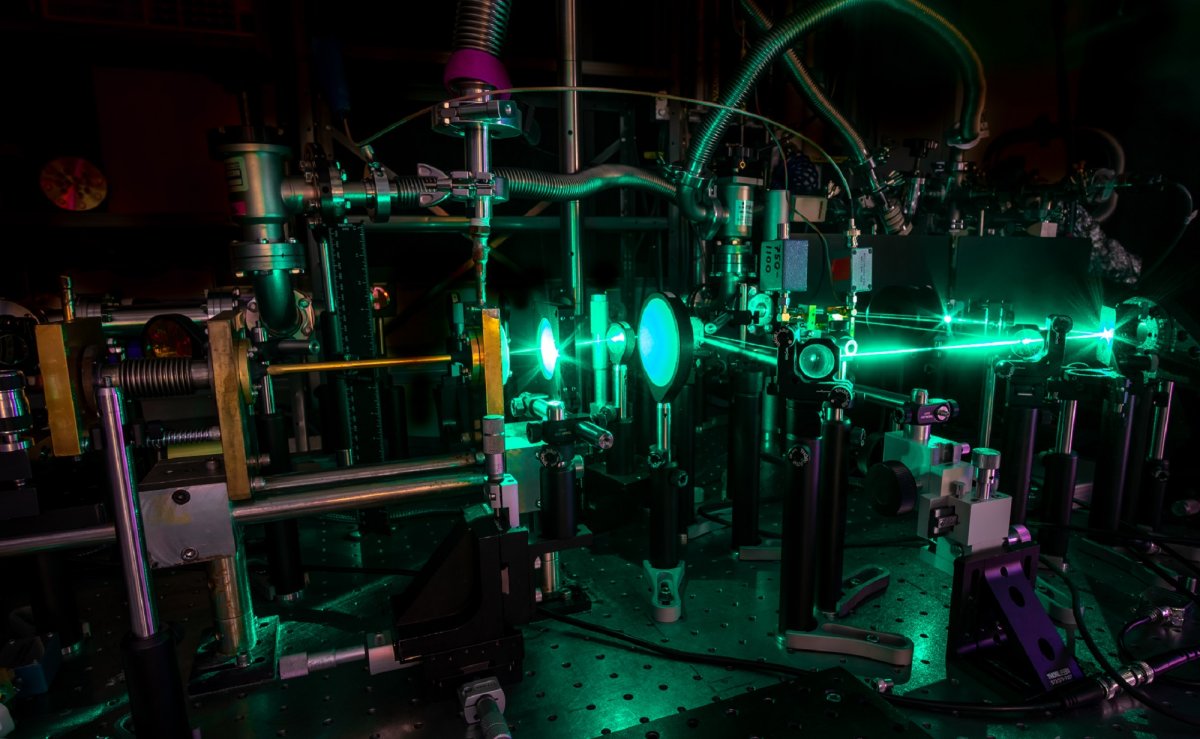
popsci.com →Engineers from Harvard, MIT, and the US Army created this experimental terahertz laser setup in 2019. They are among the few to do so. Arman Amirzhan, Harvard SEAS There’s a gap on the electromagnetic spectrum where engineers can not tread. The spectrum covers everything from radio waves and microwaves, to the light that reaches our eyes, to X-rays and gamma rays. And humans have mastered the art of sending and receiving almost all of them. There is an exception, however. Between the beams of visible light and the blips of radio static, there lies a dead zone where our technology isn’t effective. It’s called the terahertz gap. For decades now, no one’s succeeded in building a consumer device that can transmit terahertz waves . The terahertz band lies in a slim region of the electromagnetic spectrum between microwaves and infrared. Deposit Photos Look at the terahertz gap as a borderland. On the left side, there are microwaves and longer radio waves. On the right side lies the infrared spectrum. (Some scientists even call the terahertz gap “far infrared.”) Our eyes can’t see infrared, but as far as our technologies are concerned, it’s just like light. Radio waves are crucial for communication, especially between electronic devices, making them universal in today’s electronics. Light powers the optical fibers that underpin the internet. These realms of technology typically feed off different wavelengths, and uneasily coexist in the modern world. But both realms struggle to go far into the terahertz neutral zone. Standard electronic components, like silicon chips, can’t go about their business quickly enough to make terahertz waves. Light-producing technologies like lasers, which are right at home in infrared, don’t work with terahertz waves either. Even worse, terahertz waves don’t last long in the Earth’s atmosphere : Water vapor in the air tends to absorb them after only a few dozen feet. There are a few terahertz wavelengths that can squeeze through the water vapor. Astronomers have built telescopes that capture those bands, which are especially good for seeing interstellar dust. For best use, those telescopes need to be stationed in the planet’s highest and driest places, like Chile’s Atacama Desert, or outside the atmosphere altogether in space. When it comes to tapping into terahertz waves, the world of electronics faces a fundamental problem. To enter the gap, the silicon chips in our electronics need to pulsate quickly—at trillions of cycles per second (hence a terahertz). The chips in your phone or computer can operate perfectly well at millions or billions cycles per second, but they struggle to reach the trillions. The highly experimental terahertz components that do work can cost as much as a luxury car. Engineers are working to bring the prices down. But MIT’s Hu didn’t think so.“I knew nothing about how to make lasers,” he says. Still, making this kind of laser became his quest. Then in 1994, scientists invented the quantum cascade laser , which was particularly good for making infrared light. All that Hu and his colleagues needed to do was push the laser out to the longer waves of the far infrared. Around 2002, they succeeded in making a terahertz quantum cascade laser . But there was a catch: The system needed temperatures around -343 degrees Fahrenheit to actually fire. It also required liquid nitrogen to work, which made it difficult to use outside the lab or cryogenic settings. In the two decades since, that temperature threshold has crept up. The latest lasers from Hu’s lab operate at a balmier 8 degrees Fahrenheit. That’s not quite room temperature, but it’s warm enough that the laser could be chilled inside a portable refrigerator and carted out of the lab. Meanwhile, in 2019, a team from Harvard, MIT, and the US Army created a shoe box-sized terahertz laser that can alter molecular gas. In the time it took Hu to finetune his laser, electronics have made progress, too. Advances into how chips
Excerpt from a page describing this subject · 11,250 chars · not written by Vinony
Wikidata facts
- Part of
- radio spectrum
- Follows
- extremely high frequency
Show 5 more facts
- Commons category
- Terahertz radiation
- topic's main category
- Category:Terahertz technology
- described at URL
- www.popsci.com/science/terahertz-waves-future-technologies/?utm_source=pocket-newtab-global-en-GB
- lower limit
- 300
- upper limit
- 3000
Sources (3)
via Wikidata · CC0
~28 min read
Encyclopedic overview
EU / NATO / US ECM
A
Excerpted from Wikipedia’s “terahertz radiation” article, available under the CC BY-SA 4.0 licence.