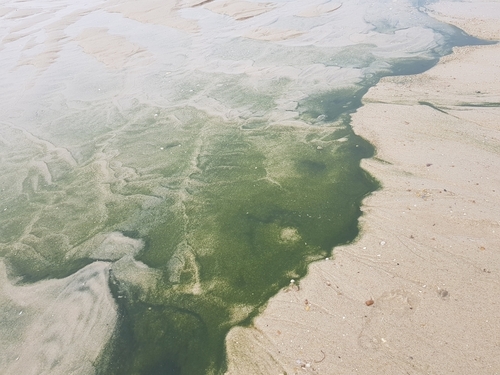
(c) Charcos Companhia, some rights reserved (CC BY-NC), uploaded by Charcos Companhia · cc-by-nc
Tetraselmis
Sign in to saveTetraselmis is a genus of phytoplankton. Tetraselmis is a green algal genus within the order Chlorodendrales, and they are characterized by their green chloroplast, their four-flagellate cell bodies, the presence of a pyrenoid within the chloroplast, and a scale-produced thecal-wall. Species within this genus are found in both marine and freshwater ecosystems across the globe; their habitat range is mainly limited by water depth due to their photosynthetic nature. Thus, they live in diverse water environments if enough nutrients and light are available for net photosynthetic activity. Tetrasel
Species
テトラセルミス属
GENUS
- KingdomPlantae
- PhylumChlorophyta
- ClassPrasinophyceae
- OrderChlorodendrales
- FamilyChlorodendraceae
via GBIF
Museum specimens
- Specimen records
- 5
- Family
- Chlorodendraceae
- Collections
- UTEX
- Recorded in
- United Kingdom, United States
Wikidata facts
- Instance of
- taxon
- Parent taxon
- Chlorodendraceae
- Image
- Tetraselmis cordiformis.jpg
Show 5 more facts
- taxon name
- Tetraselmis
- taxon rank
- genus
- Commons category
- Tetraselmis
- taxon common name
- テトラセルミス属
Sources (2)
via Wikidata · CC0
~13 min read
Encyclopedic overview
9 sectionsContents
- History
- Location and ecology
- Cell morphology
- Flagella
- Life cycle
- Practical importance
- Additional information
- Species
- References
Tetraselmis is a genus of phytoplankton. Tetraselmis is a green algal genus within the order Chlorodendrales, and they are characterized by their green chloroplast, their four-flagellate cell bodies, the presence of a pyrenoid within the chloroplast, and a scale-produced thecal-wall. Species within this genus are found in both marine and freshwater ecosystems across the globe; their habitat range is mainly limited by water depth due to their photosynthetic nature. Thus, they live in diverse water environments if enough nutrients and light are available for net photosynthetic activity. Tetraselmis species have proven to be useful for both research and industry. Tetraselmis species have been studied for understanding plankton growth rates, and recently a colonial species is being used to gain an understanding of multicellularity evolution. Additionally, many species are currently being examined for their use as biofuels due to their high lipid content.
==History== The genus name was first presented to the scientific community in Germany in 1878 by F. von Stein. The genus Tetraselmis has undergone several taxonomic changes, largely due to more advanced research techniques (such as electron microscopy) that have aided scientists in their classification.
Excerpted from Wikipedia’s “Tetraselmis” article, available under the CC BY-SA 4.0 licence.