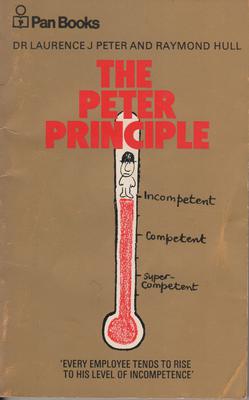
File:Cover_of_The_Peter_Principle_by_Pan_Books.jpeg · Wikimedia Commons · See Wikimedia Commons
The Peter Principle
Sign in to saveAlso known as Peter Principle
book and concept by Laurence J. Peter that states that people in a hierarchy tend to rise to "a level of respective incompetence"
Key facts
- Author
- Laurence J. Peter
via Wikipedia infobox
Wikidata facts
- Named after
- Laurence J. Peter
- Main subject
- incompetence
Show 4 more facts
- subtitle
- ou pourquoi tout va toujours mal
- title
- Le Principe de Peter
- language of work or name
- English language
- facet of
- organizational behavior studies
Sources (3)
via Wikidata · CC0
~15 min read
Encyclopedic overview
The Peter principle is a concept in management developed by Laurence J. Peter which observes that people in a hierarchy tend to rise to "a level of respective incompetence": employees are promoted based on their success in previous jobs until they reach a level at which they are no longer competent, as skills in one job do not necessarily translate to another.
The concept was explained in the 1969 book The Peter Principle (William Morrow and Company) by Laurence Peter and Raymond Hull. Hull wrote the text, which was based on Peter's research. Peter and Hull intended the book to be satire, but it became popular as it was seen to make a serious point about the shortcomings of how people are promoted within hierarchical organizations. The Peter principle has since been the subject of much commentary and research.
Excerpted from Wikipedia’s “The Peter Principle” article, available under the CC BY-SA 4.0 licence.