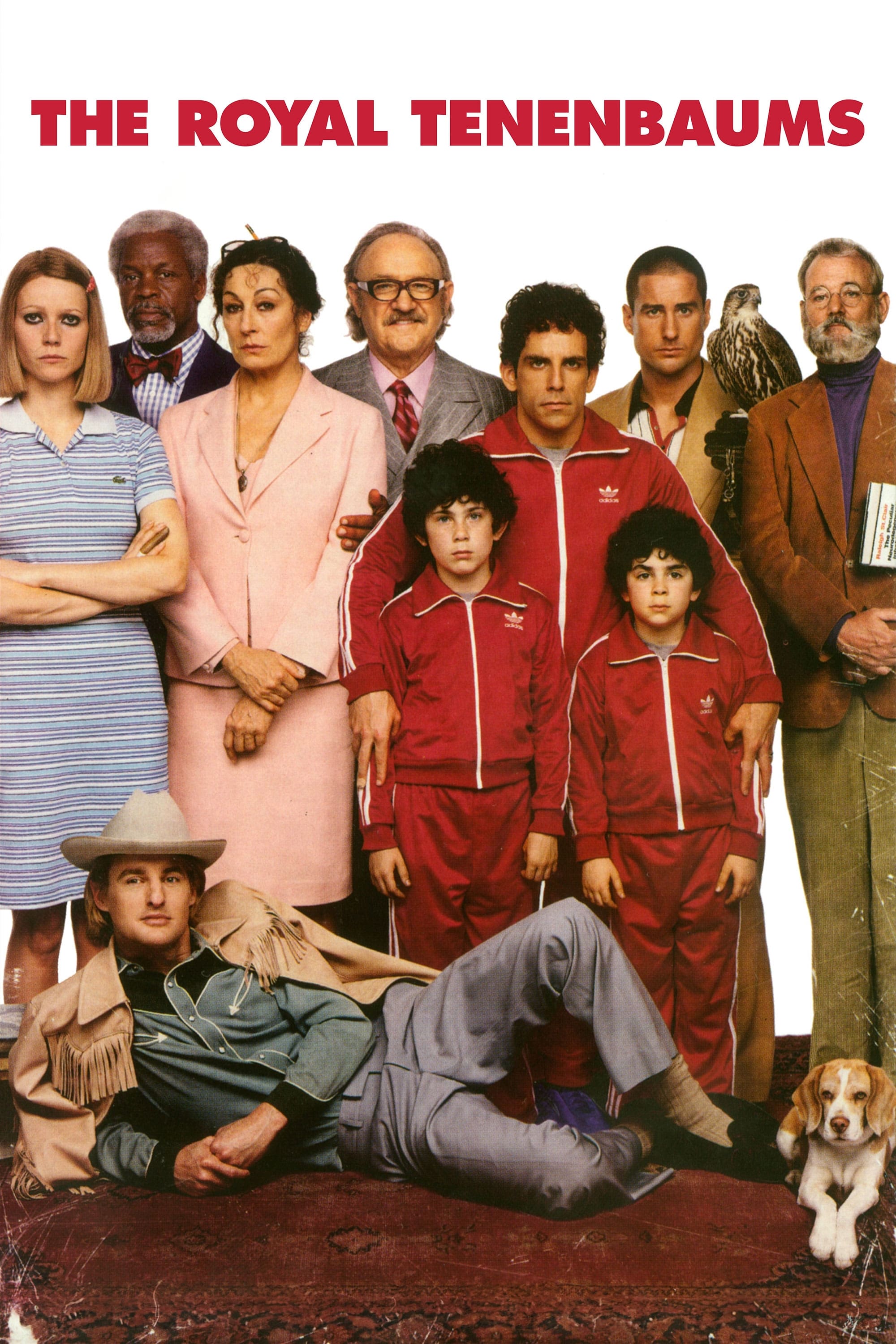
The Royal Tenenbaums
Also known as Royal Tenenbaums
2001 film by Wes Anderson
Film · TMDB
7.5Royal Tenenbaum and his wife Etheline had three children and then they separated. All three children are extraordinary --- all geniuses. Virtually all memory of the brilliance of the young Tenenbaums was subsequently erased by two decades of betrayal, failure, and disaster. Most of this was generally considered to be their father's fault. "The Royal Tenenbaums" is the story of the family's sudden, unexpected reunion one recent winter.
Released: 2001-10-05110 minDir: Wes AndersonComedy, DramaBudget: $21.0MBox office: $71.4M
Cast
- Gene Hackman as Royal Tenenbaum
- Anjelica Huston as Etheline Tenenbaum
- Ben Stiller as Chas Tenenbaum
- Gwyneth Paltrow as Margot Tenenbaum
- Luke Wilson as Richie Tenenbaum
- Owen Wilson as Eli Cash
Themes
- forgiveness
Article
The Royal Tenenbaums is a 2001 American comedy-drama film directed by Wes Anderson and co-written by him and Owen Wilson. It stars Danny Glover, Gene Hackman, Anjelica Huston, Bill Murray, Gwyneth Paltrow, Ben Stiller, Luke Wilson, and Owen Wilson. Ostensibly based on a nonexistent novel, and told with a narrative influenced by the writing of J. D. Salinger, it follows the lives of three gifted siblings who experience great success in youth, and even greater disappointment and failure in adulthood. The children's eccentric father, Royal Tenenbaum (Hackman), leaves them in their adolescent years and returns to them after they have grown, claiming that he has a terminal illness. He works on reconciling with his children and wife (Huston), from whom he has been separated, but not divorced.
With a variety of influences, including Louis Malle's 1963 film The Fire Within and Orson Welles's 1942 film The Magnificent Ambersons, the story involves themes of the dysfunctional family, lost greatness, and redemption. An absurdist and ironic sense of humor pervades the film, which features a soundtrack subsequently released in two albums. The Royal Tenenbaums was shot in and around New York City, including a house in Harlem used for the Tenenbaum residence. The filmmakers went to efforts to distinguish the film's backgrounds from a recognizable New York, with fashions and sets combining the appearances of different time periods.
Gallery (5)
Connections
Categories
2001 American films2001 comedy-drama films2001 English-language films2001 filmsAmerican comedy-drama filmsEnglish-language comedy-drama filmsFilms about adultery in the United StatesFilms about dysfunctional familiesFilms about griefFilms about self-harmFilms directed by Wes AndersonFilms featuring a Best Musical or Comedy Actor Golden Globe winning performance