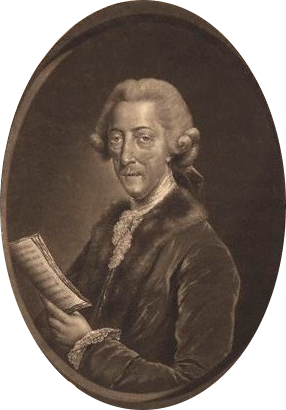
File:Thomas_Augustine_Arne.png · Wikimedia Commons · See Wikimedia Commons
Thomas Arne
Sign in to saveAlso known as Thomas Augustus Arne, Thomas Augustine Arne
18th-century British composer
OverviewAI-generated
Thomas Augustine Arne was a British composer and actor who worked within the Baroque music movement. Born in London in 1710, he was educated at Eton College and held the academic degree of Doctor of Music. Arne was a member of the Catholic Church and served as a keyboard instrument player. He was married to Cecilia Young and had a child named Michael Arne. His musical output included works in the opera genre, with notable compositions such as the 8 Keyboard Sonatas and the Masque of Comus.
Arne’s career spanned the Kingdom of Great Britain and the United Kingdom. He taught the student Margaret Kennedy. His works have been documented in various sources, including the Encyclopædia Britannica 11th edition and Brockhaus and Efron Encyclopedic Dictionary. Arne died in London in 1778.
Synthesized by Vinony from 37 facts across 7 sources: Wikidata, Open Library, MusicBrainz, Crossref, Last.fm, Europeana Sparql, Vinony graph. Generated from structured data (not the Wikipedia text) and checked against those facts — may still contain errors.
Music · MusicBrainz
- Type
- Person
- Gender
- Male
- Origin
- United Kingdom
- Active from
- 1710
- Active to
- 1778
Discography
via MusicBrainz · CC0
Listeners · Last.fm
- Listeners
- 3,995
- Total plays
- 27,485
Tags
Thomas Augustine Arne (March 12, 1710 – March 5, 1778) was an English baroque composer, best known for the song, “Rule, Britannia!”, and his musical settings of songs from the plays of William Shakespeare. Arne was born in the Covent Garden area of London, to a family that had prospered in the upholstery business. He was educated at Eton College, and was interested in music from his earliest youth. A chance meeting with Michael Festing gave him the opportunity to indulge his interest <a href="h
Key facts
- Born
- Thomas Augustine Arne , ( 1710-03-12 ) 12 March 1710, Covent Garden , London, England
- Died
- 5 March 1778 (1778-03-05) (aged 67), London, England
- Education
- Eton College
via Wikipedia infobox
Wikidata facts
- Instance of
- human
- Gender
- male
- Citizenship
- United Kingdom
- Place of birth
- London
- Place of death
- London
- Spouse
- Cecilia Young
- Child
- Michael Arne
- Occupation
- actor
- Educated at
- Eton College
- Languages spoken
- English language
- Religion
- Catholic Church
- Academic degree
- Doctor of Music
- Genre
- opera
- Movement
- Baroque music
- Instrument
- keyboard instrument
- Image
- Thomas Augustine Arne.jpg
Show 9 more facts
- Commons category
- Thomas Augustine Arne
- date of birth
- 1710-03-12
- date of death
- 1778-03-05
- student
- Margaret Kennedy
- Commons gallery
- Thomas Augustine Arne
- name in native language
- Thomas Augustine Arne
- Commons Creator page
- Thomas Augustine Arne
- P8168
- Dvorníky-Včeláre
- place of burial
- St Paul's Church, Covent Garden
Sources (3)
via Wikidata · CC0
Works in European collections
20 objects attributed to Thomas Arne, held across European museums, libraries & archives · via Europeana

When daisies pied and violets blue /
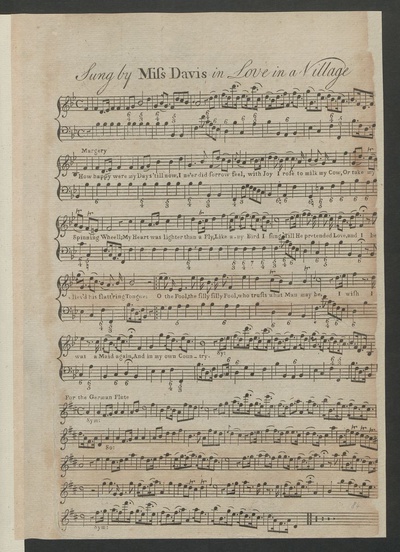
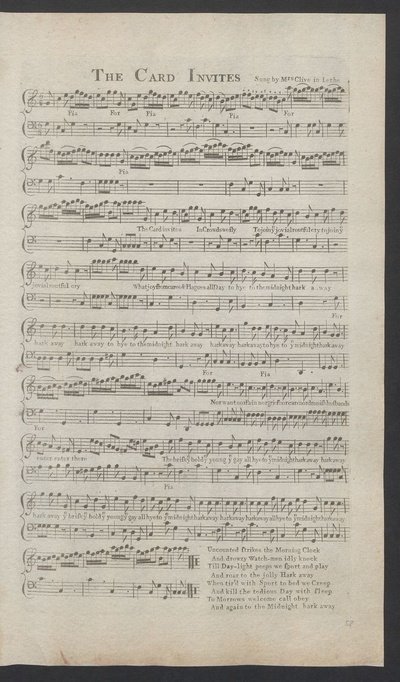
Sung by Miss Davis in Love in a village
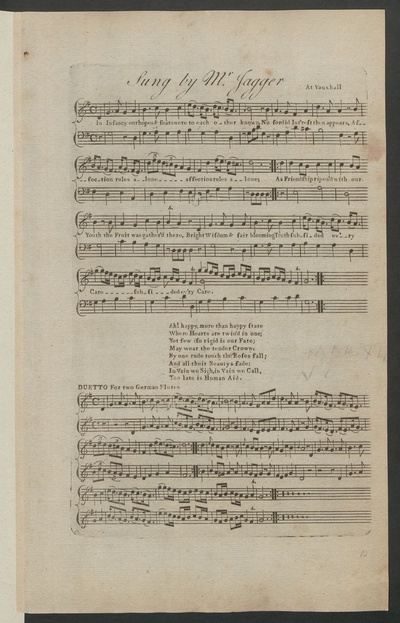
Sung by Mr. Jagger at Vauxhall
A favorite song in Judith: sung by Miss Brent
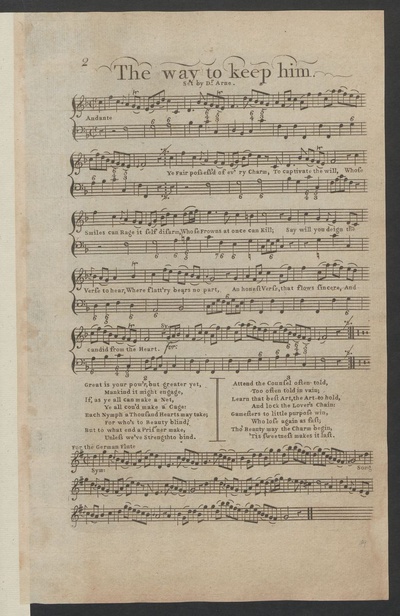
The way to keep him
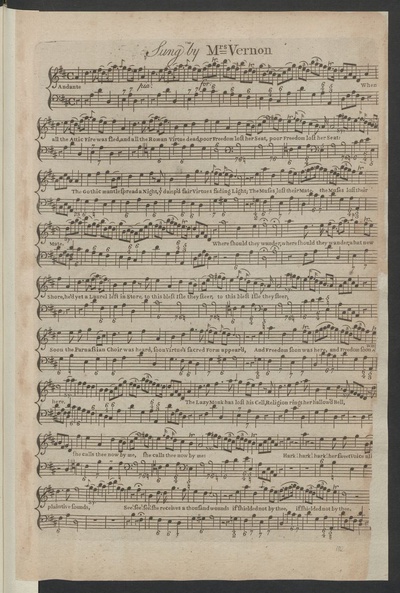
Sung by Mrs. Vernon
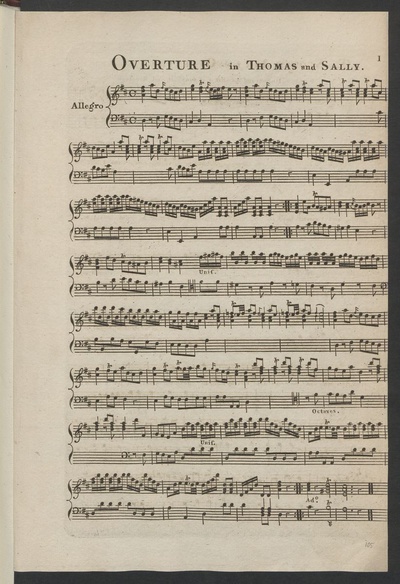
Overture in Thomas and Sally
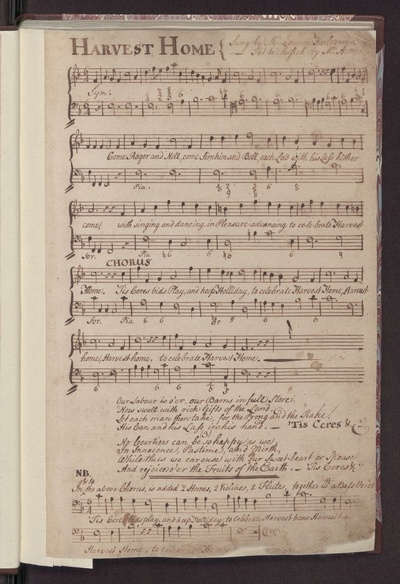
Harvest home
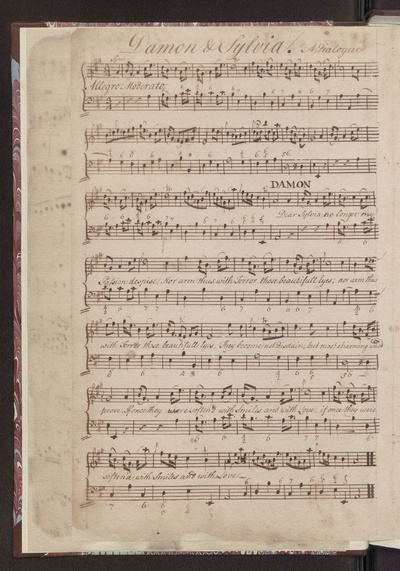
Damon & Sylvia: a dialog
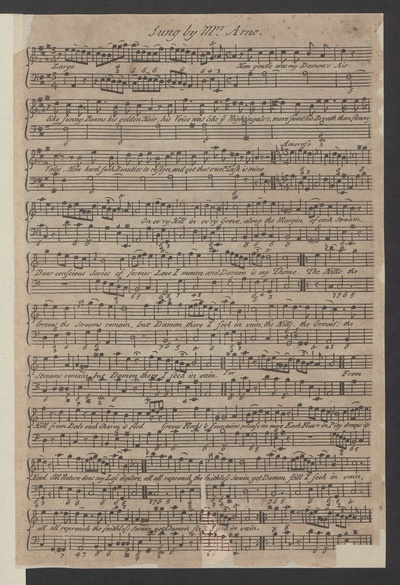
Sung by Mrs. Arne
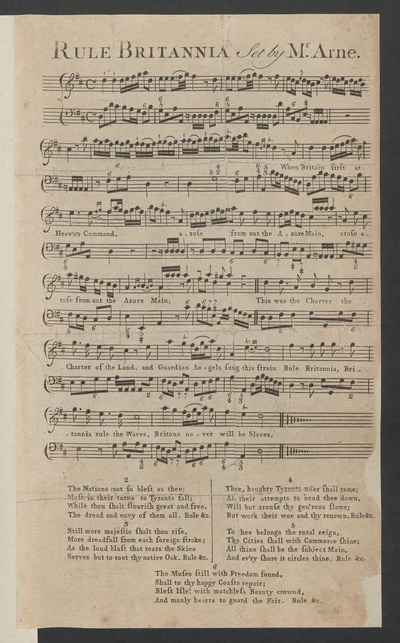
Rule Britannia
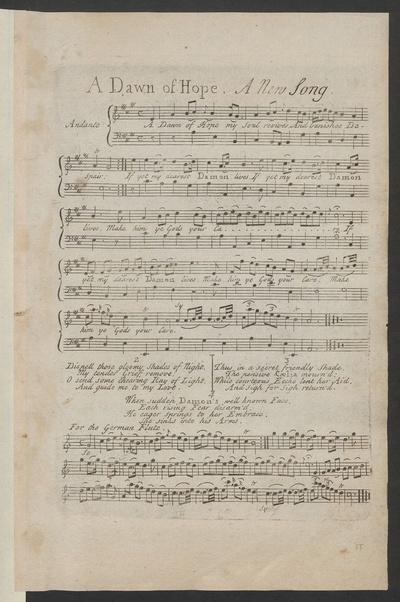
A dawn of hope: a new song
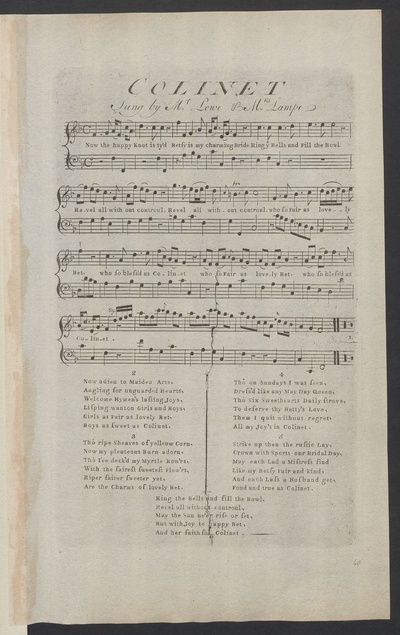
Colinet: sung by Mr. Lowe & Mrs. Lampe
The gallant sailor
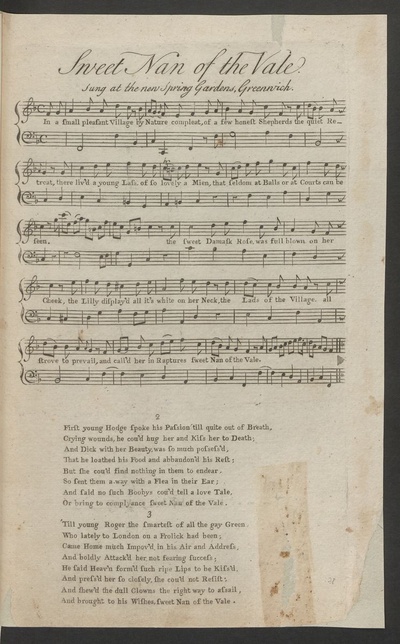
Sweet Nan of the vale: sung at the new Spring Gardens, Greenwich
cloth
cloth, bonade
cloth
Untitled
Untitled
~8 min read
Encyclopedic overview
Thomas Augustine Arne (/ɑːrn/; 12 March 1710 – 5 March 1778) was an English composer of the late Baroque and early Classical periods. He is known for his patriotic song "Rule, Britannia!" and the song "A-Hunting We Will Go", the latter composed for a 1777 production of The Beggar's Opera, which has since become popular as a folk song and a nursery rhyme. Arne was a leading British theatre composer of the 18th century, working at the West End's Drury Lane and Covent Garden. He wrote many operatic entertainments for the London theatres and pleasure gardens, as well as concertos, sinfonias and sonatas.
Early life
Excerpted from Wikipedia’s “Thomas Arne” article, available under the CC BY-SA 4.0 licence.