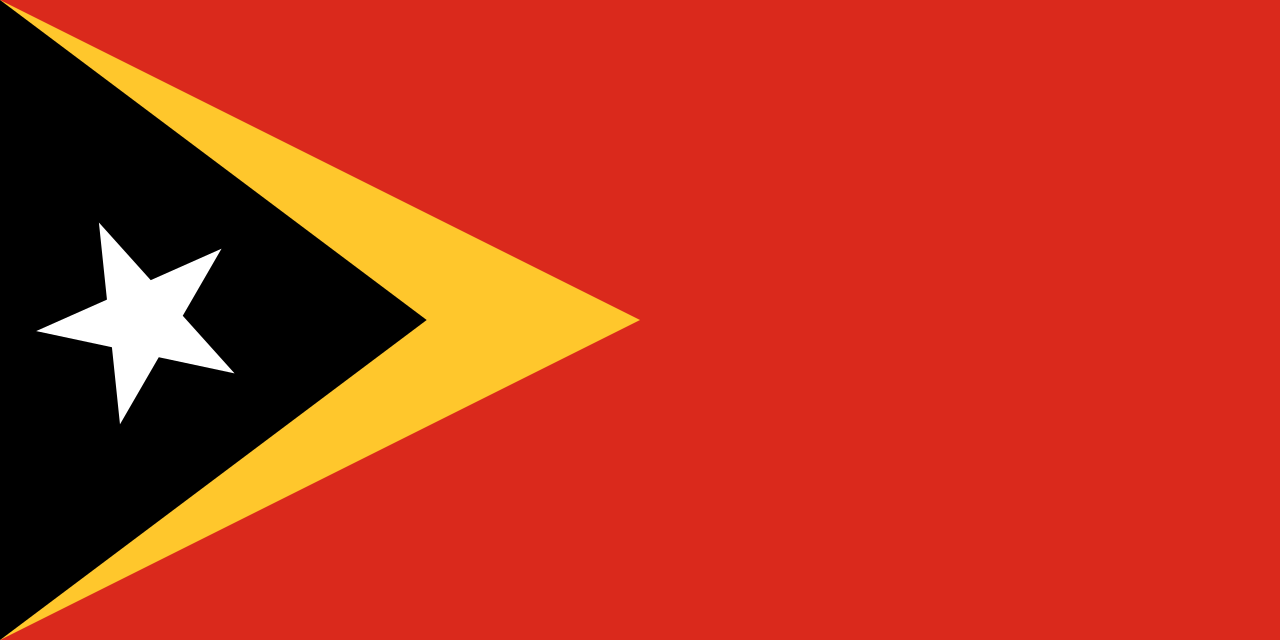
Timor-Leste
Sign in to saveAlso known as Democratic Republic of Timor-Leste, Timor Leste, East Timor, TL
Timor-Leste, also known as East Timor, officially the Democratic Republic of Timor-Leste, is a country in Southeast Asia. It comprises the eastern half of the island of Timor, the coastal exclave of Oecusse in the island's northwest, and the islands of Atauro and Jaco, for a total land area of . Timor-Leste shares a land border with Indonesia to the west; Australia is the country's southern neighbour, across the Timor Sea. Dili, on the north coast of Timor, is its capital and largest city.
OverviewAI-generated
Timor-Leste, officially the Democratic Republic of Timor-Leste, is a sovereign island country located in Asia. Its capital is Dili, and it operates under a semi-presidential republican system. The nation shares borders with Indonesia and Australia. It is a member of the United Nations, the Community of Portuguese Language Countries, the Association of Southeast Asian Nations, and the International Bank for Reconstruction and Development.
The official languages are Portuguese and Tetum. The currency includes the United States dollar and East Timor centavo coins. The national anthem is Pátria, and the top-level Internet domain is .tl. The highest point in the country is Tatamailau. The legislative body is the National Parliament. José Ramos-Horta serves as head of state, while Taur Matan Ruak and Xanana Gusmão are heads of government. The country is located in the UTC+09:00 time zone.
Synthesized by Vinony from 72 facts across 10 sources: Wikidata, REST Countries, Open Meteo, Openweathermap, World Bank, OpenStreetMap, Firecrawl, PubMed, Vinony graph, Geo. Generated from structured data (not the Wikipedia text) and checked against those facts — may still contain errors.
In the Vinony graph
Timor-Leste appears in Vinony's Countries collection — one of 215 entries.
Vinony's link graph records 6,907 inbound references to Timor-Leste, and connects out to Non-Aligned Movement, Austronesian peoples and Uab Meto.
The entry is geolocated on the map, across 2 mapped points.
It is catalogued under topics including 1975 establishments in Asia, 2002 establishments in Asia and Countries and territories where Portuguese is an official language.
Weather now
cached 17h ago7-day forecast
via Open-Meteo
Country
- Capital
- Dili
- Population
- 1,391,221
- Region
- Asia · South-Eastern Asia
- Demonym
- East Timorese
- Currencies
- USD ($)
- Languages
- Portuguese, Tetum
- Calling code
- +670
- Drives on
- Left
- Gini
- 28.7 (2014)
- FIFA code
- TLS
- TLD
- .tl
- Timezones
- UTC+09:00
- Borders
- IDN
via REST Countries
Indicators · World Bank
- GDP
- $1.9B(2024)
- Population
- 1,400,638(2024)
- Life expectancy
- 67.9 yrs(2024)
- Unemployment
- 1.6 %(2025)
- Urban population
- 28.7 %(2024)
- Internet users
- 35 %(2021)
- Forest area
- 61.7 %(2023)
- Renewable energy
- 11.4 %(2022)
via World Bank Open Data · CC BY 4.0
Wikipedia views (30d)
101,872 totalvia Wikimedia Pageviews API
Key facts
- Country.HDI_rank
- 142nd
- Country.conventional_long_name
- Democratic Republic of
- Country.common_name
- Timor-Leste
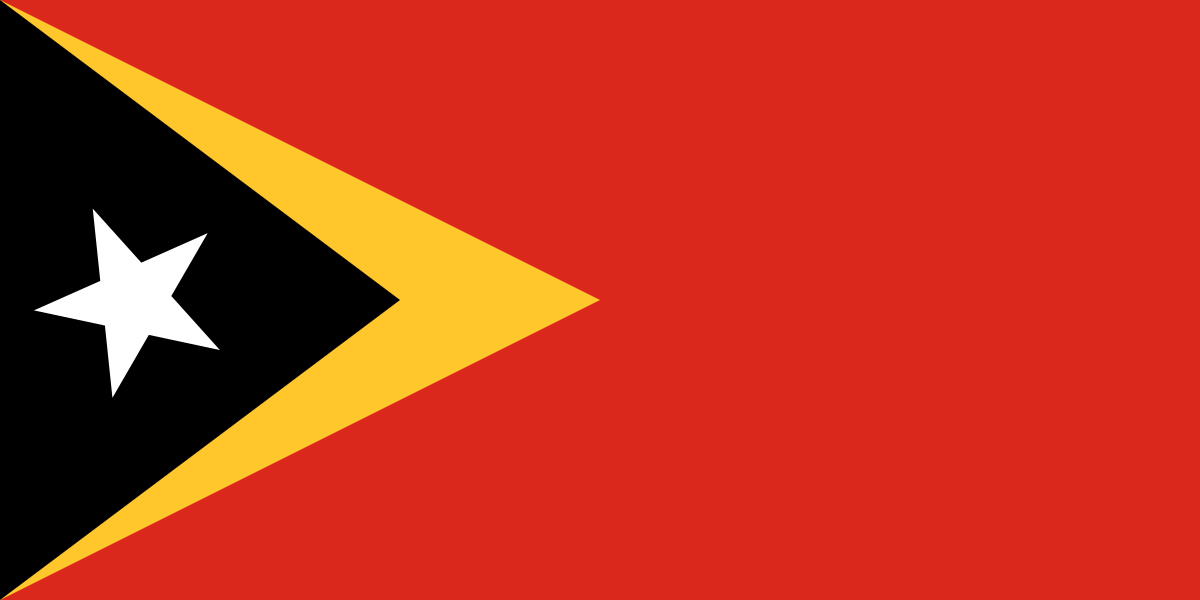
- Country.image_flag
- Flag of East Timor.svg
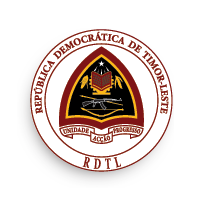
- Country.image_coat
- Coat of arms of East Timor.svg
- Country.symbol_type
- Emblem
- Country.national_motto
- "Unity, Action, Progress"
- Country.national_anthem
- "Fatherland"
- Country.map_width
- 230px
- Country.map_caption
- Location of Timor-Leste (green) toward the eastern end of the Malay Archipelago
- Country.capital
- Dili
- Country.largest_city
- Dili
- Country.religion_year
- 2015 census
- Country.government_type
- Unitary semi-presidential republic
- Country.leader_title1
- President
- Country.leader_name1
- José Ramos-Horta
- Country.leader_title2
- Prime Minister
- Country.leader_name2
- Xanana Gusmão
via Wikipedia infobox
Research
808 papersvia PubMed
Official website
Link to the official site · 13,768 chars · not written by Vinony
Wikidata facts
- Instance of
- island country
- Official name
- République démocratique du Timor oriental
- Demonym
- timorense
- Religion
- Islam
- Country
- Portuguese Empire
- Contains
- Atauro
- Continent
- Asia
- Capital
- Dili
- Official language
- Tetum
- Currency
- East Timor centavo coins
- Population
- 1400638
- Area
- 14918.72
- Head of government
- Xanana Gusmão
- Head of state
- José Ramos-Horta
- Form of government
- unitary state
- Legislature
- National Parliament
- Anthem
- Pátria
- Shares border with
- Indonesia
- Highest point
- Tatamailau
- Official website
- timor-leste.gov.tl
- Image
- Lospalos klein.jpg
- Life expectancy
- 69
- Nominal GDP
- 3163324631
- Calling code
- +670
Show 54 more facts
- Licence plate code
- TL
- Mains voltage
- 220
- Motto
- Undod, Gweithredu, Cynnydd
- Coat of arms
- coat of arms of East Timor
- top-level Internet domain
- .tl
- Commons category
- East Timor
- topic's main category
- Category:Timor-Leste
- category for people born here
- Category:Births in East Timor
- category for people who died here
- Category:Death in Timor-Leste
- category of associated people
- Category:East Timorese people
- diplomatic relation
- Russia
- topic's main Wikimedia portal
- Portal:East Timor
- history of topic
- history of East Timor
- IPA transcription
- œstːɪˈmuːɾ
- Commons gallery
- Timor Lorosa'e
- mobile country code
- 514
- lowest point
- Timor Sea
- office held by head of government
- Prime Minister of East Timor
- driving side
- left
- geography of topic
- Geography of East Timor
- emergency phone number
- 112
- marriageable age
- 17
- office held by head of state
- President of East Timor
- number of out-of-school children
- 99489
- total fertility rate
- 3.98
- replaces
- Portuguese Timor
- inception
- 1975-11-28
- Unicode character
- 🇹🇱
- central bank
- Banco Central de Timor-Leste
- culture
- culture of East Timor
- BTI Status Index
- 6.09
- BTI Governance Index
- 5.78
- economy of topic
- economy of Timor-Leste
- maritime identification digits
- 550
- demographics of topic
- demographics of East Timor
- Democracy Index
- 7.06
- native label
- República Democrática de Timor-Leste
- Human Development Index
- 0.607
- P11012
- Dithmarschen
- hashtag
- EastTimor
- on focus list of Wikimedia project
- Wikipedia:Vital articles/Level/4
- Gini coefficient
- 28.7
- Inequality-adjusted Human Development Index
- 0.440
- P12749
- Kerala
- birth rate
- 24.611
- male population
- 683957
- death rate
- 6.535
- rural population
- 911089
- female population
- 657338
- urban population
- 430207
- located in/on physical feature
- Southeast Asia
Sources (15)
via Wikidata · CC0
Travel guide
Understand
thumb|View of the town of Manatuto
Get in
thumb|375px|A map showing the visa requirements of Timor-Leste, with countries in dark green having visa-free access, and countries in light green having visa on arrival at Dili airport or seaport only.
Get around
thumbnail|Soibada, Timor-Leste
See
thumb|Dili and Atauro Island Carnival de Timor is the annual festival held in Dili in middle of April (sometimes in May, depending on rain season). Initiated by the Ministry of Tourism in 2010, the carnival is all about fun, music and multiculturalism. Both modern and traditional costumes, Timor-Leste and foreign minorities, even embassies participate in this annual festival. The parade starts at a landmark and ends at Palacio do Governo, greeted by bands and awards for the best dressed group. The crowd continues to dance into the night with live music and other attractions.
Tourists in Timor-Leste are a rare breed. Traveling from village to village, you're likely to hear choruses of "malay" (the Tetum word for foreigner) and folks will want to engage you in conversation. One could spend several days just enjoying the feeling of being a very welcome stranger.
Timor-Leste is at the end of the Indonesian archipelago, north of Darwin, Australia and at the base of the Coral Triangle, which hosts the highest diversity of coral and reef fish species on earth.
Timor-Leste offers a rich cultural heritage spun from tens of thousands of years of human habitation, the Portuguese and Indonesian colonial periods, and from the depths of a society which has cultural traditions as the fabric of that bonds society together.
Timor-Leste is well positioned for community-based ecotourism, which has been written into the nation's tourism strategic plan. The Nino Konis National Park (situated …
Eat
thumbnail|Cooking the natural way in Timor-Leste
The staple food in Timor-Leste is rice. Commonly grown food crops include taro, cassava, sweet potatoes and maize. Beans, cabbage, cowpeas, onions and spinach are well-liked vegetables. People also rear poultry, goats and pigs. Fish forms an important part of the diet and acts as a supplement to any meal. Most traditional Timor-Leste recipes use a generous dose of spices. Mangoes, watermelons, papayas, bananas and coconuts are the most commonly cultivated fruits here. Carbohydrates like sago or other grains form the main dish for many a Timor-Leste meal.
Many restaurants in Dili serve Portuguese and Italian cuisine and you can find Chinese, Japanese and Thai as well. Significant numbers of foreigners living and working in Timor-Leste ensure a loyal clientele for these restaurants.
Drink
Several beachfront bars and nightclubs provide the nightlife in Dili serving food and drink, but they cater mainly to the small expat population making them relatively expensive. Some fancy inner city restaurants include Nautilaus, Diya, Ocean View Hotel and Gion Japanese Restaurant. In the Meti Aut area is the newly renovated Atlantic Bar and Grill which is arguably amongst the best service and quality in Timor. Another is the Caz Bar where kayaks can be hired late in the night and a barbeque serves fried fish and all the beach side meals such as sizzling garlic prawns, hamburgers and a large range of cold beer.
Sleep
thumb|Night in Dili
Dili has a wide range of hotels at every price level.
Outside of Dili, there are really only two other bona fide hotels in the country, at Baucau and at Com. However, there are plenty of creative options if you don't insist on luxury, and these range from guesthouses to convents to camping.
Stay safe
Timor-Leste continues to face sporadic internal ethnic & political tension and related violence may occur. This may not be targeted at foreigners or tourists, but follow the guidelines below. There is still a considerable international presence in Timor-Leste, including a United Nations mission and international police and military (mostly conducting capacity building and training for national security forces).
Foreigners or tourists have been targets for violence in Timor-Leste, so visitors should be responsible and adhere to standard precautions as in any developing country. Remember, that you are travelling in a underdeveloped country, and crimes such as assault and theft do occur. The key to avoid such crime is to apply common sense and reduce your exposure to possible opportunity crime such as:
Avoid large gatherings (demonstrations have had the potential to escalate with little or no warning in the past). Remove any visible valuables from your car if leaving it unattended. Women should avoid travelling alone in taxis at night. Women should avoid walking alone at night in quiet streets.
Stay healthy
Malaria is no longer an issue in Timor-Leste.
Tap water is not safe to drink. Boil it or treat it before consuming, or drink bottled water.
Respect
thumb|Independence monument in Balibo Timor-Leste was devastated by the Indonesian occupation that may have killed up to 200,000 (1 in 5 of all people in Timor-Leste) indigenous people. Speaking well of Suharto's Orde Baru or of the idea of Timor-Leste becoming part of Indonesia will not be well received. However, the two countries enjoy a positive relationship today, and Indonesia played a key role in advocating for Timor-Leste's accession to ASEAN.
Many Timor-Leste people are sympathetic or even outright nostalgic about the period of Portuguese rule, where they were generally left to their own devices by the Portuguese colonial government. As with discussing politics abroad in all places, if you aren't sure a discussion about sensitive topics will go over well, don't bring it up.
Travel guide from Wikivoyage (CC BY-SA 4.0)
~40 min read
Encyclopedic overview
24 sectionsContents
- Name
- History
- Prehistory and Classical era
- Portuguese era (1769–1975)
- Indonesian occupation (1975–1999)
- Contemporary era
- Geography
- Government and politics
- Administrative divisions
- Foreign relations
- Military
- Economy
- Demographics
- Ethnicity
- Language
- Religion
- Education
- Culture
- Media
- See also
- Notes
- References
- Bibliography
- External links
Timor-Leste, also known as East Timor, officially the Democratic Republic of Timor-Leste, is a country in Southeast Asia. It comprises the eastern half of the island of Timor, the coastal exclave of Oecusse in the island's northwest, and the islands of Atauro and Jaco, for a total land area of 15,007 square kilometres (5,794 sq mi). Timor-Leste shares a land border with Indonesia to the west; Australia is the country's southern neighbour, across the Timor Sea. Dili, on the north coast of Timor, is its capital and largest city.
Timor was settled over time by various Papuan and Austronesian peoples, which created a diverse mix of cultures and languages linked to Southeast Asia and Melanesia. East Timor came under Portuguese influence in the sixteenth century, remaining a Portuguese colony until 1975. Internal conflict preceded a unilateral declaration of independence and an Indonesian invasion and annexation. The subsequent Indonesian occupation was characterised by extreme abuses of human rights, including torture and massacres, a series of events named the East Timor genocide. Resistance continued throughout Indonesian rule and in 1999, a United Nations–sponsored act of self-determination led Indonesia to relinquish control of the territory. On 20 May 2002, Timor-Leste became the first new sovereign state of the 21st century. That same year, relations with Indonesia were established and normalised, with Indonesia also supporting Timor-Leste's accession into ASEAN.
Excerpted from Wikipedia’s “Timor-Leste” article, available under the CC BY-SA 4.0 licence.
Gallery (38)
On the map
2 mapped locations
Available in 242 languages
- Español
- Français
- Deutsch
- 中文
- 日本語
- Русский
- Português
- Italiano
- العربية
- हिन्दी
- Abkhazian
- abstract
- Achinese
- Afrikaans
- Albanian
- Albanian
- Amharic
- ami
Show 223 more
- Angika
- Aragonese
- Armenian
- Arpitan
- Assamese
- Asturian
- azb
- Azerbaijani
- Bahasa Indonesia
- Balinese
- Bangla
- Banjar
- Bashkir
- Basque
- bat_smg
- Bavarian
- be_x_old
- Belarusian
- Betawi
- Bhojpuri
- Bikol
- Bishnupriya
- Bislama
- Bosnian
- Breton
- Buginese
- Bulgarian
- Buriat
- Burmese
- Catalan
- cbk_zam
- cdo
- Cebuano
- Central Dusun
- Central Kurdish
- Chechen
- Cheyenne
- Cornish
- Corsican
- Crimean Tatar
- Croatian
- Czech
- dag
- Danish
- Divehi
- dty
- Dzongkha
- Egyptian Arabic
- Erzya
- Esperanto
- Estonian
- Extremaduran
- Faroese
- Fiji Hindi
- Filipino
- Finnish
- fiu_vro
- Fula
- Gagauz
- Galician
- gcr
- Georgian
- Gilaki
- Goan Konkani
- Greek
- Guarani
- Gujarati
- Haitian Creole
- Hakka Chinese
- Hausa
- Hawaiian
- Hebrew
- Hungarian
- Iban
- Icelandic
- Ido
- Iloko
- Inari Sami
- Interlingua
- Interlingue
- Inupiaq
- Irish
- Jamaican Creole English
- Javanese
- kai
- Kannada
- Kara-Kalpak
- Karachay-Balkar
- Kashmiri
- Kashubian
- Kazakh
- kge
- Khmer
- Kinyarwanda
- Kongo
- Kurdish
- Kyrgyz
- Ladino
- Lao
- Latin
- Latvian
- Ligurian
- Limburgish
- Lingala
- Lingua Franca Nova
- Lithuanian
- lld
- Lombard
- Low German
- Lower Sorbian
- Luxembourgish
- Macedonian
- Maithili
- Malagasy
- Malay
- Malayalam
- Maltese
- Manipuri
- Manx
- Māori
- map_bms
- Marathi
- Mari
- Mazanderani
- Minangkabau
- Mingrelian
- Mirandese
- mnw
- Mongolian
- Moroccan Arabic
- Nederlands
- Nepali
- Newari
- Nias
- Northern Frisian
- Northern Sami
- Norwegian
- Norwegian Nynorsk
- Novial
- Occitan
- Odia
- Old English
- olo
- Oromo
- Ossetic
- Pampanga
- Papiamento
- Pashto
- Piedmontese
- Polski
- Punjabi
- Quechua
- Romanian
- Rusyn
- Samoan
- Sango
- Santali
- Sardinian
- Saterland Frisian
- Scots
- Scottish Gaelic
- Serbian
- Serbian (Latin)
- Shan
- Shona
- Sicilian
- Silesian
- simple
- Sindhi
- Sinhala
- Slovak
- Slovenian
- Somali
- Standard Moroccan Tamazight
- Sundanese
- Svenska
- Swahili
- szy
- Tachelhit
- Tajik
- Talysh
- Tamil
- Taroko
- Tatar
- tay
- Telugu
- Tetum
- Tibetan
- Tiếng Việt
- Tok Pisin
- Toki Pona
- Tongan
- Tumbuka
- Türkçe
- Turkmen
- Udmurt
- Ukrainian
- Upper Sorbian
- Urdu
- Uyghur
- Uzbek
- Venetian
- Veps
- Volapük
- Waray
- Welsh
- West Flemish
- Western Frisian
- Western Panjabi
- Wolof
- Wu Chinese
- Yakut
- Yiddish
- Yoruba
- Zaza
- Zeelandic
- zh_classical
- zh_min_nan
- zh_yue
- Zhuang
- فارسی
- ไทย
- 한국어
via Wikidata sitelinks · CC0