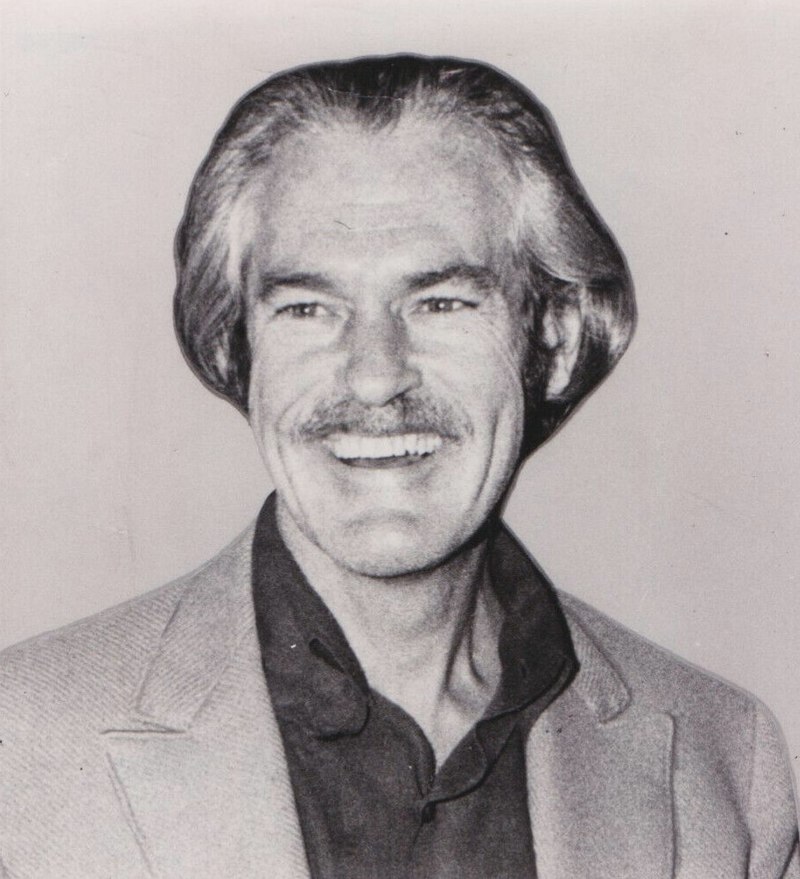
File:Dr._Timothy_Leary_(1970_AP_Photo).jpg · Wikimedia Commons · See Wikimedia Commons
Timothy Leary
Sign in to saveAlso known as Timothy Francis Leary, Dr. Timothy Leary
American psychologist (1920–1996)
Timothy Leary was an American psychologist who became a prominent advocate for the use of psychedelic drugs, particularly LSD, in the 1960s. His research and public promotion of these substances made him an influential and controversial figure in counterculture history, shaping debates about drug policy, consciousness, and personal freedom that continue to influence society today.
AI-generated from the Wikipedia summary — may contain errors.
Film & TV
Springfield, Massachusetts, USA
Timothy Francis Leary was an American psychologist and writer known for advocating the exploration of the therapeutic potential of psychedelic drugs under controlled conditions. Leary conducted experiments under the Harvard Psilocybin Project during American legality of LSD and psilocybin, resulting in the Concord Prison Experiment and the Marsh Chapel Experiment. Leary's colleague, Richard…
Known for
- Nova '78 — Self (archive footage)2026
- Utah in the ’70s — Himself (archival footage)2026
- Butthole Surfers: The Hole Truth and Nothing Butt — Self (archive footage)2026
- John Lilly and the Earth Coincidence Control Office — Self (archive footage)2025
- One to One: John & Yoko — Self (archive footage)2025
- Medium Rare Cold Case — Dr Kyle2025
- Larry Flynt for President — Self (archive footage)2021
- Surviving You, Always — Self (voice)2021
- My Psychedelic Love Story — Self (archive footage)2020
- Out of Shadows — Self (archive)2020
via TMDB
Wikidata facts
- Instance of
- human
- Given name
- Francis
- Gender
- male
- Citizenship
- United States
- Place of birth
- Springfield
- Place of death
- Beverly Hills
- Occupation
- actor
- Educated at
- College of the Holy Cross
- Employer
- Harvard University
- Languages spoken
- English language
- Native language
- English language
- Religion
- Hinduism
- Field of work
- psychology
- Record label
- ESP-Disk
- Conflict
- World War II
- Military branch
- United States Army
- Image
- Dr. Timothy Leary (1970 AP Photo).jpg
- Number of children
- 3
Show 10 more facts
- Commons category
- Timothy Leary
- date of birth
- 1920-10-22
- date of death
- 1996-05-31
- topic's main category
- Category:Timothy Leary
- name in native language
- Timothy Francis
- cause of death
- prostate cancer
- manner of death
- natural causes
- described by source
- UbuWeb
- writing language
- English language
- archives at
- New York Public Library Main Branch
via Wikidata · CC0
~40 min read
Encyclopedic overview
Timothy Francis Leary (October 22, 1920 – May 31, 1996) was an American psychologist and author known for his strong advocacy of psychedelic drugs. Evaluations of Leary are polarized, ranging from "bold oracle" to "publicity hound". According to poet Allen Ginsberg, he was "a hero of American consciousness", while writer Tom Robbins called him a "brave neuronaut". President Richard Nixon disagreed, calling Leary "the most dangerous man in America". During the 1960s and 1970s, at the height of the counterculture movement, Leary was arrested 36 times.
As a clinical psychologist at Harvard University, Leary founded the Harvard Psilocybin Project after an experience with magic mushrooms he had in Mexico in 1960. For two years, he tested psilocybin's therapeutic effects, in the Concord Prison Experiment and the Marsh Chapel Experiment. He also experimented with lysergic acid diethylamide (LSD), which was also legal in the US at the time. Other Harvard faculty questioned his research's scientific legitimacy and ethics because he took psychedelics himself along with his subjects and allegedly pressured students to join in. Harvard fired Leary and his colleague Richard Alpert (later known as Ram Dass) in May 1963. Many people learned of psychedelics after the Harvard scandal. Leary continued to publicly promote psychedelic drugs and became a well-known figure of the counterculture of the 1960s; he popularized catchphrases that promoted his philosophy, such as "turn on, tune in, drop out", "set and setting", and "think for yourself and question authority".
Excerpted from Wikipedia’s “Timothy Leary” article, available under the CC BY-SA 4.0 licence.