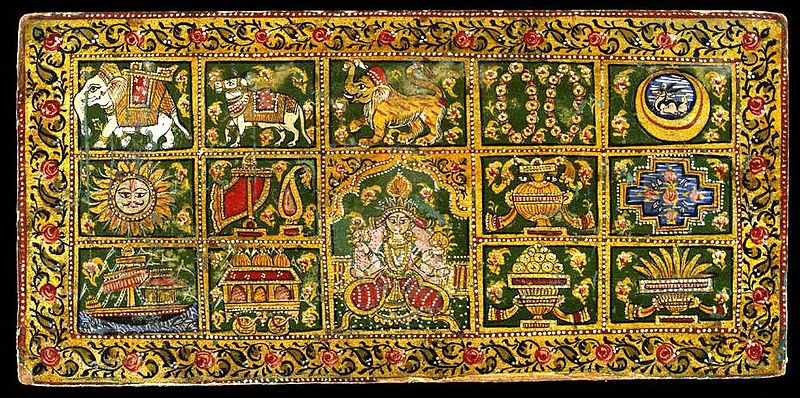
File:14_dreams.jpg · Wikimedia Commons · See Wikimedia Commons
Tirthankara
Sign in to savethumb| Jain miniature painting of 24 Jain Tirthankaras, Jaipur, |300px thumb|The 24 Tirthankaras forming the tantric meditative syllable Hrim, painting on cloth, Gujarat, |300px
Wikidata facts
Show 3 more facts
- Commons category
- Tirthankaras
- described by source
- Brockhaus and Efron Encyclopedic Dictionary
- topic's main category
- Category:Tirthankaras
Sources (1)
via Wikidata · CC0
~17 min read
Encyclopedic overview
20 sectionsContents
- Meaning
- Historicity and Hagiography
- The Historical ''Tirthankaras''
- The Hagiographical Tradition
- The Rishabhanatha Debate
- Theological Significance and Sectarian Views
- ''Tīrthaṅkara-naam-karma''
- ''Panch Kalyanaka'' (Five Auspicious Events)
- ''Samavasarana''
- ''Tīrthaṅkaras'' of the present cosmic age
- List of the 24 ''Tirthankaras''
- Present cosmic age
- Next cosmic age
- Iconography and Art
- In other religions
- See also
- References
- Citations
- Sources
- External links
thumb| Jain miniature painting of 24 Jain Tirthankaras, Jaipur, |300px thumb|The 24 Tirthankaras forming the tantric meditative syllable Hrim, painting on cloth, Gujarat, |300px
In Jainism, a Tirthankara (; ) is a saviour and supreme preacher of the dharma (righteous path). The word tirthankara signifies the founder of a tirtha, a fordable passage across saṃsāra, the sea of interminable birth and death. According to Jains, tirthankaras are the supreme preachers of dharma, who have conquered saṃsāra on their own and made a path for others to follow. After understanding the true nature of the self or soul, the Tīrthaṅkara attains kevala jnana (omniscience). A Tirthankara provides a bridge for others to follow them from saṃsāra to moksha (liberation).
Excerpted from Wikipedia’s “Tirthankara” article, available under the CC BY-SA 4.0 licence.