Tmesipteris · Kew POWO · Kew Plants of the World Online
Tmesipteris
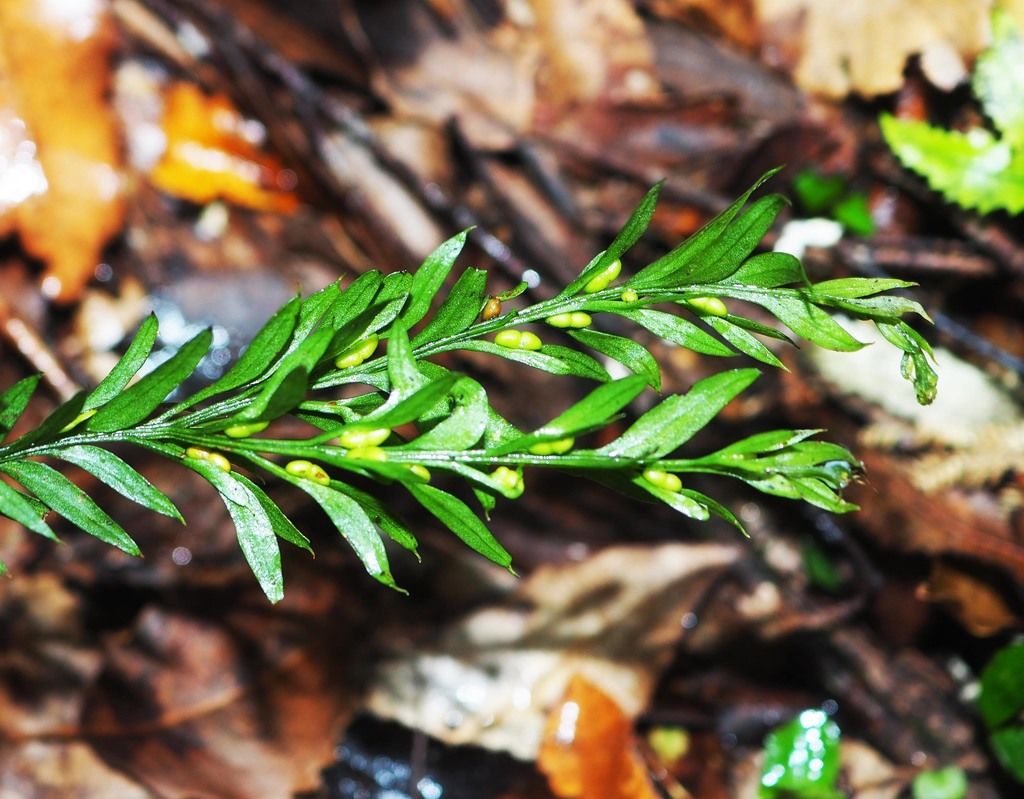
Sign in to saveTmesipteris, the hanging fork ferns, is a genus of ferns, one of two genera in the family Psilotaceae, order Psilotales (the other being Psilotum). Tmesipteris is restricted to certain lands in the Southern Pacific, notably Australia, New Zealand and New Caledonia. In New Zealand this hanging epiphyte is common in the warm temperate rain forests of both main islands, where it can normally be found as short spiky dark-green fronds (10–15 cm long), often with lighter bag-like sporangia at the bases of some of its "leaves". The plant possesses no true leaves; what appear to be leaves are fla
Species
GENUS
- KingdomPlantae
- PhylumTracheophyta
- ClassPolypodiopsida
- OrderPsilotales
- FamilyPsilotaceae
via GBIF · Kew POWO
Museum specimens
- Specimen records
- 217
- With media
- 192
- Family
- Psilotaceae
- Collections
- US, MO, BPBM, RSA, CAS, MEL
- Recorded in
- New Zealand, New Caledonia, Australia, Philippines, Nouvelle-CaléDonie, Indonesia, Solomon Islands
Wikidata facts
- Instance of
- taxon
- Parent taxon
- Psilotaceae
- Image
- Tmesipteris elongata.jpg
Show 5 more facts
- Commons category
- Tmesipteris
- taxon name
- Tmesipteris
- taxon rank
- genus
- taxonomic type
- Tmesipteris tannensis
Sources (1)
via Wikidata · CC0
~3 min read
Encyclopedic overview
4 sectionsContents
- Taxonomy
- Species
- Phylogeny
- References
Tmesipteris, the hanging fork ferns, is a genus of ferns, one of two genera in the family Psilotaceae, order Psilotales (the other being Psilotum). Tmesipteris is restricted to certain lands in the Southern Pacific, notably Australia, New Zealand and New Caledonia. In New Zealand this hanging epiphyte is common in the warm temperate rain forests of both main islands, where it can normally be found as short spiky dark-green fronds (10–15 cm long), often with lighter bag-like sporangia at the bases of some of its "leaves". The plant possesses no true leaves; what appear to be leaves are flattened stems. The fronds emerge directly from the fibrous root-mats which clad the trunks of mature tree ferns such as Dicksonia and Cyathea. Tmesipteris is from the Greek language, meaning a "cut fern", referring to the truncated leaf tips.
==Taxonomy== The Smith et al. classification of 2006, based on molecular phylogeny, placed Tmesipteris in Psilotaceae. Subsequent classifications have maintained this placement.
Excerpted from Wikipedia’s “Tmesipteris” article, available under the CC BY-SA 4.0 licence.
Gallery (2)
Available in 16 languages
- Français
- 中文
- Português
- Belarusian
- Cebuano
- Croatian
- Czech
- Egyptian Arabic
- Finnish
- Nederlands
- Norwegian
- Polski
- Svenska
- Ukrainian
- Waray
via Wikidata sitelinks · CC0