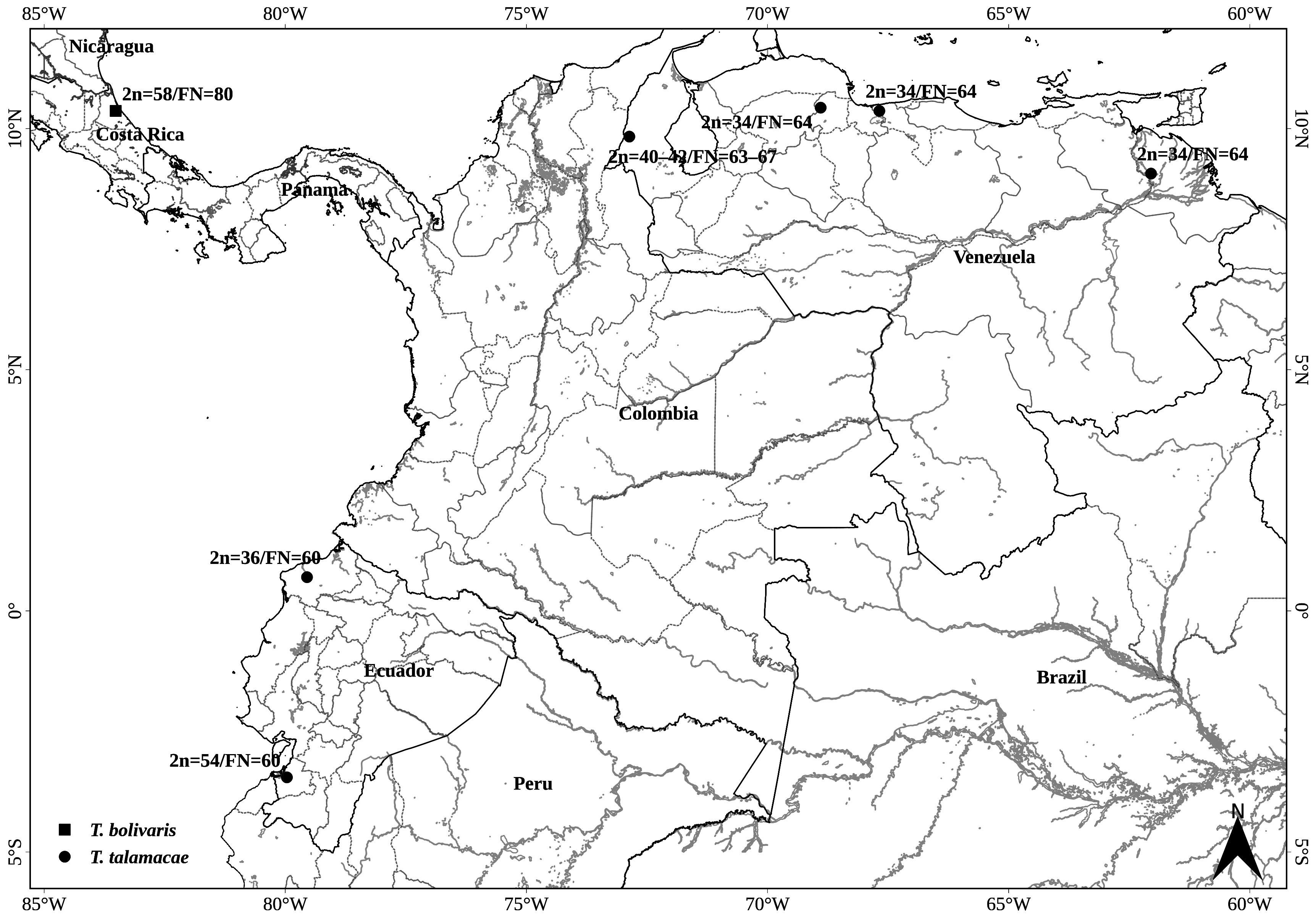
Moreira, Camila Do Nascimento;Ventura, Karen;Percequillo, Alexandre Reis;Yonenaga-Yassuda, Yatiyo
Transandinomys
Sign in to saveTransandinomys is a genus of rodents in the tribe Oryzomyini of family Cricetidae. It includes two species—T. bolivaris and T. talamancae—found in forests from Honduras in Central America south and east to southwestern Ecuador and northwestern Venezuela in northern South America. Until 2006, its members were included in the genus Oryzomys, but phylogenetic analysis showed that they are not closely related to the type species of that genus, and they have therefore been placed in a new genus. They may be most closely related to genera like Hylaeamys and Euryoryzomys, which contain very
Species
GENUS
- KingdomAnimalia
- PhylumChordata
- ClassMammalia
- OrderRodentia
- FamilyCricetidae
via GBIF
Wikidata facts
- Instance of
- taxon
- Parent taxon
- Cricetidae
- Image
- Oryzomys bombycinus bombycinus dorsal.png
Show 3 more facts
- taxon rank
- genus
- taxon name
- Transandinomys
- Commons category
- Transandinomys
Sources (1)
via Wikidata · CC0
~15 min read
Encyclopedic overview
9 sectionsContents
- Taxonomy
- Description
- Skull and teeth
- Distribution, ecology, and behavior
- Conservation status
- Notes
- References
- Literature cited
- External links
Transandinomys is a genus of rodents in the tribe Oryzomyini of family Cricetidae. It includes two species—T. bolivaris and T. talamancae—found in forests from Honduras in Central America south and east to southwestern Ecuador and northwestern Venezuela in northern South America. Until 2006, its members were included in the genus Oryzomys, but phylogenetic analysis showed that they are not closely related to the type species of that genus, and they have therefore been placed in a new genus. They may be most closely related to genera like Hylaeamys and Euryoryzomys, which contain very similar species. Both species of Transandinomys have had eventful taxonomic histories.
Transandinomys bolivaris and T. talamancae are medium-sized, soft-furred rice rats. The upperparts—brownish in T. bolivaris and reddish in T. talamancae—are much darker than the whitish underparts. Both species are characterized by very long vibrissae (whiskers); those of T. bolivaris are particularly long. In addition to whisker length and fur color, several other morphological differences distinguish the two, including the wider first upper molar in T. bolivaris. Species of Hylaeamys and Euryoryzomys also differ from Transandinomys in some details of the skull and teeth and have shorter whiskers. Species of Transandinomys live on the ground, are active during the night, eat both plant and animal matter, and construct nests of vegetation. Both are hosts to various external parasites. They are in no apparent danger of extinction and have been assessed as "Least Concern" in the IUCN Red List.
Excerpted from Wikipedia’s “Transandinomys” article, available under the CC BY-SA 4.0 licence.