Encyclopedia of Life · EOL (see source)
Trochetia
Sign in to saveTrochetia is a subgenus of flowering plants, now placed in the genus Ruizia and the family Malvaceae (formerly in the Sterculiaceae, but genera now usually subsumed in the Dombeyoideae and other subfamilies). Species are endemic to the Mascarene Islands. The original genus was first described by A.P. de Candolle in 1823, who named it in honour of French botanist Henri Dutrochet.
Species
Трохетия (лат. Trochetia) — род растений семейства мальвовых, включает 18 видов. Ранее род относили к семейству Стеркулиевые, сегодня распределённого по нескольким подсемействам мальвовых. Трохетии относят к подсемейству домбеевые (Dombeyoideae). Классифицирован род в 1823 году Декандолем и назван в честь французского ботаника Анри Дютроше.
via · Kew POWO
Museum specimens
- Specimen records
- 5
- With media
- 2
- Family
- Malvaceae
- Collections
- MO, UMZC
- Recorded in
- [England; U.K.]
Wikidata facts
- Instance of
- taxon
- Parent taxon
- Dombeyoideae
- Image
- Trochetia blackburniana clean.jpg
Show 7 more facts
- taxon rank
- genus
- taxon name
- Trochetia
- Commons category
- Ruizia
- topic's main category
- Category:Trochetia
- endemic to
- Mascarene Islands
- has fruit type
- capsule
Sources (1)
via Wikidata · CC0
~5 min read
Encyclopedic overview
6 sectionsContents
- Description and ecology
- Pollination
- Species
- Footnotes
- References
- External links
Trochetia is a subgenus of flowering plants, now placed in the genus Ruizia and the family Malvaceae (formerly in the Sterculiaceae, but genera now usually subsumed in the Dombeyoideae and other subfamilies). Species are endemic to the Mascarene Islands. The original genus was first described by A.P. de Candolle in 1823, who named it in honour of French botanist Henri Dutrochet.
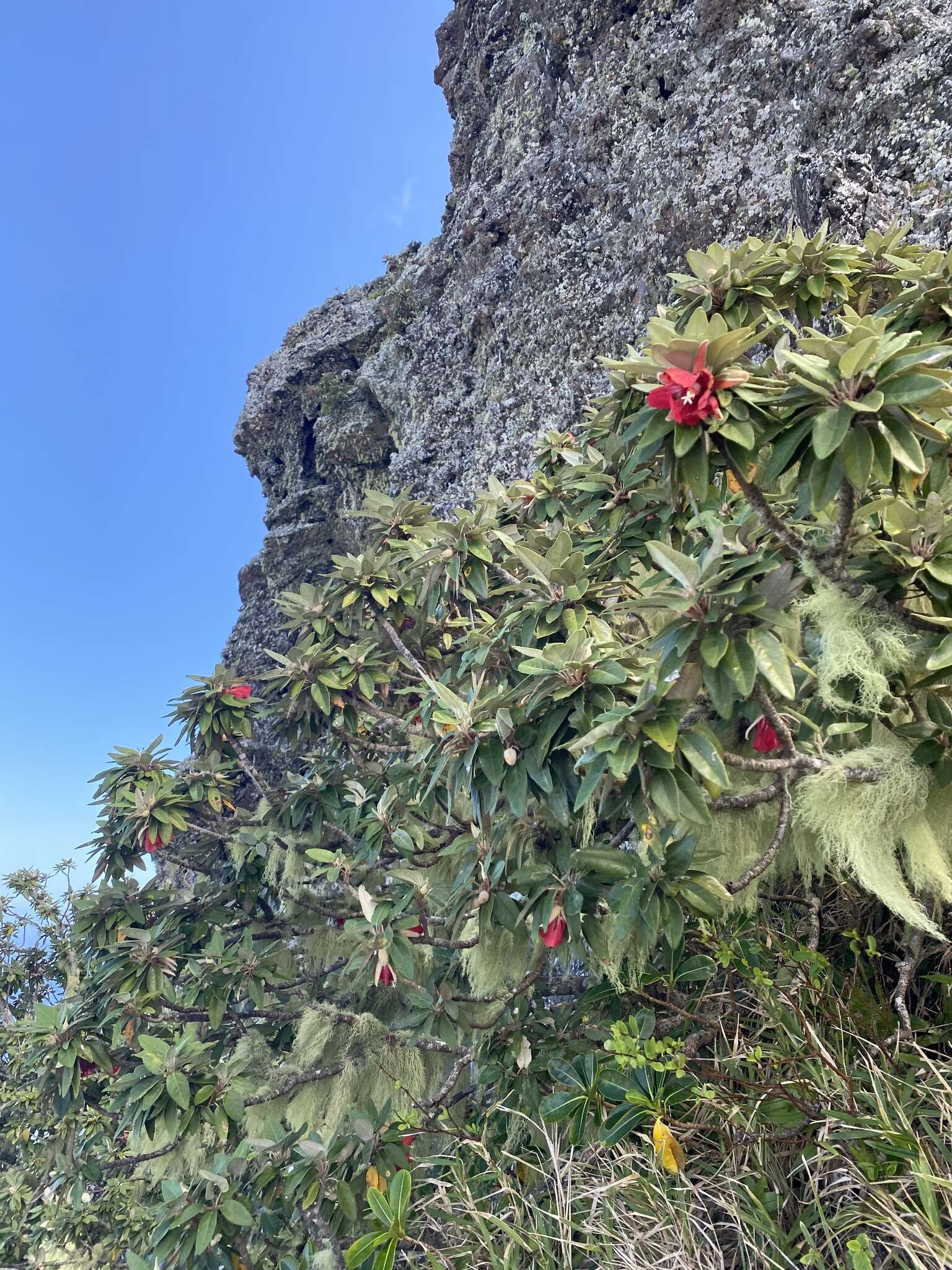
==Description and ecology== The genus Trochetia consists of scrubs or small trees, which can reach a height from two to eight metres. The hermaphroditic flowers are either white (T. triflora), pink (T. parviflora), or reddish orange (T. boutoniana). They are either single-standing, or grow in a cluster of three flowers. Some species have bell-shaped petals. All plants of this genus are imperiled due to the competition of invasive species, like the guavas from China but also by destruction caused by introduced monkeys and rats. Five species occur on Mauritius and one on La Reunion. The habitat consists of humid forests with a high annual rainfall or mountainous slopes which are directed windwards.
Excerpted from Wikipedia’s “Trochetia” article, available under the CC BY-SA 4.0 licence.