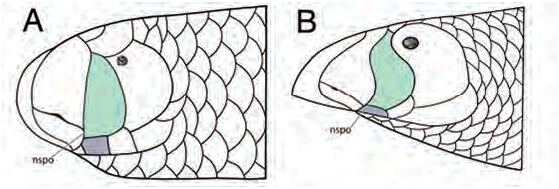
Weinell, Jeffrey L.;Hooper, Errol;Leviton, Alan E.;Brown, Rafe M.
Typhlopidae
Sign in to saveThe Typhlopidae are a family of blind snakes. They are found mostly in the tropical regions of Africa, Asia, the Americas, and all mainland Australia and various islands. The rostral scale overhangs the mouth to form a shovel-like burrowing structure. They live underground in burrows, and since they have no use for vision, their eyes are mostly vestigial. They have light-detecting black eye spots, and teeth occur in the upper jaw. Typhlopids do not have dislocatable lower jaw articulations restricting them to prey smaller than their oral aperture. All species in the family Typhlopidae are foss
OverviewAI-generated
Typhlopidae is a family of animals within the class Squamata, phylum Chordata, and kingdom Animalia. It belongs to the superfamily Typhlopoidea and is governed by the International Code of Zoological Nomenclature. The family is also referred to by the common name Mekura.
Specimen records for Typhlopidae are held by institutions including CUMV, NMV, and TM. These records originate from countries such as Tanzania, Indonesia, the Philippines, Papua New Guinea, and India. The family has been described in the Brockhaus and Efron Encyclopedic Dictionary.
Synthesized by Vinony from 23 facts across 5 sources: Wikidata, GBIF, Gbif Occ, iDigBio, Vinony graph. Generated from structured data (not the Wikipedia text) and checked against those facts — may still contain errors.
Species
FAMILY
- KingdomAnimalia
- PhylumChordata
- ClassSquamata
- FamilyTyphlopidae
盲蛇科是蛇亞目下包含所有盲蛇的科,科內的蛇類主要分佈於非洲、亞洲及美洲的熱帶地區。由於盲蛇主要生活於地下,所以牠們的嘴部鱗片相當突出,呈鐵鏟狀,便於穿梭地底。盲蛇的眼睛被鱗片覆蓋著,只有上顎有牙齒,尾巴末端有一塊角狀的鱗片。大部分盲蛇都是卵生的,目前有6個屬共204個品種已被確認。
via GBIF
Museum specimens
- Specimen records
- 189
- With media
- 2
- Family
- Typhlopidae
- Collections
- CUMV, NMV, TM
- Recorded in
- Tanzania, Indonesia, Philippines, Papua New Guinea, India, South Africa
Wikidata facts
- Instance of
- taxon
- Parent taxon
- Typhlopoidea
- Image
- Ramphotyphlops braminus.jpg
Show 7 more facts
- Commons category
- Typhlopidae
- taxon name
- Typhlopidae
- taxon rank
- family
- Code of nomenclature
- International Code of Zoological Nomenclature
- topic's main category
- Category:Typhlopidae
- Commons gallery
- Typhlopidae
- taxon common name
- Mekura
Sources (1)
via Wikidata · CC0
~5 min read
Encyclopedic overview
8 sectionsContents
- Evolution
- Fossil record
- Geographic range
- Genera
- Former genera
- See also
- References
- External links
The Typhlopidae are a family of blind snakes. They are found mostly in the tropical regions of Africa, Asia, the Americas, and all mainland Australia and various islands. The rostral scale overhangs the mouth to form a shovel-like burrowing structure. They live underground in burrows, and since they have no use for vision, their eyes are mostly vestigial. They have light-detecting black eye spots, and teeth occur in the upper jaw. Typhlopids do not have dislocatable lower jaw articulations restricting them to prey smaller than their oral aperture. All species in the family Typhlopidae are fossorial and feed on social fossorial invertebrates such as termites and ants. The tracheal lung is present and chambered in all species. One species, the Brahminy's blind snake, is the only unisexual snake, with the entire population being female and reproducing via parthenogenesis. The tail ends with a horn-like scale. Most of these species are oviparous. Currently, 18 genera are recognized containing over 200 species.
== Evolution == The Typhlopidae are thought to have originated on Madagascar during the Late Cretaceous, along with their sister group, the Xenotyphlopidae. The common ancestor of both families is thought to have diverged from the Gerrhopilidae earlier in the Cretaceous, when Insular India broke away from Madagascar. Afterwards, the Typhlopidae are thought to have dispersed out of Madagascar (leaving behind a single basal genus, Madatyphlops) into mainland Africa and then Eurasia, in contrast to the Xenotyphlopidae which remained restricted to Madagascar. From these regions, the Typhlopidae went on to colonize the rest of the world, with African typhlopids rafting across the Atlantic to South America during the Paleocene, then colonizing the Caribbean during the Oligocene, while Asian typhlopids colonized Australia from Southeast Asia or Indonesia later in the Oligocene.
Excerpted from Wikipedia’s “Typhlopidae” article, available under the CC BY-SA 4.0 licence.
Gallery (3)
Available in 44 languages
- Español
- Français
- Deutsch
- 中文
- 日本語
- Русский
- Português
- Italiano
- العربية
- Armenian
- Azerbaijani
- Bahasa Indonesia
- Basque
- Belarusian
- Breton
- Cebuano
- Czech
- Egyptian Arabic
Show 25 more
via Wikidata sitelinks · CC0