Official website (http://www.tyroneboropa.com/)
Tyrone
Sign in to saveAlso known as Tyrone, Pennsylvania, Tyrone, PA
borough in Blair County, Pennsylvania, United States
Key facts
- Country
- United States
- State
- Pennsylvania
- County
- Blair
- Type
- Borough Council
- Mayor
- John Harlow
- Total
- 2.03 sq mi (5.27 km )
- Land
- 2.03 sq mi (5.27 km )
- Water
- 0 sq mi (0.00 km )
- Elevation
- 1,001 ft (305 m)
- Density
- 2,692.7/sq mi (1,039.65/km )
- Time zone
- UTC-5 ( Eastern (EST) )
- Summer dst
- UTC-4 (EDT)
- Fips code
- 42-78168
- Website
- Tyrone Borough website
via Wikipedia infobox
Official website
Borough of Tyrone, Pennsylvania
Welcome to the Borough of Tyrone, Pennsylvania, "Where Quality of life Comes First!", Welcome to the Borough of Tyrone, Pennsylvania, "Where Quality of life Comes First!"
tyroneboropa.com →Tyrone’s first public (government) building was erected in 1857. A brick, two-story building was later erected on 10th Street. The Citizens Fire Co. used the first floor, and the Borough Council occupied the second floor. In 1916, Tyrone Borough constructed the present building at 1100 Logan Avenue for its headquarters. The builder was J. Van Hildebrand, and the cost was $24,640. The architect was W. F. Wise. When the building was dedicated, all businesses closed at noon so that the people could attend the ceremony. The Municipal Building stands on the former location of the National Hotel (1870s), the Constitutional Amendment Hotel (1880s), and former private homes. It was the anticipation of greater community growth through the development of the railroad in this area that prompted Tyrone residents to take the action of incorporating into a Borough. The almost immediate need to make street improvements was apparent, and it was the feeling of the residents that this could not be done while the community was part of the township. History shows that “Tyrone” was the community’s fourth name. The settlement was first called Eagleville, since the Little Bald Eagle flowed through the community; later, Shorbsville, because the land originally belonged to Lyon, Shorb and Company; then, in 1852, the community was called Tyrone City. This was shortened to “Tyrone” when the petition was sent to court. On August 11, 1857, the Borough had its first election. Jonathan Burley was elected Burgess and Samuel Berlin, William R. Maxwell, John D. Bell, Caleb Guyer and J. W. Jones were elected Councilmen. The first Borough Council of five men has changed over the years. In the very early years the Borough had two representatives from each of the Borough’s seven wards. Today, Council consists of seven Council members elected “at large” from throughout the borough. In 1972 the first woman, Virgie Werner, served on Borough Council. Ms. Werner was appointed to fill a vacancy and was elected to the position after serving her appointment. In the early 1960’s, in order to conform to the State Borough Code, the title “Burgess” was changed to “Mayor”. In 1998, Tyrone had its first woman Mayor. Former Mayor Patricia Stoner served two consecutive terms for a total of eight years. In May of 1981 the local electors of Tyrone Borough selected a seven member Government Study Commission. This group was charged with the responsibility of examining the current form of government used by the Borough. They were also charged with the job of looking at other possible forms of government that might prove to be more effective and efficient. After much study, interviews and public hearings, the Commission recommended that the following question be submitted to the voters of Tyrone Borough at the primary election held on May 18, 1982. “Shall the Home Rule Charter contained in the Report, dated March 15, 1982, of the Tyrone Borough Government Study Commission, prepared in accordance with the Home Rule Charter and Optional Plans Law be adopted by the Borough of Tyrone?”
Read more on their site →Excerpt from the official site · 3,326 chars · not written by Vinony
Wikidata facts
- Official name
- Tyrone
- Country
- United States
- Located in
- Blair County
- Population
- 5477
- Area
- 2.04
- Elevation
- 889
- Official website
- www.tyroneboropa.com
- Image
- Tyrone Borough Historic District Apr 10.JPG
- Households
- 2348
Show 5 more facts
- Commons category
- Tyrone, Pennsylvania
- postal code
- 16686
- inception
- 1851-01-01
- per capita income
- 24176
- described by source
- Encyclopædia Britannica 11th edition
Sources (8)
via Wikidata · CC0
~7 min read
Encyclopedic overview
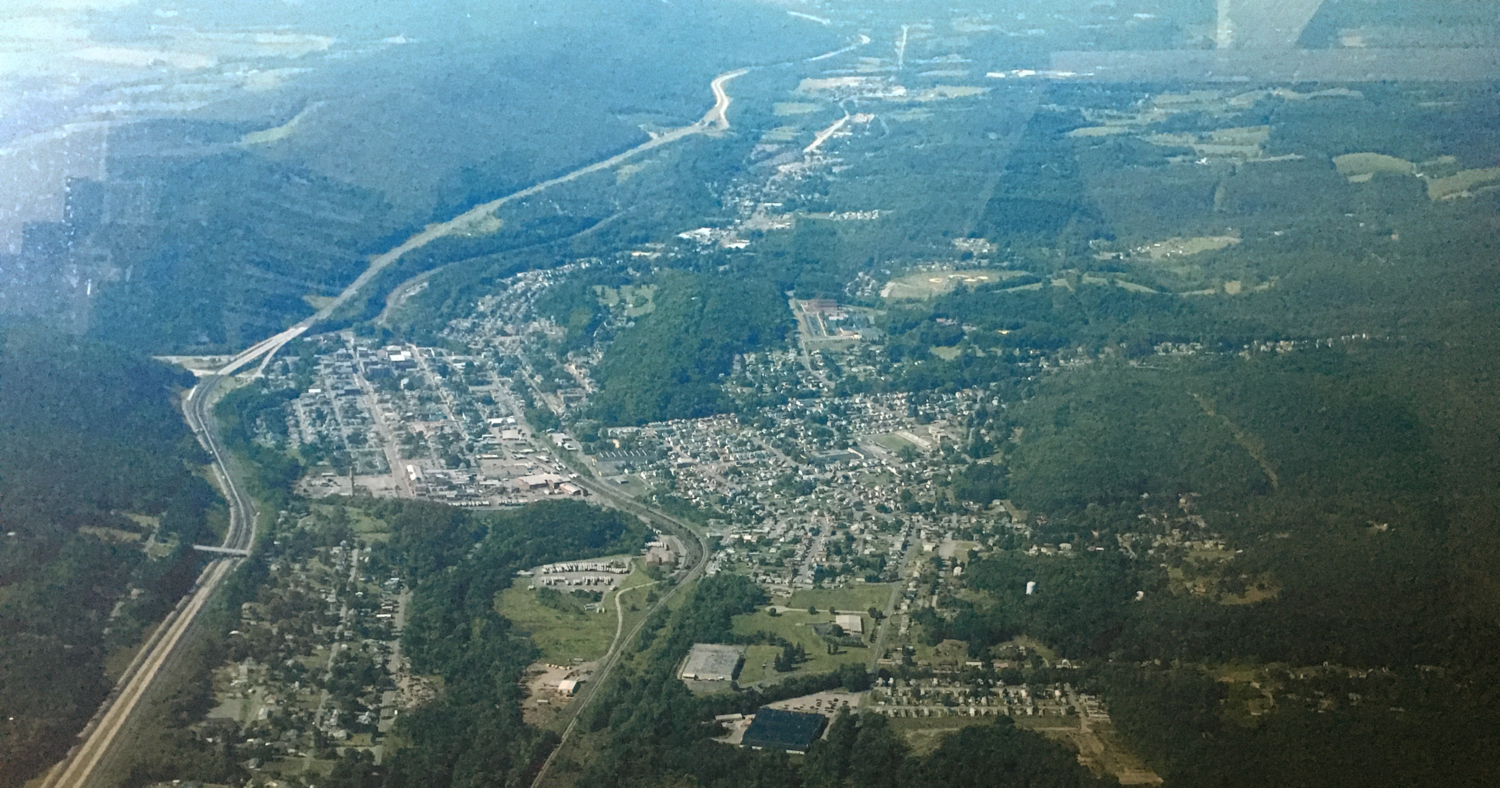
Tyrone is a borough in Blair County, Pennsylvania, United States, located 15 miles (24 km) northeast of Altoona, on the Little Juniata River. Tyrone was of considerable commercial importance in the twentieth century. It was an outlet for the Clearfield coal fields and was noted for manufacturing paper products. There were planing mills and chemical and candy factories. In 1900, 5,847 people lived here; in 1910, 7,176; and in 1940, 8,845 people resided here. As of the 2020 census, Tyrone had a population of 5,480. It is part of the Altoona, PA Metropolitan Statistical Area. It was named after County Tyrone in Ireland.
Located along the main lines of the Norfolk Southern and Nittany and Bald Eagle railroads, and U.S. Route 220, Pennsylvania Route 453, and Interstate 99 highways, Tyrone was at one time known as "The Hub of the Highways". In those days, four railroads [Pennsylvania, Tyrone and Clearfield, Tyrone and Lock Haven, Lewisburg, and Tyrone] and three main highways [US-220, PA-350, PA-453] converged there.
Excerpted from Wikipedia’s “Tyrone” article, available under the CC BY-SA 4.0 licence.