Mauffray, William F.;Tennessen, Kenneth J.
Uracis
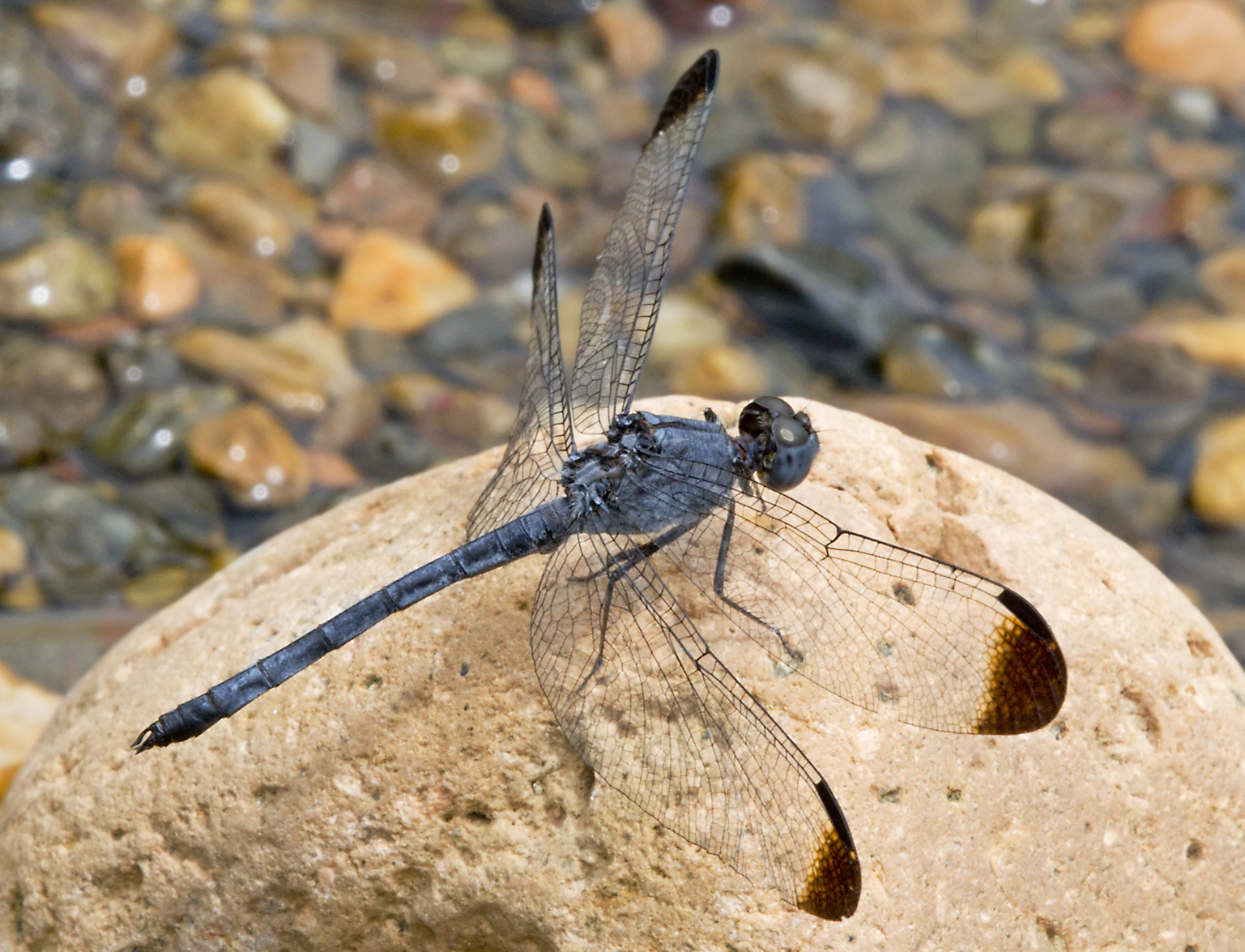
Sign in to saveUracis is a genus of dragonfly from the family Libellulidae. The genus was first described by Jules Pierre Rambur. ==Description== Uracis species are medium-sized dragonflies and grow to be 28 to 40 millimeters tall. The color of the abdomen of colored males is mostly bluish with a grayish-white coating. The part of the thorax to which the wings attach, the so-called pterothorax, is grayish, but with age it takes on the same bluish hue as the abdomen. The wings are transparent except for the brownish tinted wing tips. It can also happen that the wings have brown ribbons due to polymorphism. L
Museum specimens
- Specimen records
- 25
- With media
- 9
- Family
- Libellulidae
- Collections
- USNM, INHS, NHMUK
- Recorded in
- Peru, Brazil
Wikidata facts
- Instance of
- taxon
- Parent taxon
- Libellulidae
- Image
- Uracis imbuta.jpg
Show 4 more facts
- taxon rank
- genus
- taxon name
- Uracis
- topic's main category
- Category:Uracis
- Commons category
- Uracis
Sources (1)
via Wikidata · CC0
~2 min read
Encyclopedic overview
4 sectionsContents
- Description
- Species
- References
- External links
Uracis is a genus of dragonfly from the family Libellulidae. The genus was first described by Jules Pierre Rambur. ==Description== Uracis species are medium-sized dragonflies and grow to be 28 to 40 millimeters tall. The color of the abdomen of colored males is mostly bluish with a grayish-white coating. The part of the thorax to which the wings attach, the so-called pterothorax, is grayish, but with age it takes on the same bluish hue as the abdomen. The wings are transparent except for the brownish tinted wing tips. It can also happen that the wings have brown ribbons due to polymorphism. Like the Vertex, the postfrons are black. There are also two tubercles on the vertex, which allow a distinction to Ypirangathemis species. Similar to representatives of Erythrodiplax, Nannothemis, Pseudoleon and Ypirangathemis, the last segment of the vesica spermalis is long and cylindrical.
==Species== {| class="wikitable" |- ! Male!! Female !! Scientific name!! Common name !! Distribution |- |120px || ||Uracis fastigiata (Burmeister, 1839) || || Mexico to Brazil, Peru |- |120px ||120px ||Uracis imbuta (Burmeister, 1839) ||||Mexico to Brazil |- | || ||Uracis infumata (Rambur, 1842) ||||Brazil, Peru |- | || ||Uracis ovipositrix Calvert, 1909 ||||Peru, Brazil, Guyanas |- | || ||Uracis reducta Fraser, 1946 ||||Peru |- | || ||Uracis siemensi Kirby, 1897 ||||Tropical South America |- | || ||Uracis turrialba Ris, 1919 ||||Costa Rica |- |} ==References==
Excerpted from Wikipedia’s “Uracis” article, available under the CC BY-SA 4.0 licence.
Gallery (6)
Available in 11 languages
via Wikidata sitelinks · CC0