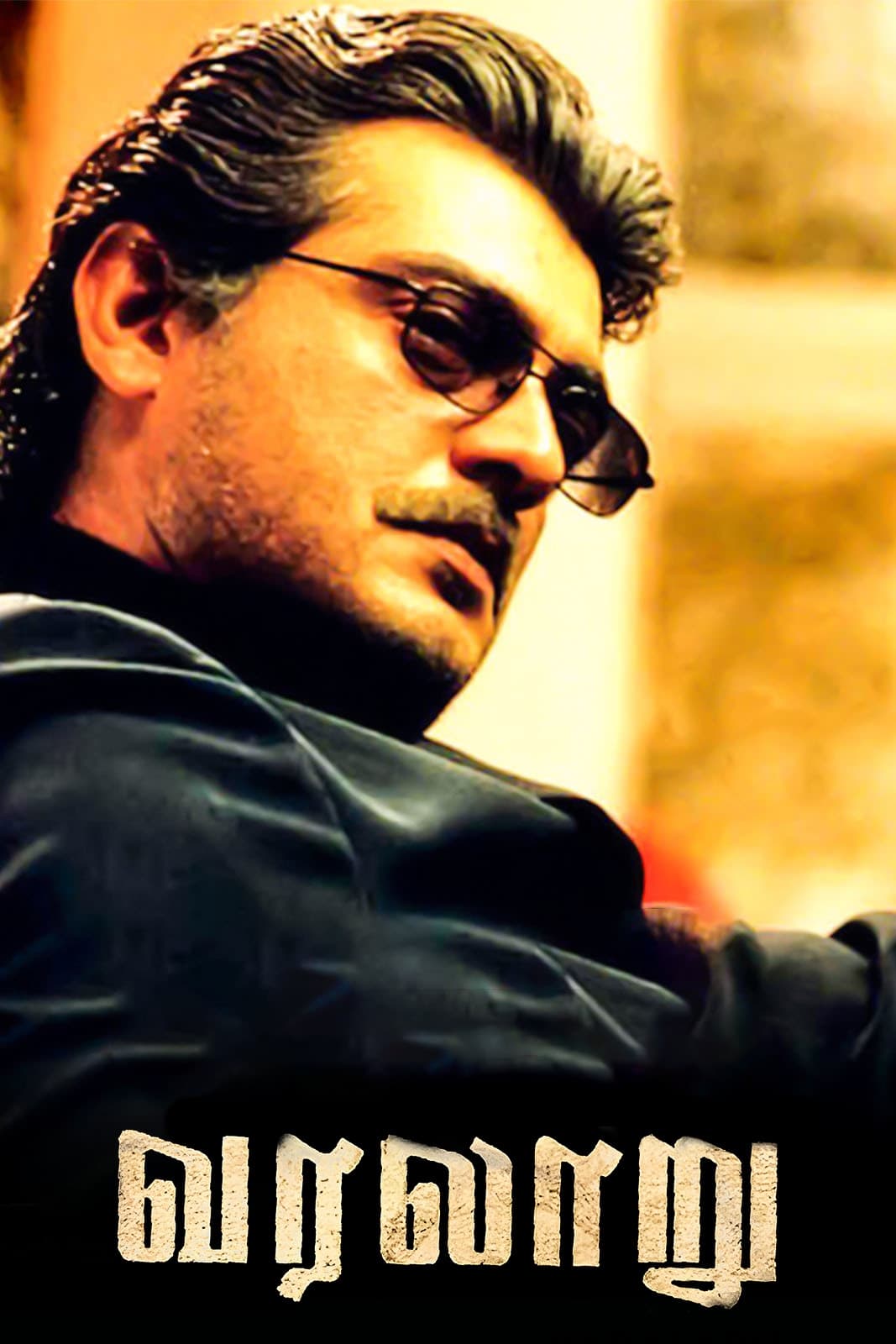
Poster from TMDB
Varalaru
Sign in to saveAlso known as Godfather
Varalaru: History Of Godfather, or simply known as Varalaru (), is a 2006 Indian Tamil-language action-drama film co-written and directed by K. S. Ravikumar, and produced by S. S. Chakravarthy under the banner NIC Arts. The film stars Ajith Kumar in the main triple lead role as a father and his two twin sons. Asin, Kanika, Ramesh Khanna, Suman Setty, Sujatha and M. S. Baskar play supporting roles. The film's soundtrack and background score were composed by A. R. Rahman. Prior to its release, the film was known by the title Godfather, but following the Government of Tamil Nadu's motion to exemp
Film · TMDB
6.4Shiva, the ageing business tycoon, bound to his wheelchair, sharing a strong bonding with his son Vishnu. Indulgent, while Vishnu whiles away his time with his cronies taking life easy. But then suddenly Vishnu starts behaving out of character, his drunken bouts and acts causing the father much shame and embarrassment. And when Vishnu professes to remember nothing of what he had done, the father takes him to a psychiatrist.
Cast
- Ajith Kumar as Sivashankar / Vishnu / Jeeva
- Asin Thottumkal as Divya
- Kaniha as Gayathri
- Rajesh as ACP Vijaykumar
- Vijayan as Divya's father
- Mansoor Ali Khan as Divya's brother
Themes
- twin brother
This product uses the TMDB API but is not endorsed or certified by TMDB.
Wikidata facts
- Instance of
- film
- Genre
- family film
- Country of origin
- India
- Original language
- Tamil
- Director
- K. S. Ravikumar
- Screenwriter
- Sujatha Rangarajan
- Cast member
- Kanika
- Composer
- A. R. Rahman
- Cinematographer
- P. C. Sreeram
- Narrative location
- Chennai
- Performer
- A. R. Rahman
Show 2 more facts
- publication date
- 2006-01-01
- title
- வரலாறு
Sources (2)
via Wikidata · CC0
~14 min read
Encyclopedic overview
9 sectionsContents
- Plot
- Cast
- Production
- Music
- Release
- Reception
- Remakes
- References
- External links
Varalaru: History Of Godfather, or simply known as Varalaru (), is a 2006 Indian Tamil-language action-drama film co-written and directed by K. S. Ravikumar, and produced by S. S. Chakravarthy under the banner NIC Arts. The film stars Ajith Kumar in the main triple lead role as a father and his two twin sons. Asin, Kanika, Ramesh Khanna, Suman Setty, Sujatha and M. S. Baskar play supporting roles. The film's soundtrack and background score were composed by A. R. Rahman. Prior to its release, the film was known by the title Godfather, but following the Government of Tamil Nadu's motion to exempt tax on films titled in Tamil, the title was changed to Varalaru.
After two years of production, the film was released on 20 October 2006 on the eve of Diwali, and emerged as the highest grosser of the year. The film has been remade in Kannada, titled after the original title of the film, in Burmese as Nat Khat Mhar Tae Tite Pwal, and in Odia as Tu Mo Dehara Chhai.
Excerpted from Wikipedia’s “Varalaru” article, available under the CC BY-SA 4.0 licence.