Virginia Irwin
Sign in to saveUS journalist and war correspondent
Person · Open Library
- Works
- 1
Top works
- Peasant life in the poetry of Robert Burns
via Open Library + Wikidata
Described at
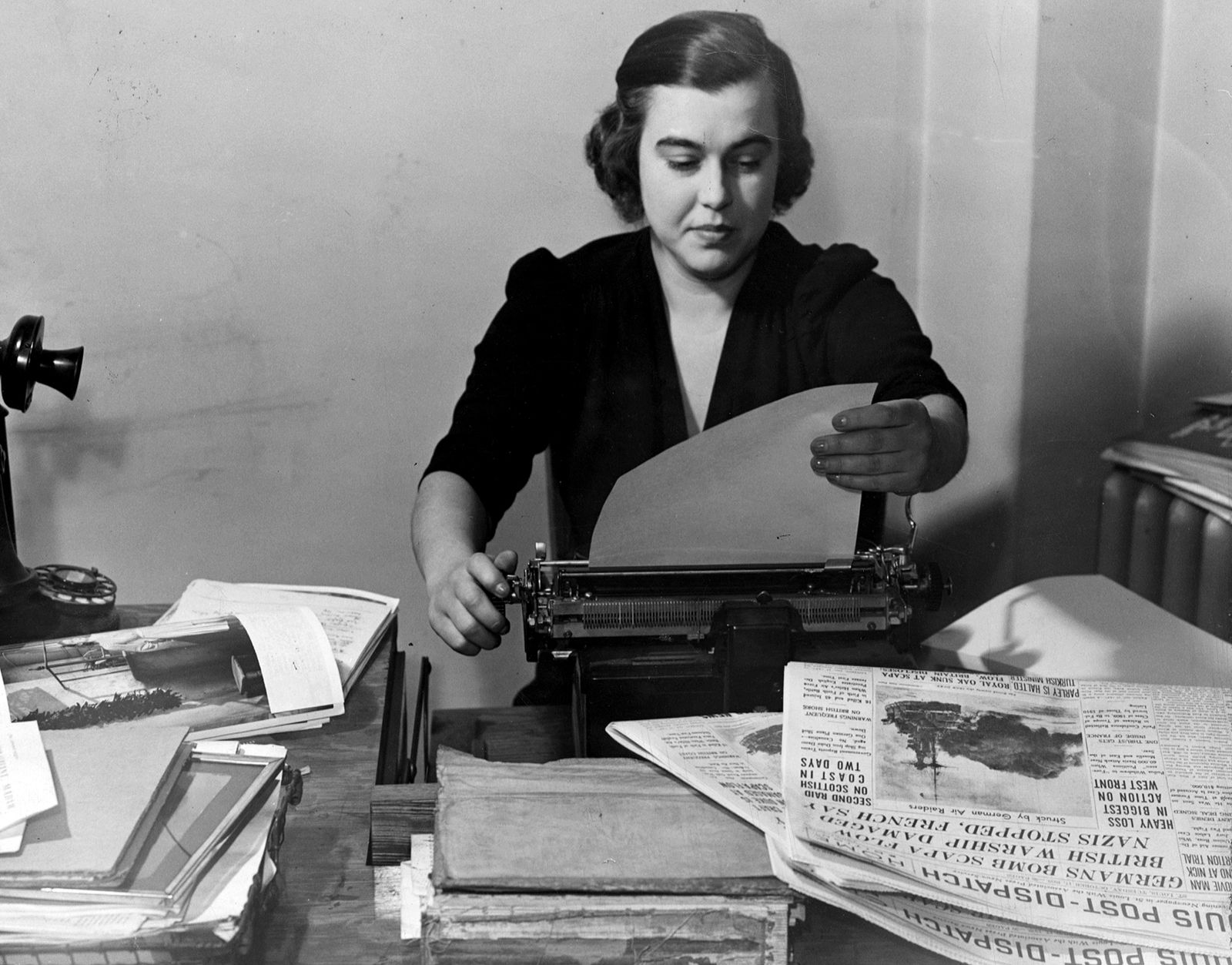
Journalist Virginia Irwin Broke Barriers When She Reported From Berlin at the End of WWII
Her exclusive dispatches from the last days of Nazi Germany appeared in newspapers around the country, briefly making her a national celebrity
smithsonianmag.com →On April 27, 1945, days before Adolf Hitler committed suicide in his Berlin bunker, an enterprising writer convinced a young Army sergeant to commandeer a jeep and drive into the heart of the embattled city, without an adequate map or any real plan for what might come next. Virginia Irwin, a reporter for the St. Louis Post-Dispatch , would be one of the first Americans to witness Russian fighters clashing with the remnants of Nazi forces. Irwin’s nerve-wracking journey netted her the scoop of her bold wartime career, but she has since been largely overlooked among pioneering female combat correspondents. No American correspondent had been inside the city in years – foreign reporters had been kicked out in 1941 . Irwin provided an unparalleled firsthand account to readers across the nation. As they wound their way through lines of haggard Russian troops headed for Berlin, a surreal scene awaited Irwin and her traveling companions, journalist Andrew Tully of the Boston Traveler and the driver, Sergeant Johnny Wilson. They saw exhausted soldiers singing and celebrating as they advanced into the final battle. Despite the chaos – bodies littered the sidewalks amid ongoing fighting – the mood encompassed both merciless vengeance and jubilant relief. “The Russians were happy – with an almost indescribably wild joy,” she recalled. “They were in Berlin. In this German capital lies their true revenge for Leningrad and Stalingrad, for Sevastopol and Moscow.” The arrival of Russian forces in Berlin signaled the proverbial nail in the coffin for Hitler’s regime as Allied forces progressed irreversibly toward the German capital. The specter of the Russians’ arrival inspired fear in residents who had hunkered down to ride out the final, futile months. When Irwin arrived, the city was still under a barrage of artillery and the site of street-by-street combat. She and her companions had no protection whatsoever for their opportunistic push into Berlin, risking safety in their quest for the first reporting out of the Hitler’s Berlin. That night, navigating into the city without proper maps and no fixed destination, they stumbled across a Russian command post where they were welcomed by a surprised but raucously hospitable group of Russian officers. Irwin’s descriptions were of a dreamlike blend of death and dancing – they were f ê ted by their hosts as fighting raged blocks away, shaking the ground and filling the air with the smell of “cordite and the dead.” She danced until she was “puffing from the exertion.” Toasts were raised to Stalin, Churchill, Roosevelt and Truman. She felt a degree of disdain for the German civilians she encountered, but was so taken by her Soviet hosts – who “fight like mad and play with a sort of barbaric abandon” – that in the emotion and gravity of the moment she declared a desire to “join the Russian Army and try to help take Berlin.” Post-Dispatch reporter Virginia Irwin and Army Sgt. Johnny Wilson in Berlin April 27-28, 1945, while the Russians were advancing upon the last German defenders in the bomb-wrecked city. She got there four days before Adolf Hitler killed himself. St Louis Post-Dispatch / Polaris Irwin typed this account by candlelight as it happened, but it wasn’t until more than a week later, after V-E Day was declared, that readers across the country would be captivated by this glimpse into the last chapter in the long and bloody fight for Europe. There had been a steady stream of stories about hometown soldiers fighting in Europe, but Irwin’s series showed readers war from another perspective. For the Russians she encountered, this was not a distant war – it was one in which they had lost loved ones at home. The sense of vengeance deeply felt, and the corresponding fear among Germans remaining in Berlin, was palpable. “You get a real sense of a city on the brink with everything falling apart from the way she writes about it - you get a sense of what she felt,” says Jenny Cousins, who spearh
Excerpt from a page describing this subject · 14,521 chars · not written by Vinony
Wikidata facts
- Instance of
- human
- Given name
- Virginia
- Gender
- female
- Citizenship
- United States
- Place of birth
- Quincy
- Occupation
- war correspondent
- Employer
- Joseph Pulitzer
- Image
- Virginia Irwin - St. Louis Post-Dispatch polaris06144711.jpg
Show 4 more facts
- Commons category
- Virginia Irwin
- date of birth
- 1908-06-29
- date of death
- 1980-08-19
via Wikidata · CC0