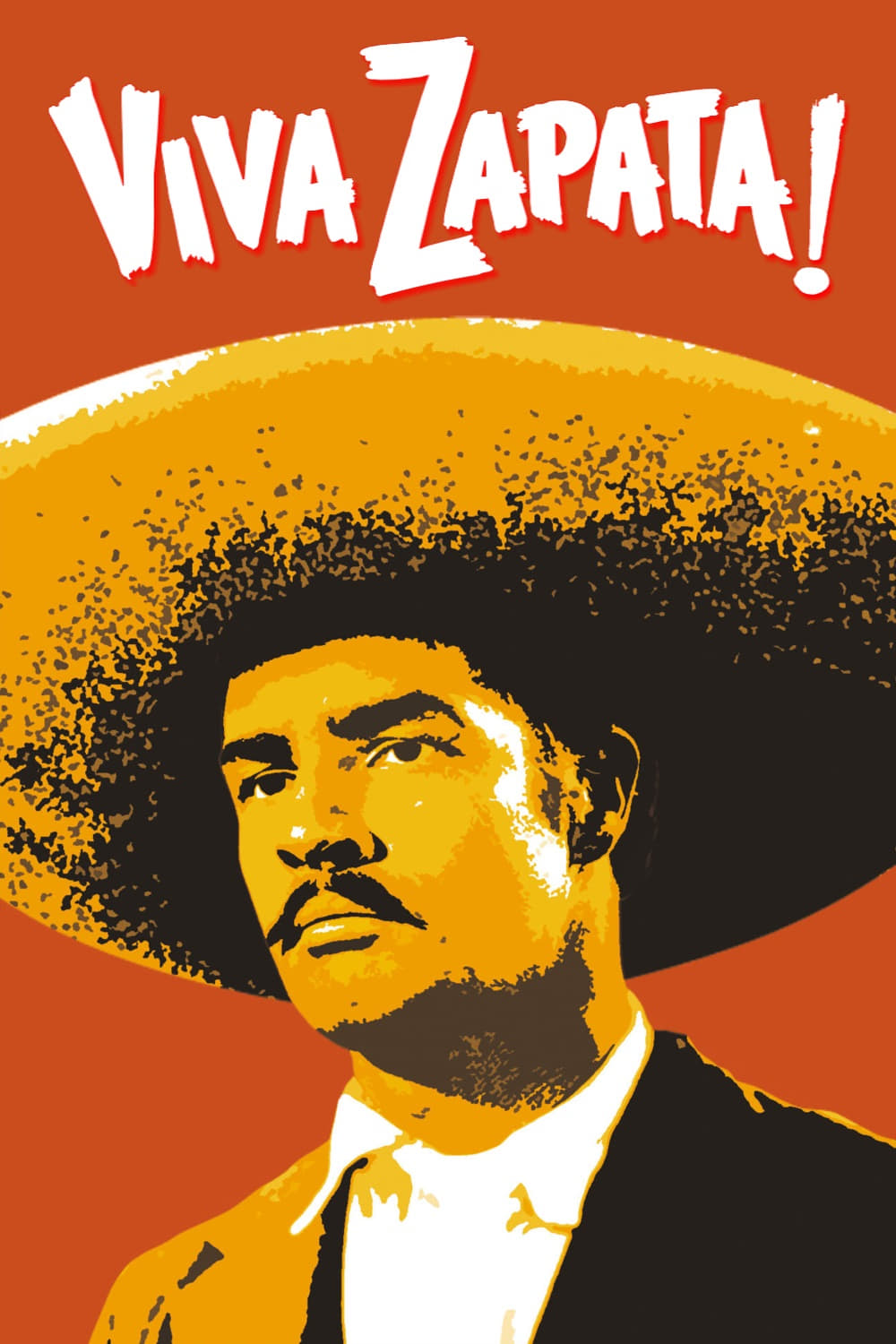
Poster from TMDB
OverviewAI-generated
Viva Zapata! is a 1952 American black-and-white film directed by Elia Kazan and produced by Darryl F. Zanuck. The biographical drama, war, and Western film stars Marlon Brando, Jean Peters, Anthony Quinn, and Joseph Wiseman. John Steinbeck wrote the screenplay, while Alex North composed the music. The production was handled by 20th Century Studios, with Joseph MacDonald serving as director of photography and Barbara McLean as film editor.
The movie has a runtime of 113 minutes and was filmed in New Mexico, Mexico, Colorado, and Roma. It is distributed by 20th Century Studios, Netflix, Fandango at Home, and iTunes. The film received an Academy Award for Best Supporting Actor and was nominated for Best Actor and Best Writing, Original Screenplay. It holds an IMDb rating of 7.2 and a Rotten Tomatoes score of 53%.
Synthesized by Vinony from 46 facts across 6 sources: Wikidata, TMDb, OMDb, IMDb, Vinony collections, Vinony graph. Generated from structured data (not the Wikipedia text) and checked against those facts — may still contain errors.
Film · TMDB
6.9The story of Mexican revolutionary Emiliano Zapata, who led a rebellion against the corrupt, oppressive dictatorship of president Porfirio Díaz in the early 20th century.
Cast
- Marlon Brando as Emiliano Zapata
- Jean Peters as Josefa
- Anthony Quinn as Eufemio Zapata
- Joseph Wiseman as Fernando
- Arnold Moss as Don Nacio
- Alan Reed as Pancho Villa
Themes
- mexico
- usa president
- presidential election
- peasant
- mexican revolution
- biography
- revolutionary
- 1900s
This product uses the TMDB API but is not endorsed or certified by TMDB.
Ratings
IMDb
7.3/10
12,681 votes
Rotten Tomatoes
53%
- Year
- 1952
- Runtime
- 113 min
- Genres
- Biography, Drama, History
- Rated
- Approved
- Awards
- Won 1 Oscar. 3 wins & 9 nominations total
via OMDb · IMDb
Key facts
- Directed by
- Elia Kazan
- Written by
- John Steinbeck
- Produced by
- Darryl F. Zanuck
- Starring
- Marlon Brando Jean Peters Anthony Quinn Joseph Wiseman Arnold Moss Alan Reed Margo Harold Gordon Lou Gilbert Mildred Dunnock
- Cinematography
- Joseph MacDonald
- Edited by
- Barbara McLean
- Music by
- Alex North
- Distributed by
- 20th Century-Fox
- Release date
- February 13, 1952 ( 1952-02-13 )
- Running time
- 113 minutes
- Country
- United States
- Language
- English
- Budget
- $1.8 million
- Box office
- $1.9 million (US rentals)
via Wikipedia infobox
Wikidata facts
- Instance of
- film
- Genre
- Western film
- Country of origin
- United States
- Original language
- English language
- Main subject
- Emiliano Zapata
- Director
- Elia Kazan
- Screenwriter
- John Steinbeck
- Composer
- Alex North
- Producer
- Darryl F. Zanuck
- Production company
- 20th Century Studios
- Cinematographer
- Joseph MacDonald
- Narrative location
- Mexico
- Filming location
- Roma
- Duration
- 113
- FilmAffinity ID
- 660534
- Distribution format
- video on demand
- Image
- Viva Zapata movie trailer screenshot lighter.jpg
Show 9 more facts
- Commons category
- Viva Zapata! (1952 film)
- publication date
- 1952-01-01
- film editor
- Barbara McLean
- title
- Viva Zapata!
- color
- black-and-white
- distributed by
- Disney+
- make-up artist
- Allan Snyder
- review score
- 56%
- set in period
- 1909
Sources (15)
via Wikidata · CC0
~6 min read
Encyclopedic overview
Viva Zapata! is a 1952 American biographical Western film directed by Elia Kazan, dramatizing the life of Mexican revolutionary Emiliano Zapata from his peasant upbringing through his rise to power in the early 1900s and his death in 1919. It stars Marlon Brando as the title character, and features Jean Peters as his wife Josefa and Anthony Quinn as his brother Eufemio. The screenplay was written by John Steinbeck, using Edgcumb Pinchon's 1941 book Zapata the Unconquerable as a guide.
To make the film as authentic as possible, Kazan and producer Darryl F. Zanuck studied the numerous photographs that were taken during the revolutionary years, the period between 1909 and 1919, when Zapata led the fight to restore land taken from common people during the dictatorship of Porfirio Díaz. Kazan was especially impressed with the Agustín Casasola collection of photographs, and he attempted to duplicate their visual style in the film. Kazan also acknowledged the influence of Roberto Rossellini's Paisan (1946).
Excerpted from Wikipedia’s “Viva Zapata!” article, available under the CC BY-SA 4.0 licence.