Weingartia · Kew POWO · Kew Plants of the World Online
Weingartia
Sign in to saveWeingartia is a genus in the family Cactaceae, with species native to Bolivia and Argentina. It was formerly included in Rebutia, but molecular phylogenetic evidence suggested that it was distinct from that genus. , it was treated as separate genus by Plants of the World Online, and recognized as an alternative generic name in the third edition of the CITES Cactaceae Checklist. It may also be treated as Rebutia subg. Weingartia.
Species
GENUS
- KingdomPlantae
- PhylumTracheophyta
- ClassMagnoliopsida
- OrderCaryophyllales
- FamilyCactaceae
via GBIF · Kew POWO
Wikidata facts
- Instance of
- taxon
- Parent taxon
- Rebutiinae
- Named after
- Wilhelm Weingart
- Image
- Succu Weingartia lanata 01.jpg
Show 5 more facts
- taxon rank
- genus
- taxon name
- Weingartia
- Commons category
- Weingartia
- taxon common name
- 轮冠属
Sources (1)
via Wikidata · CC0
~4 min read
Encyclopedic overview
6 sectionsContents
- Description
- Taxonomy
- Species
- Distribution
- References
- Literature
Weingartia is a genus in the family Cactaceae, with species native to Bolivia and Argentina. It was formerly included in Rebutia, but molecular phylogenetic evidence suggested that it was distinct from that genus. , it was treated as separate genus by Plants of the World Online, and recognized as an alternative generic name in the third edition of the CITES Cactaceae Checklist. It may also be treated as Rebutia subg. Weingartia.
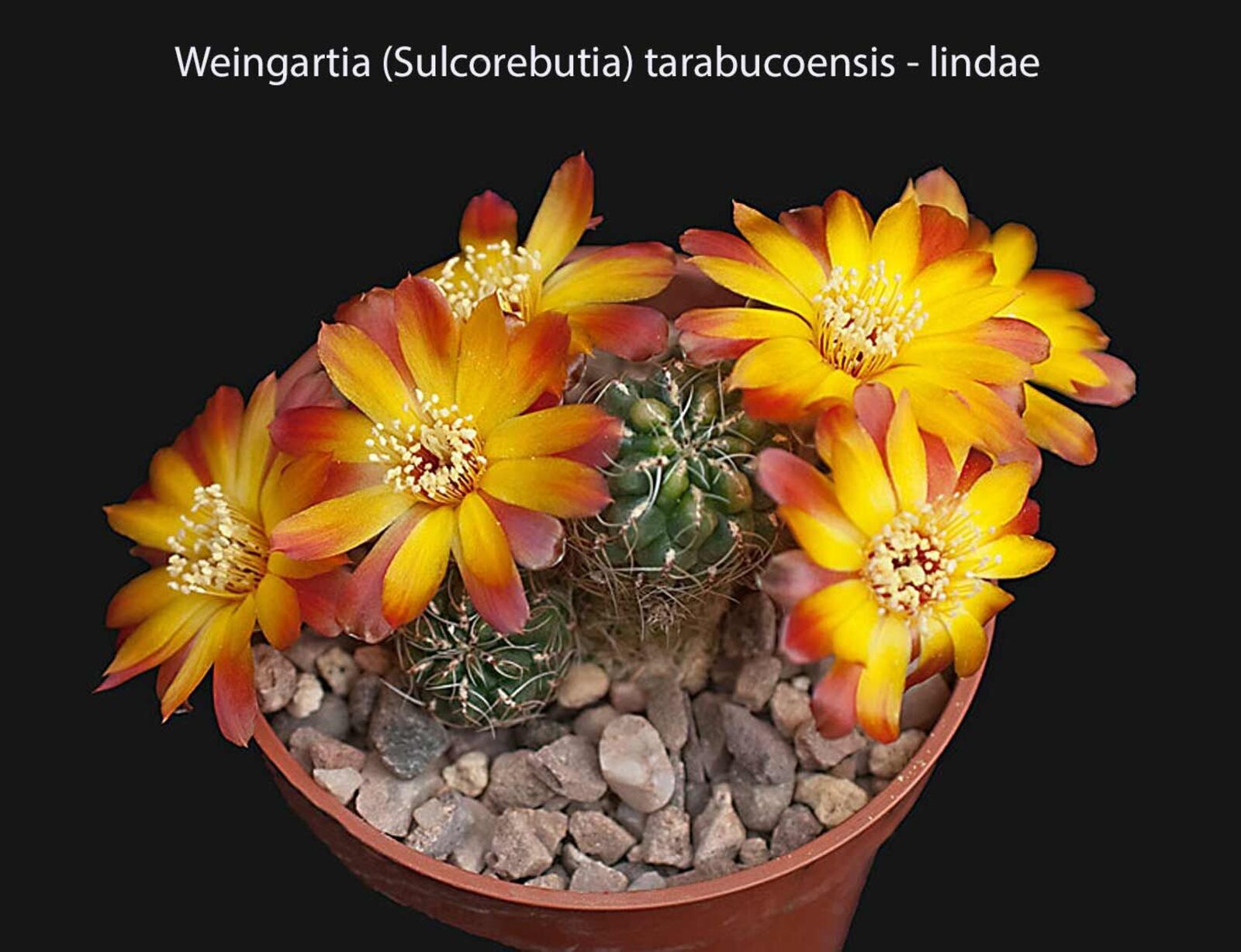
== Description == thumb|Weingartia hediniana (syn. Weingartia lanata) in flower Plants usually solitary. Stems globose to oblong, to 20 cm high and 15 cm, rarely 30 cm in diameter, fresh green. Ribs 12 – 18, spiraling, forming distinct tubercles. Areoles on the tubercle in excentric position, sunken in its higher part. Spines more robust and thick, 7 – 35 in one areole, radial spines 1 – 3 cm long, central spines 3 – 4, to 5 cm long. Flowers borne near the stem tips, one areole can produce up to 3 flowers, golden yellow to orange to reddish yellow, 1 – 3 cm in diameter. Floral tube scales broad and imbricated. Fruits globose to ovoid, brownish. Seeds oblong, 1 mm long, black or brown.
Excerpted from Wikipedia’s “Weingartia” article, available under the CC BY-SA 4.0 licence.