
Cover via Open Library · Open Library
Why We Sleep
Sign in to saveAlso known as Why We Sleep: The New Science of Sleep and Dreams
book by Matthew Walker
Book · Open Library
- Author
- Matthew P. Walker
- First published
- 2017
- Editions
- 11
- Subjects
- sleep, health & fitness, sleep & sleep disorders, science, life sciences, Human Anatomy & Physiology, psychology, mental health
via Open Library
Described at
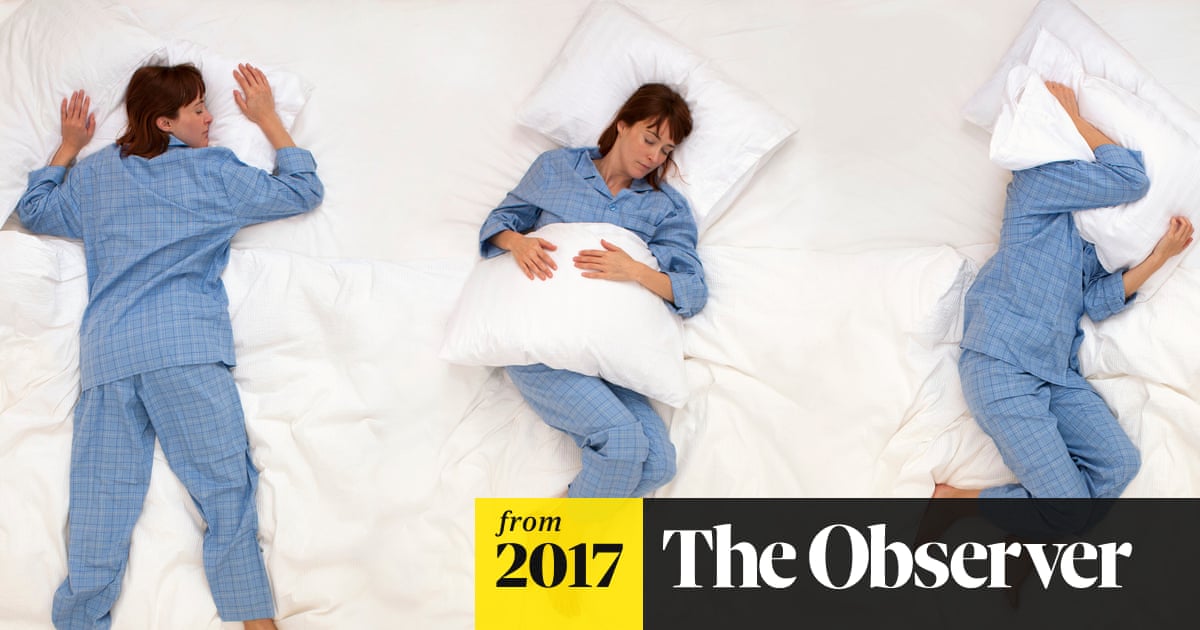
'Sleep should be prescribed': what those late nights out could be costing you | Sleep | The Guardian
Leading neuroscientist Matthew Walker on why sleep deprivation is increasing our risk of cancer, heart attack and Alzheimer’s – and what you can do about it
theguardian.com →Scientists count anything less than seven hours’ sleep as sleep deprivation. Photograph: Ian Hooton/Science Photo Library/Getty Images/Science Photo Library RF Scientists count anything less than seven hours’ sleep as sleep deprivation. Photograph: Ian Hooton/Science Photo Library/Getty Images/Science Photo Library RF Matthew Walker has learned to dread the question “What do you do?” At parties, it signals the end of his evening; thereafter, his new acquaintance will inevitably cling to him like ivy. On an aeroplane, it usually means that while everyone else watches movies or reads a thriller, he will find himself running an hours-long salon for the benefit of passengers and crew alike. “I’ve begun to lie,” he says. “Seriously. I just tell people I’m a dolphin trainer. It’s better for everyone.” Walker has spent the last four and a half years writing Why We Sleep , a complex but urgent book that examines the effects of this epidemic close up, the idea being that once people know of the powerful links between sleep loss and, among other things, Alzheimer’s disease, cancer, diabetes, obesity and poor mental health, they will try harder to get the recommended eight hours a night (sleep deprivation, amazing as this may sound to Donald Trump types, constitutes anything less than seven hours). But, in the end, the individual can achieve only so much. Walker wants major institutions and law-makers to take up his ideas, too. “No aspect of our biology is left unscathed by sleep deprivation,” he says. “It sinks down into every possible nook and cranny. And yet no one is doing anything about it. Things have to change: in the workplace and our communities, our homes and families. But when did you ever see an NHS poster urging sleep on people? When did a doctor prescribe, not sleeping pills, but sleep itself? It needs to be prioritised, even incentivised. Sleep loss costs the UK economy over £30bn a year in lost revenue, or 2% of GDP. I could double the NHS budget if only they would institute policies to mandate or powerfully encourage sleep.” Why, exactly, are we so sleep-deprived? What has happened over the course of the last 75 years? In 1942, less than 8% of the population was trying to survive on six hours or less sleep a night; in 2017, almost one in two people is. The reasons are seemingly obvious. “First, we electrified the night,” Walker says. “Light is a profound degrader of our sleep. Second, there is the issue of work: not only the porous borders between when you start and finish, but longer commuter times, too. No one wants to give up time with their family or entertainment, so they give up sleep instead. And anxiety plays a part. We’re a lonelier, more depressed society. Alcohol and caffeine are more widely available. All these are the enemies of sleep.” But Walker believes, too, that in the developed world sleep is strongly associated with weakness, even shame. “We have stigmatised sleep with the label of laziness. We want to seem busy, and one way we express that is by proclaiming how little sleep we’re getting. It’s a badge of honour. When I give lectures, people will wait behind until there is no one around and then tell me quietly: ‘I seem to be one of those people who need eight or nine hours’ sleep.’ It’s embarrassing to say it in public. They would rather wait 45 minutes for the confessional. They’re convinced that they’re abnormal, and why wouldn’t they be? We chastise people for sleeping what are, after all, only sufficient amounts. We think of them as slothful. No one would look at an infant baby asleep, and say ‘What a lazy baby!’ We know sleeping is non-negotiable for a baby. But that notion is quickly abandoned [as we grow up]. Humans are the only species that deliberately deprive themselves of sleep for no apparent reason.” In case you’re wondering, the number of people who can survive on five hours of sleep or less without any impairment, expressed as a percent of the population and rounded to a whole num
Excerpt from a page describing this subject · 25,060 chars · not written by Vinony
Wikidata facts
- Instance of
- literary work
- Author
- Matthew P. Walker
- Main subject
- sleep
Show 5 more facts
- inception
- 2017-10-03
- title
- Why We Sleep
- subtitle
- The New Science of Sleep and Dreams
- language of work or name
- English language
via Wikidata · CC0