
File:William_Morris_age_53.jpg · Wikimedia Commons · See Wikimedia Commons
William Morris
Sign in to saveAlso known as William M. Morris
British textile artist, author, and socialist (1834-1896)
William Morris was a British artist, writer, and political thinker who revolutionized textile design and decorative arts during the Victorian era while advocating for socialist ideals. He matters because his work challenged industrial mass production, emphasized skilled craftsmanship, and influenced how we think about design, beauty, and the relationship between art and everyday life.
AI-generated from the Wikipedia summary — may contain errors.
Wikidata facts
- Instance of
- human
- Given name
- William
- Family name
- Morris
- Gender
- male
- Citizenship
- United Kingdom
- Place of birth
- London
- Place of death
- Hammersmith
- Spouse
- Jane Morris
- Child
- May Morris
- Sibling
- Isabella Gilmore
- Occupation
- art theorist
- Educated at
- Marlborough College
- Political party
- Socialist League
- Languages spoken
- English language
- Native language
- English language
- Genre
- decorative art
- Movement
- Arts and Crafts movement
- Official website
- williammorrissociety.org
- Image
- William Morris age 53.jpg
- Work location
- Southern England
Show 16 more facts
- Commons category
- William Morris
- date of death
- 1896-10-03
- date of birth
- 1834-03-24
- Commons Creator page
- William Morris
- topic's main category
- Category:William Morris
- Commons gallery
- William Morris
- archives at
- Harry Ransom Center
- has works in the collection
- State Library of New South Wales
- writing language
- English language
- start of work period
- 1869-00-00
- end of work period
- 1896-01-01
- described at URL
- arch-pavouk.cz/index.php/architekti/1473-morris-william
- medical condition
- epilepsy
- P12749
- William Hurt
- P8168
- Analord
- P13311
- Claudia Barainsky
Sources (12)
via Wikidata · CC0
Works in European collections
17 objects attributed to William Morris, held across European museums, libraries & archives · via Europeana
Ave Maria
Blumentapete

The earthly paradise : a poem, 1
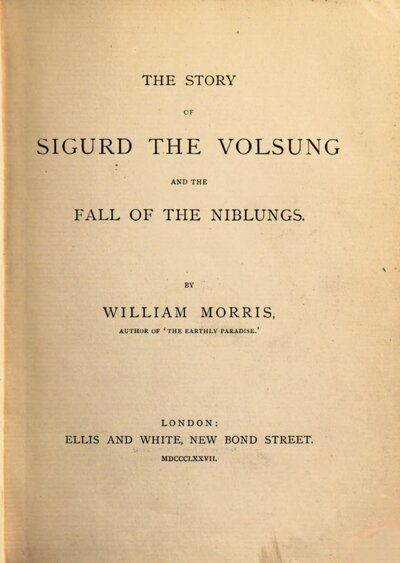
The Story of Sigurd the Volsung and the Fall of the Niblungs : By William Morris, Author of "The Earthly Paradise". (keine Übersetzung, sondern eine freie, moderne Bearbeitung der Völsunga Saga)
The poetical works of William Morris, III. The Earthly Paradise : A poem
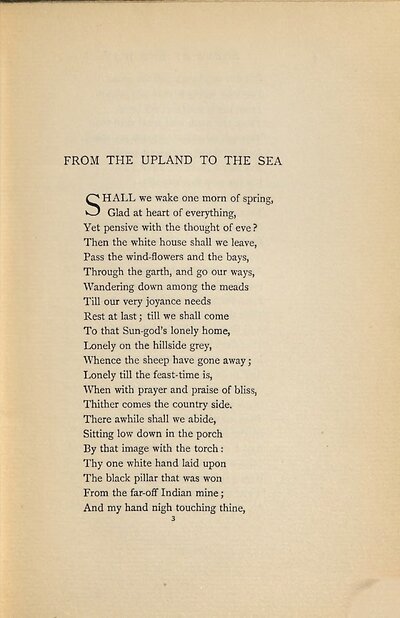
The poetical works of William Morris, VIII. Poems by the way : Love is enough
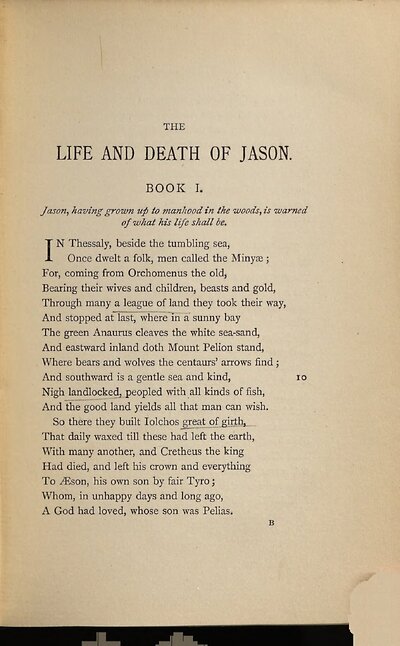
The poetical works of William Morris, V
News from Nowhere or An Epoch of rest, being some chapters from a Utopian romance by William Morris
The earthly paradise : a poem, 2
A selection from the poems : Ed. with a memoir. Copyright ed.

The poetical works of William Morris, VI
The poetical works of William Morris, X. The Æneids of Virgil : Done into English verse by William Morrison
The poetical works of William Morris, IX. The Odyssey of Homer : Done into English Verse by William Morris
The poetical works of William Morris, I. The Earthly Paradise : A poem
The poetical works of William Morris, VII. The story of Sigurd the Volsung and the fall of the Nibelungs

The poetical works of William Morris, IV
The poetical works of William Morris, II. The Earthly Paradise : A poem
~40 min read
Encyclopedic overview
William Morris (24 March 1834 – 3 October 1896) was an English textile designer, poet, artist, writer, and socialist activist associated with the British Arts and Crafts movement. He was a major contributor to the revival of traditional British textile arts and methods of production. His literary contributions helped to establish the modern fantasy genre, while he campaigned for socialism in fin de siècle Great Britain.
Morris was born in Walthamstow, Essex, to a wealthy middle-class family. He came under the strong influence of medievalism while studying classics at Oxford University, where he joined the Birmingham Set. After university, he married Jane Burden, and developed close friendships with Pre-Raphaelite artists and poets such as Dante Gabriel Rossetti, Algernon Charles Swinburne, and Edward Burne-Jones, as well as with Neo-Gothic architect Philip Webb. Webb and Morris designed Red House in Kent where Morris lived from 1859 to 1865, before moving to Bloomsbury, central London. In 1861, Morris founded the Morris, Marshall, Faulkner & Co. decorative arts firm with Burne-Jones, Rossetti, Webb, and others, which became highly fashionable and much in demand. The firm profoundly influenced interior decoration throughout the Victorian period, with Morris designing tapestries, wallpaper, fabrics, furniture, and stained glass windows. In 1875, he assumed total control of the company, which was renamed Morris & Co.
Excerpted from Wikipedia’s “William Morris” article, available under the CC BY-SA 4.0 licence.