Xylosma · Kew POWO · Kew Plants of the World Online
Xylosma
Sign in to saveXylosma is a genus of flowering plants in the family Salicaceae. It contains around 100 species of evergreen shrubs and trees commonly known as brushhollies, xylosmas, or, more ambiguously, "logwoods". The generic name is derived from the Greek words ξύλον (xylon), meaning "wood, tree", and ὀσμή (osmé), meaning "smell", referring to the fragrant wood of some of the species. The Takhtajan system places it in the family Flacourtiaceae, which is considered defunct by the Angiosperm Phylogeny Group.
Species
GENUS
- KingdomPlantae
- PhylumTracheophyta
- ClassMagnoliopsida
- OrderMalpighiales
- FamilySalicaceae
General: and throughout Asia and the Pacific; two species in New Guinea: Xylosma
via GBIF · Kew POWO
Museum specimens
- Specimen records
- 2,046
- With media
- 1,016
- Family
- Salicaceae
- Collections
- CICY, INECOL, UACH, FC-UNAM, UNICACH, ECOSUR
- Recorded in
- Mexico
Wikidata facts
- Instance of
- taxon
- Parent taxon
- Salicaceae
- Image
- Starr 060225-6165 Xylosma hawaiiense.jpg
Show 6 more facts
- Commons category
- Xylosma
- taxon rank
- genus
- taxon name
- Xylosma
- topic's main category
- Category:Xylosma
- taxon common name
- 柞木属
Sources (3)
via Wikidata · CC0
~3 min read
Encyclopedic overview
7 sectionsContents
- Description
- Selected species
- Distribution
- Ecology
- Uses
- References
- External links
Xylosma is a genus of flowering plants in the family Salicaceae. It contains around 100 species of evergreen shrubs and trees commonly known as brushhollies, xylosmas, or, more ambiguously, "logwoods". The generic name is derived from the Greek words ξύλον (xylon), meaning "wood, tree", and ὀσμή (osmé), meaning "smell", referring to the fragrant wood of some of the species. The Takhtajan system places it in the family Flacourtiaceae, which is considered defunct by the Angiosperm Phylogeny Group.
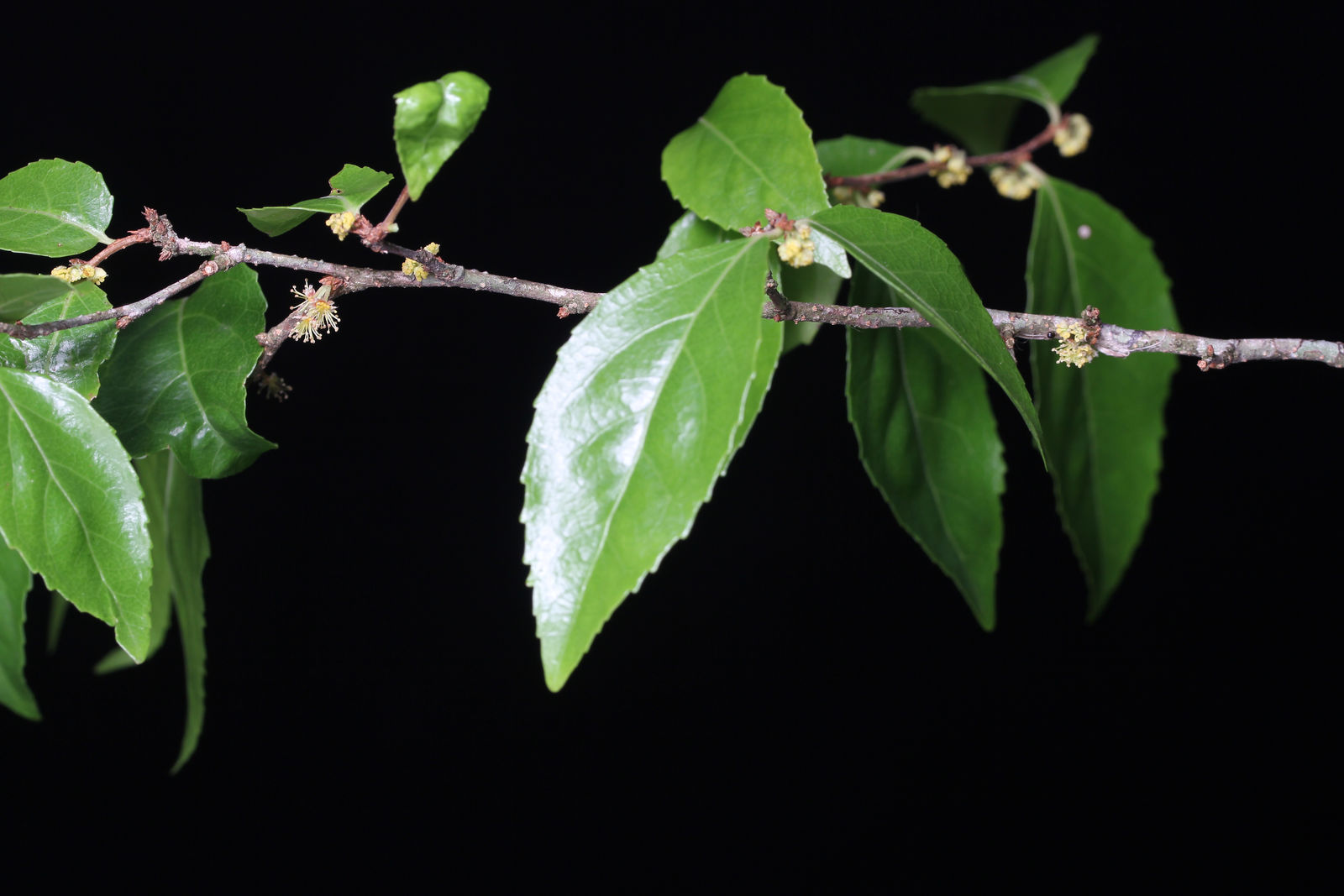
==Description== The leaves are alternate, simple, entire or finely toothed, long. The flowers are small, yellowish, produced on racemes long, usually dioecious, and have a strong scent. The fruit is a small purple-black berry in diameter that contains 2 to 8 seeds.
Excerpted from Wikipedia’s “Xylosma” article, available under the CC BY-SA 4.0 licence.