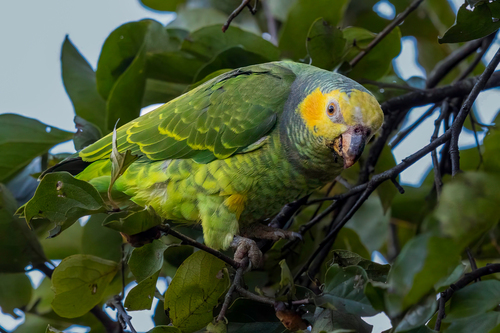
(c) abelardomendesjr, some rights reserved (CC BY-NC), uploaded by abelardomendesjr · cc-by-nc
Yellow-faced Parrot
Sign in to saveAlso known as Yellow-faced Amazon, Alipiopsitta xanthops
species of bird
OverviewAI-generated
The Yellow-faced Parrot, scientifically known as *Alipiopsitta xanthops*, is a species of bird classified within the class Aves. It is also referred to by the common names amason wynebfelyn, Goldbauchamazone, and Amazona del Cerrado. This diurnal organism is native to Brazil in South America.
According to the IUCN Red List, the species was assessed as Near Threatened in 2022. The taxon has been documented through 343 observations on iNaturalist.
Synthesized by Vinony from 17 facts across 4 sources: Wikidata, iNaturalist, IUCN Red List, Vinony graph. Generated from structured data (not the Wikipedia text) and checked against those facts — may still contain errors.
Species
Near ThreatenedYellow-faced Parrot
species
via IUCN
Wikidata facts
- Instance of
- taxon
- Image
- Papagaio-galego.jpg
Show 8 more facts
- taxon rank
- species
- IUCN conservation status
- Near Threatened
- taxon name
- Alipiopsitta xanthops
- Commons category
- Alipiopsitta xanthops
- taxon common name
- papagaio-do-cerrado
- taxon range
- South America
- diel cycle
- diurnality
- short name
- A. xanthops
via Wikidata · CC0
~5 min read
Encyclopedic overview
The yellow-fronted parrot (Poicephalus flavifrons) from Africa is occasionally called "yellow-faced parrot".
The yellow-faced parrot (Alipiopsitta xanthops), formerly also known as the yellow-faced amazon, is the only species of the genus Alipiopsitta. It is a Neotropical parrot (tribe Arini), and was classified in the genus Amazona for many years. It is a predominantly green and yellow-plumaged bird with a yellow head. It is a semi-nomadic species found in the cerrado region of Brazil and adjacent Bolivia. As the yellow-faced parrot has disappeared from parts of its former range due to habitat destruction and generally occurs in low densities, it was considered vulnerable by the IUCN, but it remains locally fairly common, occurs in several protected areas and can survive in fragmented habitats, leading to its downlisting to near-threatened.
Excerpted from Wikipedia’s “Yellow-faced Parrot” article, available under the CC BY-SA 4.0 licence.