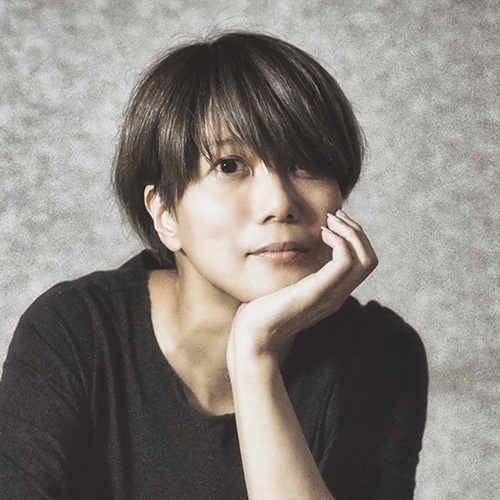
Official website (https://www.yukikomishima.com/)
Official website
Yukiko Mishima is one of Japan’s leading filmmakers whose works entertain while brimming with philosophical thinking on social issues, from the sudden irrationalities that strike in life and those stemming from inequality, to the question of why we live. While depicting mundane everyday life in meticulous detail, her works continue to highlight the irrationalities of modern society that emerge despite being covered up, in a form that can be shared with people around the world. Aspiring to become a filmmaker from the age of 10, Mishima began making independent movies on 8mm film when she was 18. Her projects and works gained recognition and she joined the public broadcaster NHK (Japan Broadcasting Corporation) after graduating from university. During her time at the network, she directed many documentaries for its General and Educational TV channels. She learned about the optical effects of color while interviewing fashion designers. When documenting the subject of correspondences between the elderly and children, she observed the sorrows of growing old in Japan and the distinctive way Japanese people who can’t say what they really mean communicate through letters. Reporting on the Great Hanshin-Awaji Earthquake (1995) in Kobe became a turning point for Mishima. She felt that following people who live their daily lives with sincerity was what movies should be about, and that the fraying bits of everyday life were the essence of what she wanted to depict. In 2003, at the age of 34, she left NHK and began working as an assistant director at Toei Studios Kyoto to study the basics of Japanese filmmaking. She later took part in a summer workshop in New York with instructors from the Herbert Berghof Studio, where she learned the basics of acting and also became aware of a Japanese trait as seen from the outside, namely the irrationalities stemming from a culture that values blood ties. After directing short films and writing scripts for theater, she made her feature film debut when she was 40 years old in 2009 with The Tattooer (Shisei: Nihohi tsuki no gotoku), based on a classic by Japanese novelist Jun-ichiro Tanizaki. Her second film, Bread of Happiness (2012), uses the sharing of bread as a motif to depict the theme of sharing that she noticed at an evacuation center after the earthquake. She wrote and directed this movie and also published a novel based on the story, both of which became hits in Japan, Taiwan, and South Korea. Dear Etranger (2017) portrays a patchwork family formed through the remarriage of a couple with children from previous relationships, with scenes of the father who isn’t related by blood to any of his current family presented as absent by shots of the dining table from the hallway. The movie was screened and received accolades in over 20 countries including the Jeonju Film Festival in South Korea and the 41st Montreal World Film Festival, where it won the Special Grand Prix of the Jury. Shape of Red (2020) aims to be a modern version of Henrik Johan Ibsen’s A Doll's House and depicts a woman finding independence through a romantic relationship. The house where the protagonist marries into can be interpreted as a prison in this work, and her first time behind the wheel of a car is portrayed symbolically. The film was released in France in March 2022 under the title The Housewife (Art House). The short film “Ode to Joy," starring the distinguished Japanese actress Sumiko Fuji, depicts an old woman and a young man who are partners in crime during the COVID-19 pandemic through almost colorless images, resulting in an art piece exuding with the irrationalities felt by every generation in the world during this period. The work was invited for screening at the Masterclass in the Ca’ Foscari Short Film Festival in Italy. It was described as a strong and hopeful film about two people who share the fear of committing a crime but find love in the end.
Read more on their site →Excerpt from the official site · 13,929 chars · not written by Vinony
Wikidata facts
- Instance of
- human
- Named after
- Yukio Mishima
- Gender
- female
- Citizenship
- Japan
- Place of birth
- Kita-ku
- Occupation
- writer
- Languages spoken
- Japanese
- Native language
- Japanese
- Award
- Hochi Film Award
- Notable work
- The Case Files of Biblia Bookstore
- Official website
- www.yukikomishima.com
- Image
- Mishima Yukiko from "Night's Tightrope" at Opening Ceremony of the Tokyo International Film Festival 2016 (32828270893).jpg
Show 8 more facts
- official blog URL
- yukikofilm.exblog.jp
- name in kana
- みしま ゆきこ
- date of birth
- 1969-04-22
- name in native language
- 三島有紀子
- writing language
- Japanese
- ethnic group
- Japanese people
- Commons category
- Yukiko Mishima
- web feed URL
- www.yukikomishima.com/rss.xml
via Wikidata · CC0