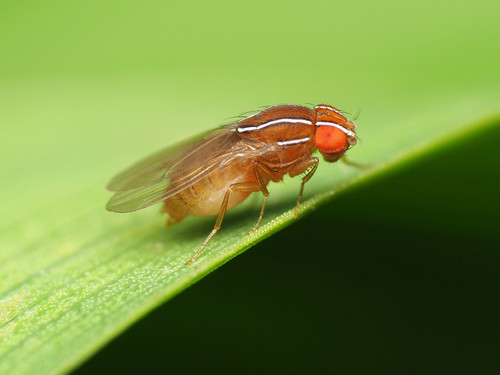
(c) Katja Schulz, some rights reserved (CC BY), uploaded by Katja Schulz · cc-by
Zaprionus
Sign in to saveThe genus Zaprionus belongs to the Drosophilidae family of fruit flies and is positioned within the paraphyletic genus Drosophila. All species are easily recognized by the white longitudinal stripes across the head and thorax. The genus is subdivided in two subgenera, based on the presence of an even (subgenus Zaprionus) or odd (subgenus Anaprionus) number of white stripes. The species of the genus can be found in Africa and Southern Asia. One species, Zaprionus indianus, has invaded the New World.
Species
African Fig Fly
GENUS
- KingdomAnimalia
- PhylumArthropoda
- ClassInsecta
- OrderDiptera
- FamilyDrosophilidae
via GBIF
Museum specimens
- Specimen records
- 3
- Family
- Drosophilidae
- Collections
- SAM, USNM, MZLU
- Recorded in
- South Africa, Philippines, Iran
Wikidata facts
- Instance of
- taxon
- Parent taxon
- Drosophilidae
- Image
- Zaprionus indianus cropped.jpg
Show 5 more facts
- taxon name
- Zaprionus
- taxon rank
- genus
- topic's main category
- Category:Zaprionus
- Commons category
- Zaprionus
- diel cycle
- diurnality
Sources (1)
via Wikidata · CC0
~8 min read
Encyclopedic overview
7 sectionsContents
- Description
- Coloration
- Distribution
- Ecology
- Taxonomy
- Species
- References
The genus Zaprionus belongs to the Drosophilidae family of fruit flies and is positioned within the paraphyletic genus Drosophila. All species are easily recognized by the white longitudinal stripes across the head and thorax. The genus is subdivided in two subgenera, based on the presence of an even (subgenus Zaprionus) or odd (subgenus Anaprionus) number of white stripes. The species of the genus can be found in Africa and Southern Asia. One species, Zaprionus indianus, has invaded the New World.
==Description== All species in the genus Zaprionus are easily identified by the longitudinal white stripes bordered by black stripes running across the top of the head and thorax. Species of the subgenus Zaprionus have 4 or 6 white stripes while the species of the subgenus Anaprionus have 5 or 7 white stripes. The general body color varies across species from yellowish to dark brown. Several species of the subgenus Zaprionus have one or more stout and sometimes composite spines on the forelegs.
Excerpted from Wikipedia’s “Zaprionus” article, available under the CC BY-SA 4.0 licence.