
File:Yazd,_Templo_del_Fuego_(2000)_02_(cropped).jpg · Wikimedia Commons · See Wikimedia Commons
Zoroaster
Sign in to saveAlso known as Zarathushtra, Zartosht, Zardusht, Zarathustra, Zarathushtra Spitama, Zarathoustra, Zoroastre, Zurtasht
Zarathushtra Spitama, more commonly known as Zoroaster or Zarathustra, was an Iranian religious reformer who challenged the tenets of the contemporary Ancient Iranian religion, becoming the spiritual founder of Zoroastrianism. In the oldest Zoroastrian scriptures, the Gathas, which he is traditionally believed to have authored, he is described as a preacher and a poet-prophet. Some have claimed, with much scholarly controversy, to find his influence in Heraclitus, Plato, Pythagoras, and, perhaps less controversially, in the Abrahamic religions, including Judaism, Christianity, and Islam, parti
OverviewAI-generated
Zoroaster was a male human born in Ray in 628 BCE and died in Balkh in 551 BCE. He worked as a prophet, poet, writer, and thaumaturge. He practiced vegetarianism and adhered to Zoroastrianism. He spoke, wrote, or signed in Avestan.
He is described by sources including the Literary Encyclopedia (1929–1939), the Brockhaus and Efron Encyclopedic Dictionary, the Encyclopædia Britannica 11th edition, and the Jewish Encyclopedia of Brockhaus and Efron. He is also known by the nicknames Bactrian Sage, le Sage de Bactriane, and El sabio bactriano.
His works include Zend Avesta: Volume I, ZARATHUSHTRA First Perfect Master/Poet after Adam of the Sufis SELECTED POEMS, The Gospel of Zarathustra, and Zarathushtra. He is listed as an author on Open Library with two works. Europeana Sparql lists ten works associated with him.
Synthesized by Vinony from 16 facts across 3 sources: Wikidata, Open Library, Europeana Sparql. Generated from structured data (not the Wikipedia text) and checked against those facts — may still contain errors.
Person · Open Library
- Works
- 2
Top works
- רדוף־הזמן
- Zend Avesta : Volume I
- ZARATHUSHTRA First Perfect Master/Poet after Adam of the Sufis SELECTED POEMS
- The Gospel of Zarathustra
- Zarathushtra
via Open Library + Wikidata
Key facts
- Religious biography.honorific_prefix
- Artu
- Religious biography.name
- Zarathushtra Spitama
- Religious biography.image
- File:Yazd, Templo del Fuego (2000) 03.jpg
- Religious biography.background
- 990955
- Religious biography.caption
- Modern depiction of Zoroaster featured at the Fire Temple of Yazd
- Religious biography.birth_date
- Unknown, traditionally
- Religious biography.birth_place
- Possibly Bactra, (Balkh, modern-day Afghanistan)
- Religious biography.death_date
- Unknown, traditionally (age 77)
via Wikipedia infobox
Wikidata facts
- Gender
- male
- Occupation
- thaumaturge
- Languages spoken
- Avestan
- Religion
- Zoroastrianism
- Image
- Zoroaster 1.jpg
Show 8 more facts
- Commons category
- Zoroaster
- described by source
- Granat Encyclopedic Dictionary
- lifestyle
- vegetarianism
- topic's main category
- Category:Zoroaster
- different from
- Zoroaster
- nickname
- Bactrian Sage
- on focus list of Wikimedia project
- Wikipedia:Vital articles/Level/4
- P8168
- San Piero Patti
via Wikidata · CC0
Works in European collections
10 objects attributed to Zoroaster, held across European museums, libraries & archives · via Europeana
Vendidad Sadé : traduit en langue Huzvaresch ou Pehlewie, 9
Vendidad Sadé : traduit en langue Huzvaresch ou Pehlewie, 1

Die Gatha's des Awesta : Zarathushtra's Verspredigten
Oracvla Magica Zoroastris Cvm Scholiis Plethonis et Pselli nunc primum editi. E Biblioteca Regia. Studio Iohannis Opsopoei
A hymn of Zoroaster. Yasna 31. transl. with comments by A. V. Williams Jackson
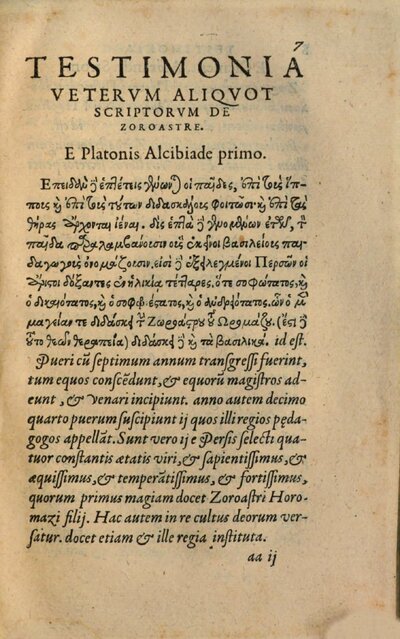
Oracula magica Zoroastris : cum scholiis Plethonis et Pselli nunc primum editi ; e bibliotheca regia
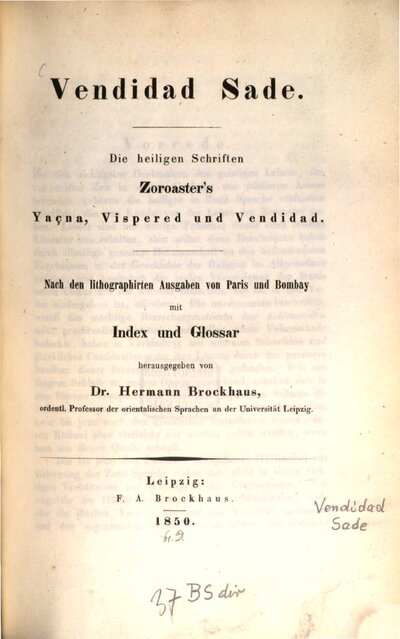
Vendidad Sade : die heiligen Schriften Zoroaster's Yaçna, Vispered und Vendidad ; nach den lithographirten Ausgaben von Paris und Bombay mit Index und Glossar
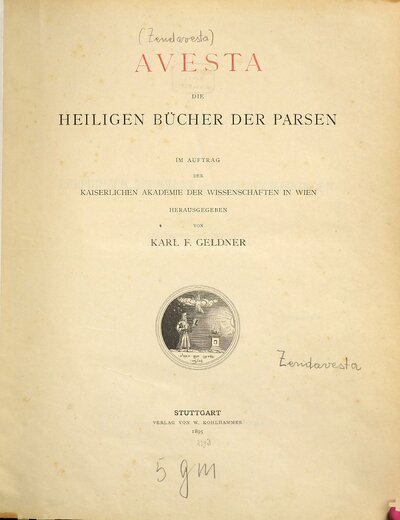
Avesta : die heiligen Bücher der Parsen, Prolegomena
Vendidad Sadé : traduit en langue Huzvaresch ou Pehlewie, 5
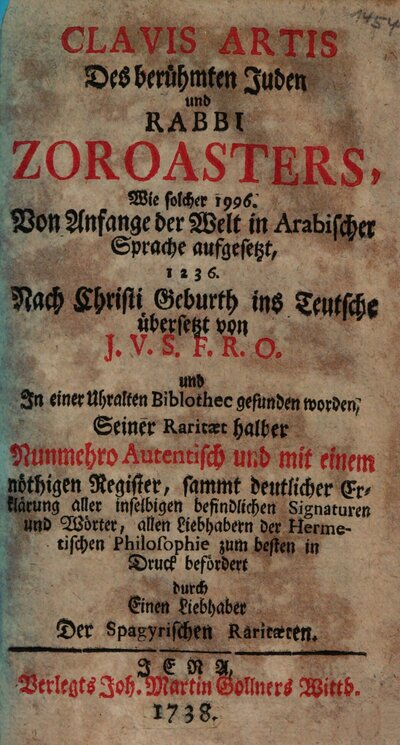
Clavis Artis Des berühmten Juden und Rabbi Zoroasters
~39 min read
Encyclopedic overview
28 sectionsContents
- Name and etymology
- Date
- Classical scholarship
- Zoroastrian and Muslim scholarship
- Modern scholarship
- Late date
- Early date
- Place
- Life
- Cypress of Kashmar
- Influences
- In Christianity and Judaism
- In Islam
- Muslim scholastic views
- Ahmadiyya view
- In Manichaeism
- In the Bahá'í Faith
- Philosophy
- Iconography
- Western references to Zoroaster and Zoroastrianism
- In classical antiquity
- In the modern era
- Notable influence on modern Western culture
- See also
- Notes
- References
- Bibliography
- External links
Zarathushtra Spitama, more commonly known as Zoroaster or Zarathustra, was an Iranian religious reformer who challenged the tenets of the contemporary Ancient Iranian religion, becoming the spiritual founder of Zoroastrianism. In the oldest Zoroastrian scriptures, the Gathas, which he is traditionally believed to have authored, he is described as a preacher and a poet-prophet. Some have claimed, with much scholarly controversy, to find his influence in Heraclitus, Plato, Pythagoras, and, perhaps less controversially, in the Abrahamic religions, including Judaism, Christianity, and Islam, particularly through concepts of cosmic dualism and personal morality.
He spoke an Old Iranian language, named Avestan by scholars after the corpus of Zoroastrian religious texts written in that language. Based on this, it is tentative to place his homeland somewhere in the eastern regions of the Greater Iran (possibly Bactra, now in modern-day Afghanistan). His life is traditionally dated to sometime around the 7th and 6th centuries BC; though most scholars, using linguistic and socio-cultural evidence, suggest a dating to somewhere in the 2nd millennium BC.
Excerpted from Wikipedia’s “Zoroaster” article, available under the CC BY-SA 4.0 licence.
Gallery (26)
Available in 123 languages
- Español
- Français
- Deutsch
- 中文
- 日本語
- Русский
- Português
- Italiano
- العربية
- हिन्दी
- Afrikaans
- Albanian
- Albanian
- Amharic
- Angika
- Aragonese
- Armenian
- Assamese
Show 104 more
- Asturian
- azb
- Azerbaijani
- Bahasa Indonesia
- Bangla
- Bashkir
- Basque
- Bavarian
- be_x_old
- Belarusian
- Betawi
- Bhojpuri
- Bikol
- Breton
- Bulgarian
- Burmese
- Catalan
- Central Kurdish
- Chechen
- Chuvash
- Croatian
- Czech
- Danish
- Egyptian Arabic
- Esperanto
- Estonian
- Filipino
- Finnish
- fiu_vro
- Galician
- Gan Chinese
- gcr
- Georgian
- Greek
- Gujarati
- Hausa
- Hebrew
- Hungarian
- Icelandic
- Interlingua
- Irish
- Jamaican Creole English
- Javanese
- Kannada
- Kazakh
- kbp
- Kurdish
- Latin
- Latvian
- Lingua Franca Nova
- Lithuanian
- Low German
- Macedonian
- Malagasy
- Malay
- Malayalam
- Marathi
- Mazanderani
- Mingrelian
- Mirandese
- Moksha
- nds_nl
- Nederlands
- Newari
- Norwegian
- Norwegian Nynorsk
- Occitan
- Pashto
- Polski
- Punjabi
- rki
- Romanian
- Sanskrit
- Scots
- Serbian
- Serbian (Latin)
- Sicilian
- simple
- Sindhi
- Slovak
- Slovenian
- Sundanese
- Svenska
- Swahili
- szy
- Tajik
- Tamil
- Tatar
- Tiếng Việt
- Türkçe
- Ukrainian
- Urdu
- Uzbek
- Waray
- Welsh
- Western Panjabi
- Wu Chinese
- Yoruba
- Zaza
- zh_min_nan
- zh_yue
- فارسی
- ไทย
- 한국어
via Wikidata sitelinks · CC0