Category
page 1Active volcanoes

Mount Fuji
volcano in Yamanashi and Shizuoka Prefectures, Japan
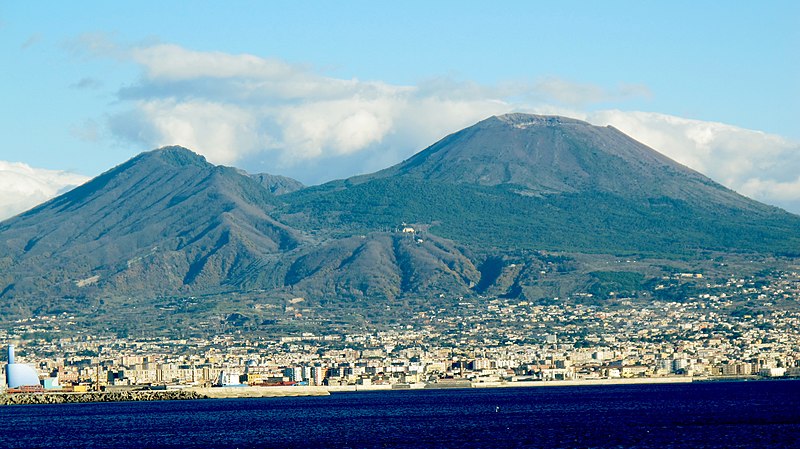
Mount Vesuvius
active stratovolcano in the Gulf of Naples, Italy

Mount Etna
active stratovolcano on the east coast of Sicily, Italy

Teide
thumb|This 3D panoramic view of Teide was created using Shuttle Radar Topography Mission|SRTM data (160% elevation).
Teide () or Mount Teide (, ; 'Peak of Teide') is a volcano on the Spanish island of Tenerife, part of the Canary Islands. Its summit (at ) is the highest point in Spain and the highest of any island in the Atlantic Ocean. Measured from its base on the ocean floor, Teide reaches a total height of , making it the third-tallest volcano in the world; UNESCO and NASA also rank it as Earth's third-tallest volcanic structure. Its elevation above sea level makes Tenerife the tenth-highe
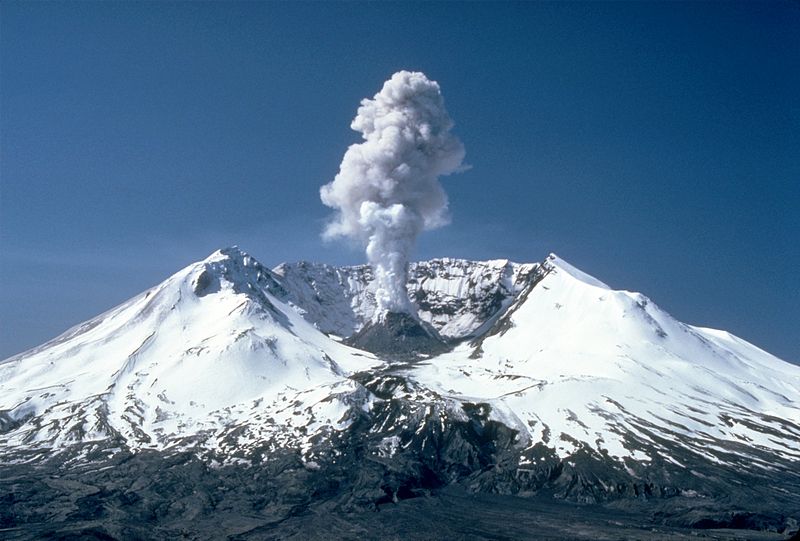
Mount St. Helens
volcano in Washington state

Mauna Loa
volcano on the island of Hawaii in Hawaii, United States

Baekdu Mountain
volcano on the border between North Korea and China

Eyjafjallajökull

Popocatépetl
Popocatépetl ( , , ; ) is an active stratovolcano located in the states of Puebla, Morelos, and Mexico in central Mexico. It lies in the eastern half of the Trans-Mexican Volcanic Belt. At it is the second highest peak in Mexico, after Citlaltépetl (Pico de Orizaba) at . Popocatépetl is ranked 89th by prominence.

Ojos del Salado
highest volcano in the world

La Palma
One of the main islands of the Canary archipelago, Spain

Mount Erebus
volcano on Ross Island, Antarctica

Mount Rainier
stratovolcano in the U.S. state of Washington

Cotopaxi volcano
Cotopaxi ( , , ) is an active stratovolcano in the Andes Mountains, located in Cotopaxi National Park in Cotopaxi Province, about south of Quito, and northeast of the city of Latacunga, Ecuador. It is the second highest summit in Ecuador (after Chimborazo), reaching a height of . Cotopaxi is among the highest active volcanoes in the world.

Kīlauea
Kīlauea ( , ) is an active shield volcano in the Hawaiian Islands. It is located along the southeastern shore of Hawaii Island. The volcano is between 210,000 and 280,000 years old and grew above sea level about 100,000 years ago. Since the islands were settled, it has been the most active of the five volcanoes that together form the island and among the most active volcanoes on Earth. The most recent eruption began in December 2024, with episodic lava fountains and flows continuing into 2026.

Surtsey
Surtsey ("Surtr's island" in Icelandic, ) is an uninhabited volcanic island located in the Vestmannaeyjar archipelago off the southern coast of Iceland. At Surtsey is the southernmost point of Iceland. It was formed in a volcanic eruption which began below sea level, and reached the surface on 14 November 1963. The eruption lasted until 5 June 1967, when the island reached its maximum size of . Since then, wave erosion has caused the island to steadily diminish in size: , its surface area was . The most recent survey (2007) shows the island's maximum elevation at above sea level.

Klyuchevskaya Sopka
active volcano located on the peninsula of Kamchatka in Russia
%20Detail%20from%20map%20of%20Iceland%201585.jpg)
Hekla
Hekla (), or Hecla, is an active stratovolcano in the south of Iceland with a height of . Hekla is one of Iceland's most active volcanoes; over 20 eruptions have occurred in and around the volcano since the year 1210. During the Middle Ages, the Icelandic Norse called the volcano the "Gateway to Hell" and the idea spread over much of Europe.

Mount Pelée
active stratovolcano

Mount Cameroon
active volcano in Cameroon near the Gulf of Guinea

Mount Nyiragongo
active volcano in Democratic Republic of the Congo
.jpg)
Laki
Laki () or Lakagígar (, Craters of Laki) is a volcanic fissure in the western part of Vatnajökull National Park, Iceland, not far from the volcanic fissure of Eldgjá and the small village of Kirkjubæjarklaustur. The fissure is properly referred to as Lakagígar, while Laki is a mountain that the fissure bisects. Lakagígar is part of a volcanic system centered on the volcano Grímsvötn and including the volcano Þórðarhyrna. It lies between the glaciers of Mýrdalsjökull and Vatnajökull, in an area of fissures that run in a southwest to northeast direction.
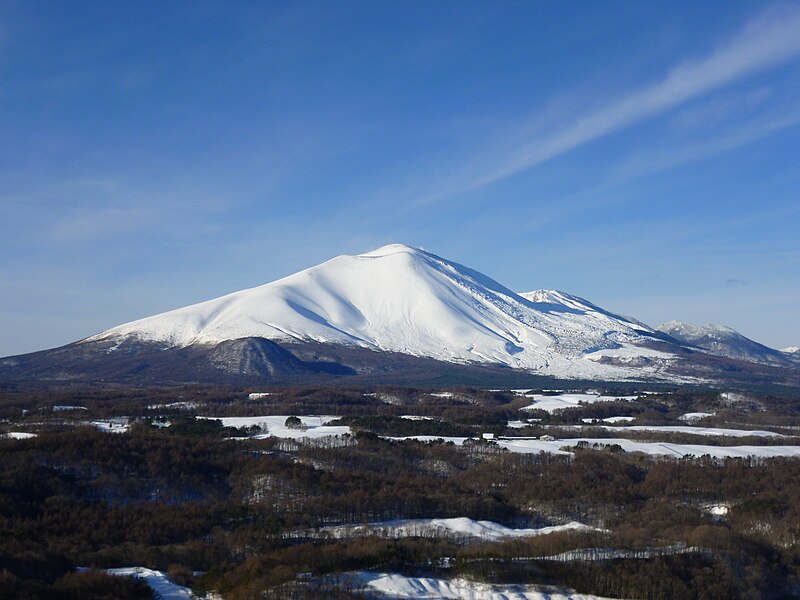
Mount Asama
volcano on the border of Gunma and Nagano prefectures in Japan

Nevado del Ruiz
volcanic mountain in Colombia

Mount Ruapehu
active stratovolcano in central North Island, New Zealand

Grímsvötn
Grímsvötn (; vötn = "waters", singular: ) is an active volcano with a (partially subglacial) fissure system located in Vatnajökull National Park, Iceland. The central volcano is completely subglacial and located under the northwestern side of the Vatnajökull ice cap. The subglacial caldera is at , at an elevation of . Beneath the caldera is the magma chamber of the Grímsvötn volcano.

Sakurajima
Sakurajima (, ) is an active stratovolcano, formerly an island and now a peninsula, in Kagoshima Prefecture in Kyushu, Japan. It is the most active volcano in Japan.

Volcán de Fuego
volcano in Guatemala

Erta Ale
volcano in Ethiopia

Mount Aso
volcano in Kumamoto Prefecture, Japan

Lake Nyos
crater lake in the Northwest Region of Cameroon
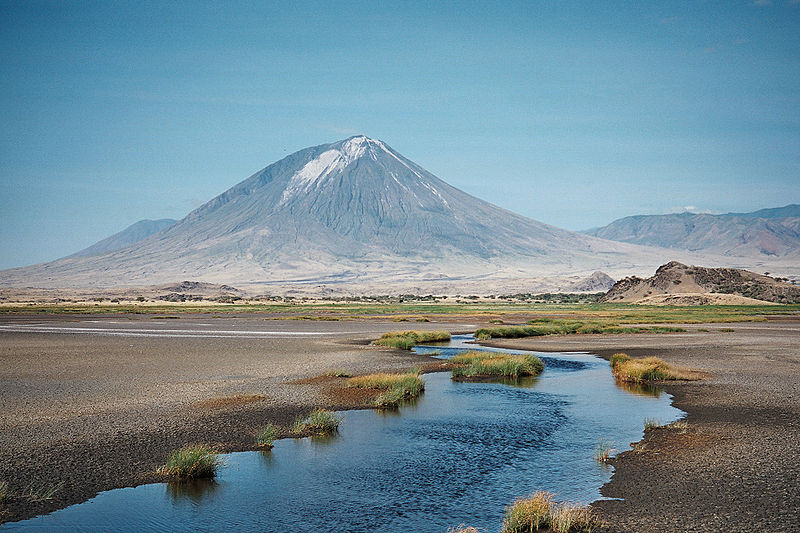
Ol Doinyo Lengai
mountain in Tanzania

Katla
volcano in Iceland

Tungurahua volcano
thumb|False-color satellite image of Tungurahua (center right, with plume of ash emanating from it) and its neighbor Chimborazo (volcano)|Chimborazo (center left)
Tungurahua (; from Quichua tunguri (throat) and rahua (fire), "Throat of Fire") is an active stratovolcano located in the Cordillera Oriental of Ecuador. The volcano gives its name to the province of Tungurahua. Volcanic activity restarted on August 19, 1999, and is ongoing , with several eruptive episodes since then, the most recent lasting from February 26 to March 16, 2016.

Snæfellsjökull
Snæfellsjökull (, snow-fell glacier) is a 700,000-year-old glacier-capped stratovolcano in western Iceland. It is situated on the westernmost part of the Snæfellsnes peninsula. Sometimes it may be seen from the city of Reykjavík over Faxa Bay, at a distance of .

Pico do Fogo
active volcano and highest peak of Cape Verde

Galeras
Galeras (Urcunina among the 16th-century indigenous people) is an Andean stratovolcano in the Colombian department of Nariño, near the departmental capital Pasto. Its summit rises above sea level. It has erupted frequently since the Spanish conquest, with its first historical eruption being recorded on December 7, 1580. A 1993 eruption killed nine people, including six scientists who had descended into the volcano's crater to sample gases and take gravity measurements in an attempt to be able to predict future eruptions. It is currently the most active volcano in Colombia.

Avachinsky
Avachinsky (also known as Avacha or Avacha Volcano or Avachinskaya Sopka) () is an active stratovolcano in Russia. It is situated on the Kamchatka Peninsula in the Russian Far East. Avachinsky lies within sight of Petropavlovsk-Kamchatsky, the capital of Kamchatka Krai. Together with neighbouring Koryaksky volcano, it is considered a Decade Volcano, worthy of particular study in light of its history of explosive eruptions and proximity to populated areas.
Colima
mountain

Nyamuragira
Nyamuragira, also known as Nyamulagira, is an active shield volcano in the Virunga Mountains of the Democratic Republic of the Congo, situated about north of Lake Kivu. The name is derived from Mashi language.
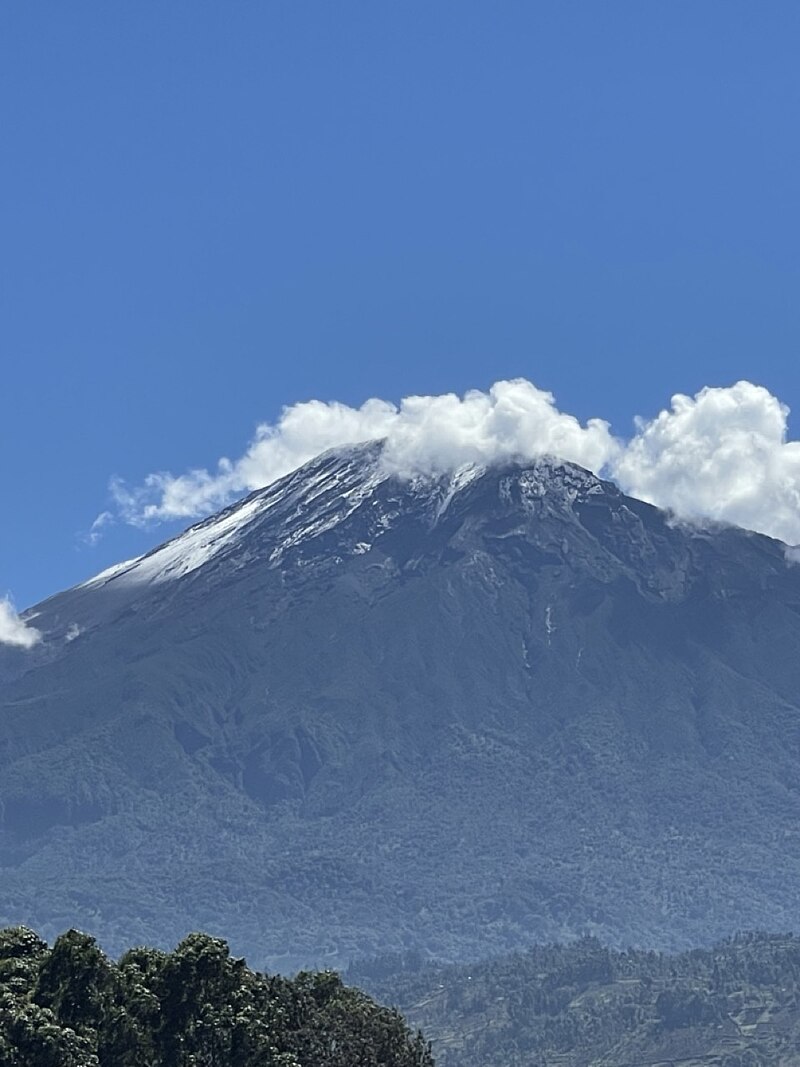
Mount Meru
mountain

Mount Hood
stratovolcano in the Cascade Volcanic Arc in Oregon, United States
Mount Unzen
mountain in Nagasaki Prefecture, Japan

Nisyros
Nisyros, also spelled Nisiros (; ), is a volcanic Greek island and municipality located in the Aegean Sea. It is part of the Dodecanese group of islands, situated between the islands of Kos and Tilos.
Beerenberg
Beerenberg is a stratovolcano dominating the northeastern end of the Norwegian island of Jan Mayen. It is high and is the world's northernmost subaerial active volcano and the only active volcano in Norway. The volcano is topped by a mostly ice-filled crater about wide, with numerous peaks along its rim including the highest summit, Haakon VII Toppen, on its western side.
Isabela Island
The largest of the Galápagos Islands

Copahue
Copahue () is a stratovolcano in the Andes on the border of Bío Bío Region, Chile and Neuquén Province, Argentina. There are nine volcanic craters along a line, the easternmost of which is historically the most active, and contains a 300 m (1000 ft) wide crater lake with a pH ranging between 0.18 and 0.30. Eruptions from this crater lake have ejected pyroclastic rocks and chilled liquid sulfur fragments. Although the lake emptied during the 2000 eruption, it later returned to its previous levels. Copahue means "sulphur waters" in Mapuche.

Arenal Volcano
Active stratovolcano in Alajuela Province, Costa Rica

Koryaksky
Koryaksky or Koryakskaya Sopka () is an active volcano on the Kamchatka Peninsula in the Russian Far East. It lies within sight of Kamchatka Krai's administrative center, Petropavlovsk-Kamchatsky. Together with neighbouring Avachinsky, it is considered a Decade Volcano, worthy of particular study in light of its history of explosive eruptions and proximity to populated areas.
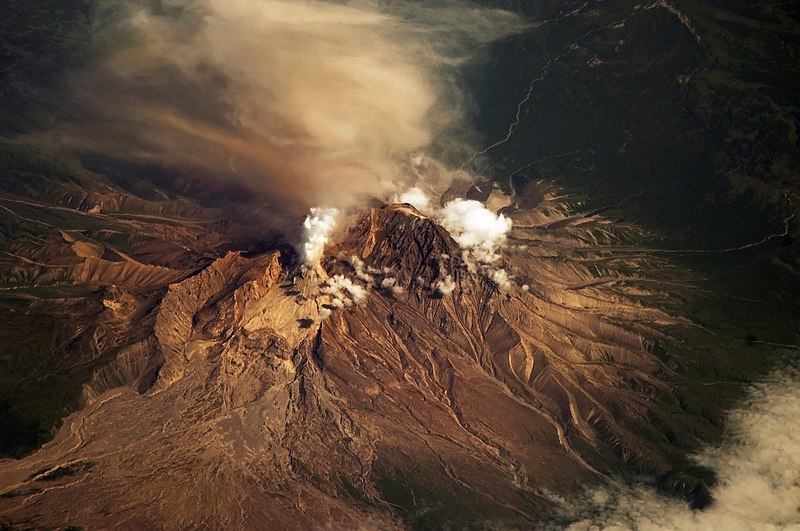
Shiveluch
Shiveluch (), also called Sheveluch, which originates from the name "suelich" which means "smoking mountain" in Itelmen, is the northernmost active volcano in Kamchatka Krai, Russia. It and Karymsky are Kamchatka's largest, most active and most continuously erupting volcanoes, as well as one of the most active on the planet. Shiveluch erupts around of magma per year, which causes frequent and large hot avalanches and lava dome formations at the summit. Volcanic ash emissions from this volcano often disrupt air traffic connecting the Asian and North American continents.

Askja
thumb|right|300px|Víti geothermal lake at Askja
thumb|right|300px|Askja and Víti (in the foreground)

Bárðarbunga
Bárðarbunga (, alternative name Veiðivötn), is an active and productive stratovolcano located under Vatnajökull, which is Iceland's most extensive glacier, in Vatnajökull National Park. The second highest mountain in Iceland, above sea level, Bárðarbunga is also part of the Bárðarbunga-Veiðivötn volcanic system that is approximately long and wide.

Osorno
stratovolcano in Chile

Paramushir
Paramushir (; ) is a volcanic island in the northern portion of the Kuril Islands chain in the Sea of Okhotsk in the northwest Pacific Ocean. It is separated from Shumshu by the very narrow Second Kuril Strait in the northeast , from Antsiferov by the Luzhin Strait () to the southwest, from Atlasov in the northwest by , and from Onekotan in the south by the wide Fourth Kuril Strait. Its northern tip is from Cape Lopatka at the southern tip of the Kamchatka Peninsula. Severo-Kurilsk, the administrative center of the Severo-Kurilsky district, is the only permanently populated settlement on Param
Taranaki Maunga
stratovolcano in New Zealand

Sangay volcano
Sangay (also known as Macas, Sanagay, or Sangai) is an active stratovolcano in central Ecuador. It exhibits mostly strombolian activity. Geologically, Sangay marks the southern boundary of the Northern Volcanic Zone, and its position straddling two major pieces of crust accounts for its high level of activity. Sangay's approximately 500,000-year-old history is one of instability; two previous versions of the mountain were destroyed in massive flank collapses, evidence of which still litters its surroundings today.
La Soufrière
Volcano on the island of Saint Vincent in the Caribbean
Mount Baker
stratovolcano in Washington State, United States
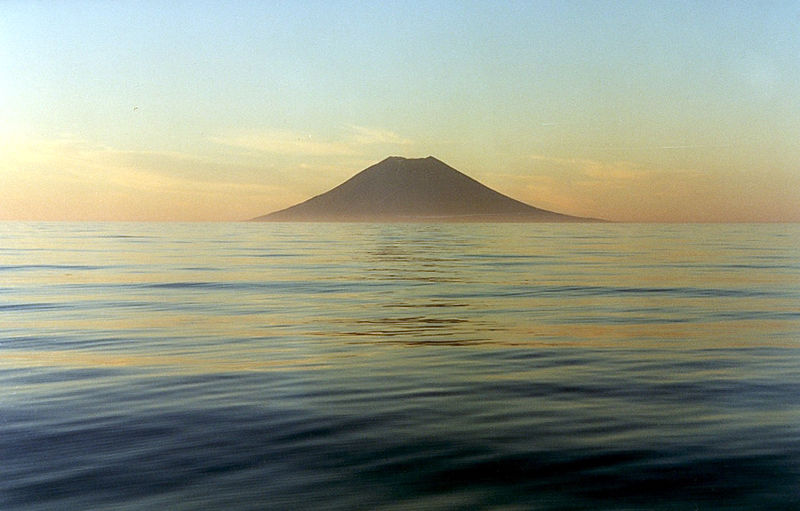
Atlasov Island
island in Russia
Fernandina Island
Western island in the Galapagos Archipelago in Ecuador